WHO sounds global alarm as Ebola outbreak in the DRC becomes the worst in the country’s history
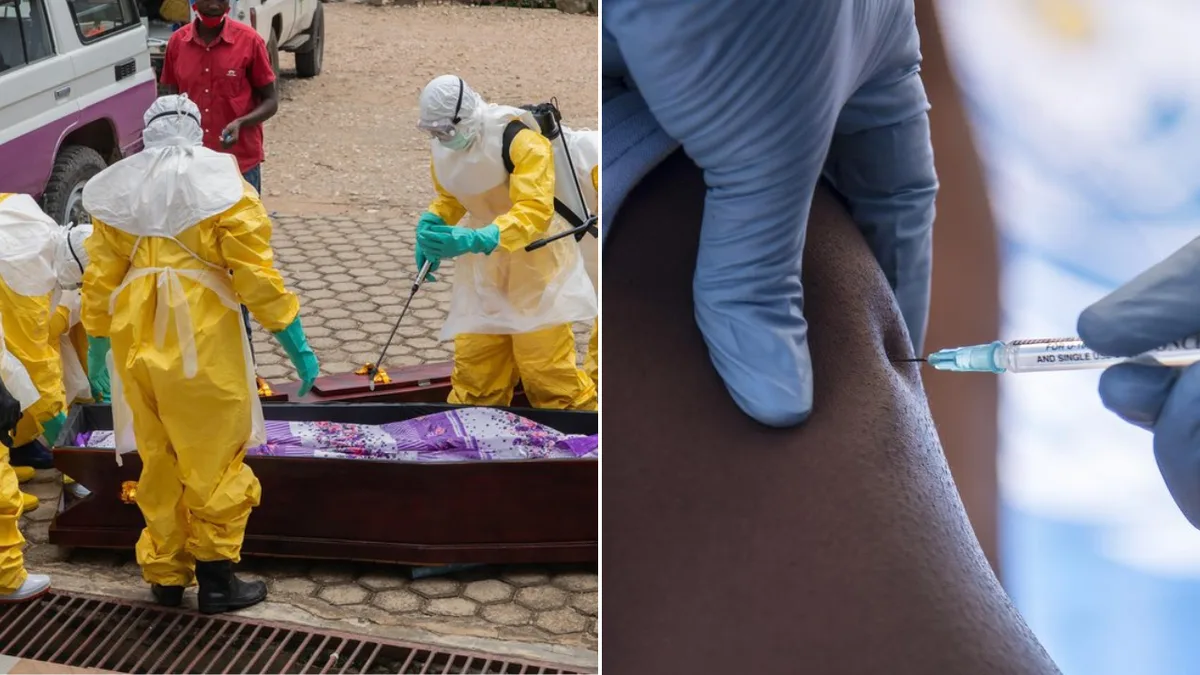
The Ebola response needs to be scaled up to tackle the outbreak in the Democratic Republic of Congo , with tracking the chains of transmission still posing a challenge, the head of the World Health Organisation has warned.
“Until every chain is found and broken, the epidemic will continue and will continue to pose a threat to DRC, its neighbours and the region as a whole,” WHO director-general Tedros Adhanom Ghebreyesus said in Geneva.
The number of deaths in Congo’s Ebola outbreak has surpassed 3000, government data showed on Wednesday, as the country’s worst epidemic continues to spread across its northeast.
The outbreak, caused by the Bundibugyo species of Ebola, became the largest and deadliest in Congo’s history after surpassing the 2018-2020 epidemic.
It is now second only to the 2014-2016 West African outbreak, which infected more than 28,600 people and killed more than 11,000 across Guinea, Liberia and Sierra Leone.
But there is now hope of possible progress in treatments and vaccinations.
WHO aims to start clinical efficacy trials of potential vaccines next month or in November, and trials on treatments are underway.
However, Tedros said many deaths were among people who were not on a list of known contacts.
“That means there are chains of transmission we don’t know about,” he said, adding many of those who died were still being buried unsafely, which is fuelling transmission.
He urged the international community to increase and accelerate funding for the Congolese government-led Ebola response plan, which is seeking $US1.3 billion ($A1.8 billion).
While WHO has managed to ship 320 tons of supplies and has increased testing capacity to 3000 tests per day, it needs further funding to help support its response — including to increase bed capacity at Ebola treatment centres.
WHO health and logistics technical officer Luca Fontana said it costs $US15 million ($A21 million) per month for a 1500-bed treatment centre.
“We know that we are making this request at a time when financing for humanitarian assistance has contracted,” Tedros said.
“But as we know from previous Ebola outbreaks, we can control this epidemic if we choose to.”
5News aggregated this summary from the outlet’s public feed. The full article, with all the context, is on 7news.com.au — the content belongs to 7NEWS Australia.