Indigenous people want violence out of their communities. Here’s a new approach
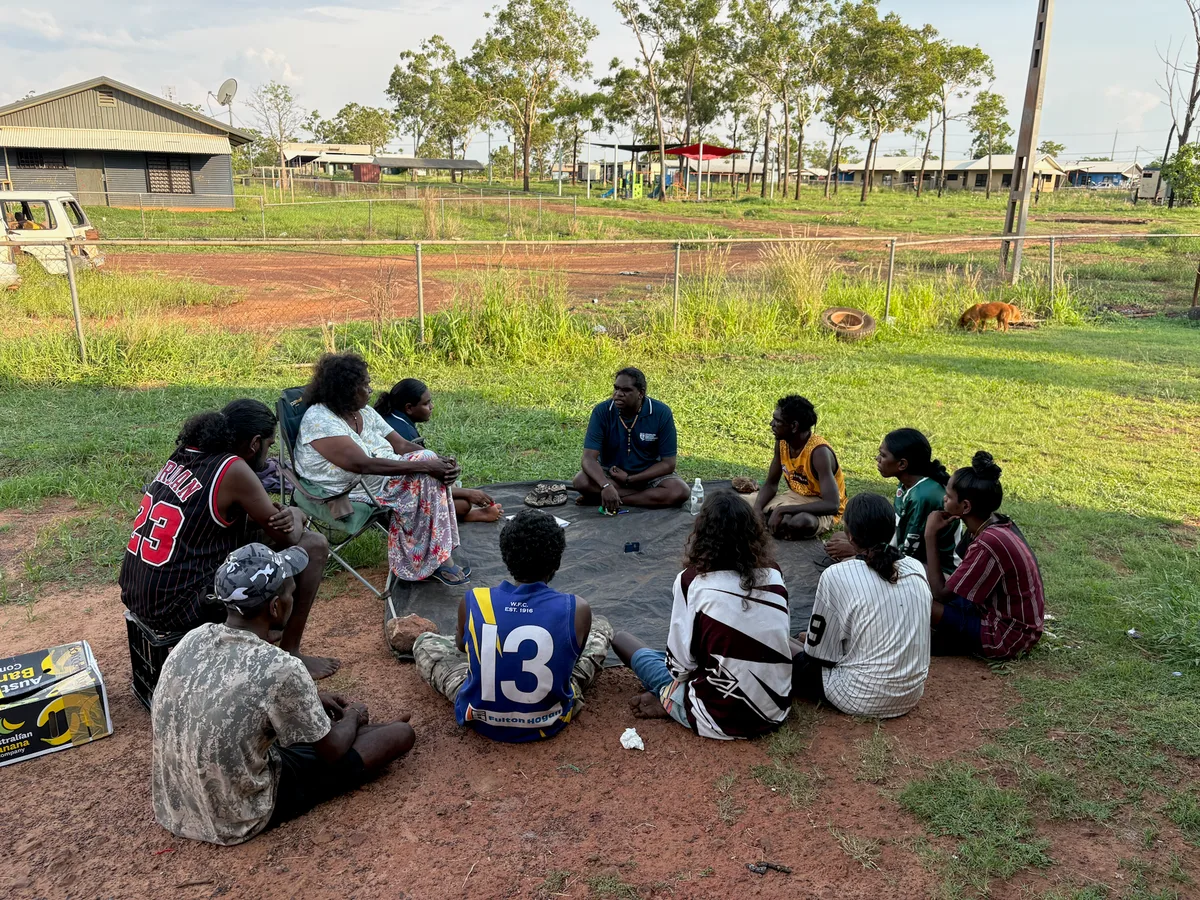
Researcher Troy Mardigan sits with a ceremony group in the West Daly region.
Michaela Spencer , CC BY-NC-ND Violent crime in Indigenous communities is often the subject of media headlines.
It usually results in governments adopting “ tough on crime ” responses, including increased policing and restricting bail.
Recent data show the toughening of Northern Territory bail laws has led to more Aboriginal people in jails than ever before.
At the same time, high levels of violence in remote Aboriginal communities persist.
Our new research looks at what’s happening on the ground, specifically in the remote Aboriginal communities of the West Daly region in the Northern Territory.
Elders have revealed there are complicated drivers of community violence and unrest, many of which go unaddressed by typical law and order responses.
Here’s what they’re doing instead.
Indigenous people across the country face a range of social policy challenges, many of which are often politicised.
In this three-part series, experts examine issues with child protection, violence and reconciliation and look at evidence-based policy approaches that would help improve the lives of Aboriginal and Torres Strait Islander people.
Different social structures Over the last few years there has been an increase in community violence in the West Daly.
Aboriginal townships and homelands that have been largely free of community violence in the past have experienced episodes of conflict and rioting.
This new unrest requires innovative strategies to achieve peace.
In 2024, the federal National Indigenous Australians Agency working with the NT attorney-general’s department, set up the West Daly Peace Project.
5News aggregated this summary from the outlet’s public feed. The full article, with all the context, is on theconversation.com — the content belongs to The Conversation Australia.