China warns its car brands against overseas price wars
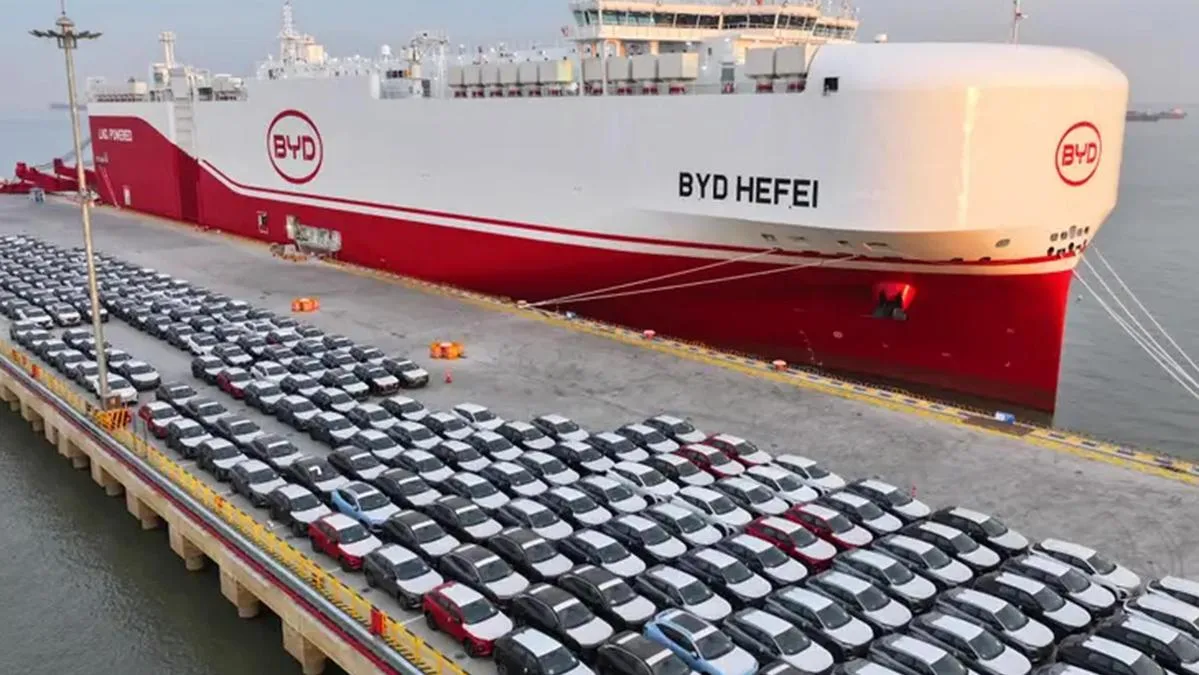
China has issued a series of guidelines on how its automakers should behave in export markets such as Australia, with directives to avoid aggressive pricing to gain an ‘improper advantage’, follow local laws and build better after-sales support.
As reported by Nikkei , the guidelines were published on September 1, 2026 by China’s Ministry of Commerce and Ministry of Industry and Information Technology, in collaboration with the country’s State Administration for Market Regulation.
The guidelines state they're intended to “promote orderly and healthy international development of China’s automotive industry” and thereby “advance the development of the global automotive industry”.
Key elements include directives on pricing, establishing better after-sales customer support, and ensuring customer data from connected vehicles is collected in accordance with each country’s laws.
🚘 Don’t just read about your next car. Find a great deal with CarExpert.
According to the new guidelines, Chinese automakers operating overseas “must not disrupt the order of market competition to obtain an improper competitive advantage”.
Price wars in the competitive Chinese market have eroded profitability for automakers, making exports to overseas markets an increasingly attractive means to offset this.
Between January and July 2026, China exported 72.5 per cent more passenger vehicles than during the same period the previous year, sending around 5.3 million passenger vehicles overseas, according to the China Association of Automobile Manufacturers (CAAM).
The guidelines, however, state Chinese automakers “should avoid creating disorder among sales channels” when operating overseas. They also “must not improperly impose arbitrary surcharges beyond the displayed price or collect fees that have not been disclosed”.
China is the world’s largest producer of new vehicles, with its industry producing around 34.5 million in 2025, compared with 13.5 million in the European Union, 10.2 million in the United States and 8.4 million in Japan, according to the International Organization of Motor Vehicle Manufacturers.
The guidelines follow calls from the Chinese government in mid-2025 to end hyper-competitive price wars, with authorities describing them as “irrational competition” that limited the long-term sustainability of the more than a hundred vehicle brands competing with each other.
The government has also cracked down on so-called ‘zero-mileage’ cars, a term used to describe vehicles made in China and counted towards a brand’s domestic sales figures before being exported as ‘used cars’ with next-to-no kilometres on their odometers.
Earlier this year, William Li, CEO of Chinese brand Nio, said the Chinese auto industry’s ‘golden era’ was over , after prices had been cut to the point where there was little profit margin left, meaning consumers in China and elsewhere would have to pay more for new cars .
“We wanted to reduce the size of the discount gap and make the reservation incentives more conservative and restrained,” Mr Li said.
5News aggregated this summary from the outlet’s public feed. The full article, with all the context, is on 7news.com.au — the content belongs to 7NEWS Australia.