Urban sprawl wins again: Why Labor’s plan to infill middle Melbourne is falling short
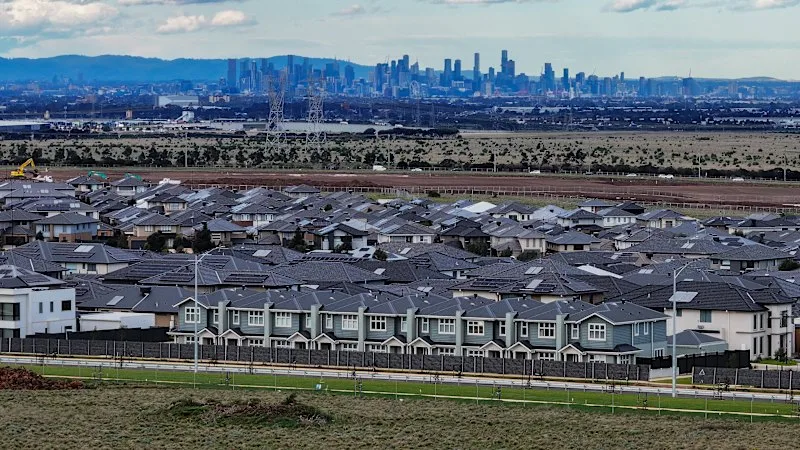
Almost half of Melbourne’s new housing approvals are concentrated in the city’s outer growth corridors, despite Labor’s push to prioritise building new homes in established suburbs and curb urban sprawl.
There were 20,252 dwellings approved across Melbourne’s seven growth-area municipalities in the last financial year, accounting for 48 per cent of all metropolitan approvals, according to the Australian Bureau of Statistics.
Labor wants at least 70 per cent of new housing to be delivered in established areas , with just 30 per cent in greenfield growth areas. The policy is designed to put more homes closer to existing jobs, public transport and services.
The government committed to the split in its 2023 housing statement , which also relaxed planning controls and fast-tracked approvals in an effort to drive up housing stock in existing suburbs.
But three years on, the government’s seven designated growth area councils – Melton, Wyndham, Casey, Hume, Whittlesea, Cardinia and Mitchell – still account for about half of Melbourne’s housing pipeline.
Together, Melton and Wyndham accounted for about 20 per cent of new homes approved in Melbourne as a whole.
The remaining 52 per cent of approvals were spread across Melbourne’s 25 established council areas included in the metropolitan housing target.
While many established suburbs struggled to attract new housing projects, the City of Melbourne stood out among established suburbs with 3966 dwelling approvals, the third highest of any Melbourne municipality.
Urban Development Institute of Australia chief executive Linda Allison said the latest figures showed industry was struggling to deliver new homes in established Melbourne suburbs.
“Growth areas have traditionally supplied at least 50 per cent of new homes, and this trend hasn’t changed,” Allison said.
“The government can create policies about density and targets, but policy alone doesn’t change the way people feel about where they want to live, and the type of housing they prefer.”
Allison said about 60 per cent of buyers in growth areas were migrant families, predominantly from India, Sri Lanka, Pakistan or the Philippines, where multi-generational living is common.
“These buyers do not move to Melbourne to live in a two-bedroom apartment. They want their own detached home.”
She said high construction costs, interest rates, weak consumer confidence and Victoria’s property tax settings meant many apartments and medium-density projects were not financially viable and described Labor’s 70:30 split as “unachievable” under current policy settings.
5News aggregated this summary from the outlet’s public feed. The full article, with all the context, is on www.watoday.com.au — the content belongs to WAtoday.