‘Frequently fumigate the hen-houses’: how ancient Greeks and Romans tried to treat sick birds
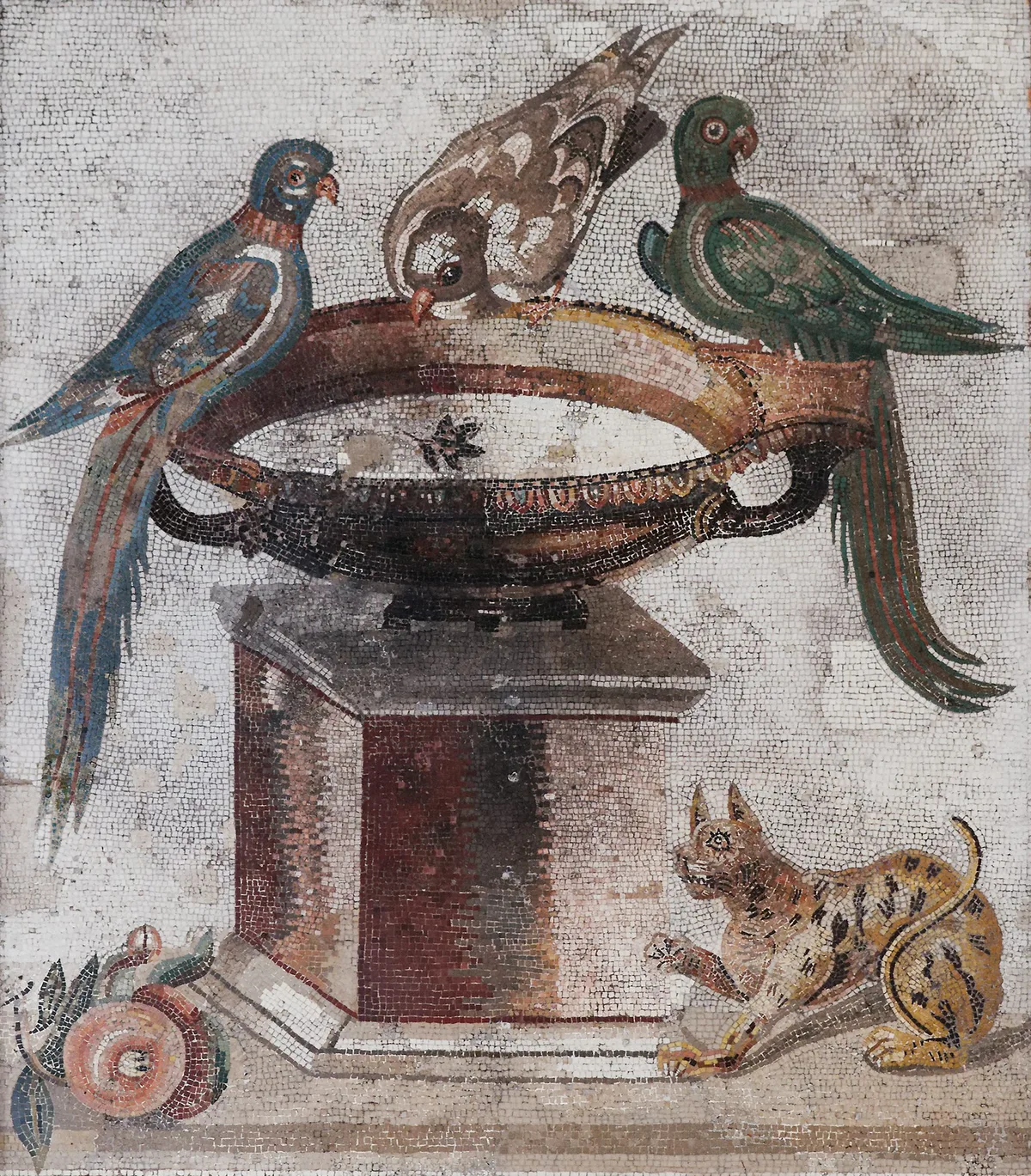
Marie-Lan Nguyen/Wikimedia Since the highly pathogenic H5N1 bird flu was first confirmed in Australian wild birds in June, it has rapidly spread around the continent – and among different species.
The virus has been linked to the deaths of more than 1,000 crested terns in South Australia, as well as two dozen little penguins in Tasmania.
It has also jumped to long-nosed fur seals .
Attention has now turned to vaccination.
Wildlife officers in Victoria have begun an unprecedented program to vaccinate thousands of little penguins , while the federal government has committed funding to protect vulnerable native birds.
The science is modern.
But some of the practical questions are surprisingly old.
Ancient Greek and Roman writers were already asking how birds became sick, what signs to look for, and what could be done when disease appeared in them.
We cannot identify any ancient disease securely as avian influenza.
Ancient writers do, however, provide evidence for close observation of outbreaks of disease among poultry and attempts to prevent them.
Birds and people in ancient Greece and Rome Birds were deeply woven into everyday life in ancient Greece and Rome.
They were eaten, bred, sold, kept around houses and watched for religious signs.
Their usefulness meant people observed them closely.
Discussing birds, the Roman encyclopaedist Pliny the Elder (23/24–79 CE) wrote that: The people of Delos began the practice of fattening hens.
5News aggregated this summary from the outlet’s public feed. The full article, with all the context, is on theconversation.com — the content belongs to The Conversation Australia.