Crocodiles can’t fly. Birds can. Scientists have finally figured out why
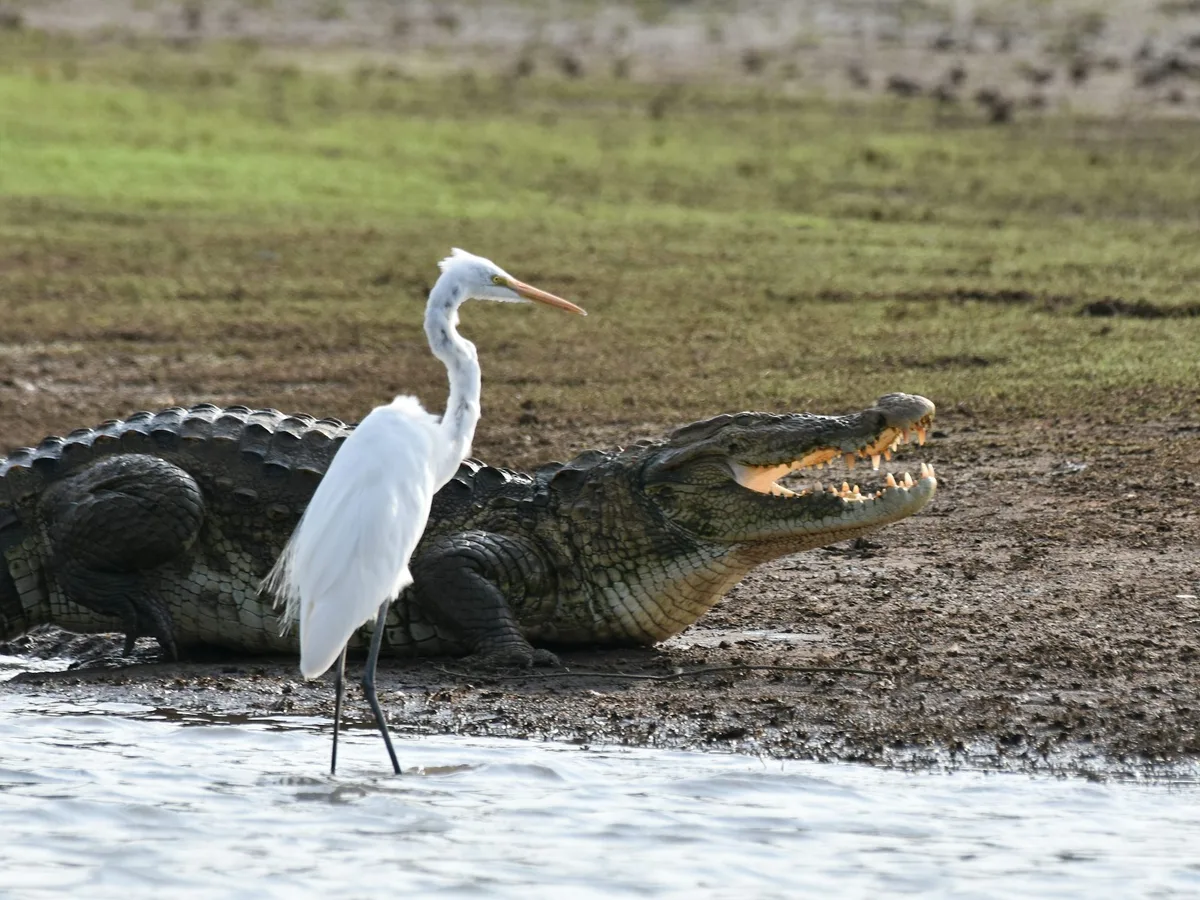
Timothy A.
Gonsalves / Wikimedai , CC BY-SA The closest living relatives of crocodiles and alligators are, perhaps surprisingly, birds.
They are both archosauriforms, a group of species that originated about 250 million years ago near the beginning of the Triassic period.
The group soon split into two lineages: one led to crocodiles ( Pseudosuchia ), while the other led to dinosaurs and then birds ( Avemetatarsalia ).
This means there is a combined 500 million years of evolutionary change between modern birds and crocodiles.
The aeons have erased almost all evidence of shared ancestry.
Crocodiles are cold-blooded (called ectotherms by physiologists).
Their body temperatures are determined by the environment, and they have low metabolic rates (the speed at which their bodies turn food into energy).
They appear sluggish, except for occasional brief flurries of powerful activity while drowning prey or fighting among themselves.
Birds are warm-blooded (or endotherms).
They have high metabolic rates, producing energy quickly enough to warm and stabilise their body temperatures and to undertake sustainable, strenuous exercise of flight.
Birds don’t fatigue and fall out of the sky.
Even if crocodiles somehow had wings, the metabolic difference in power alone would mean they could never fly .
How did birds and crocodiles become so different? The conventional assumption has been that their common ancestor was more like a crocodile than a bird – but our new research shows the opposite is most likely the truth.
5News aggregated this summary from the outlet’s public feed. The full article, with all the context, is on theconversation.com — the content belongs to The Conversation Australia.