Only heartstrings attached: Jim Henson and the evolving magic of puppetry
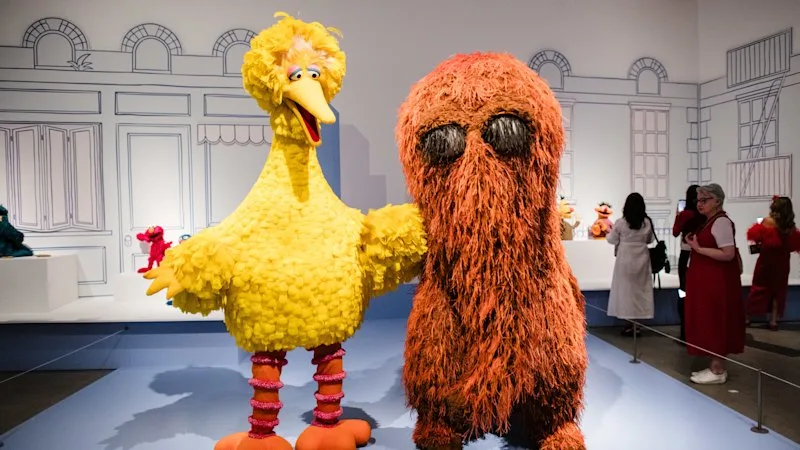
The celebrities of our childhood weren’t generally made of flesh and bone; they were built from felt, foam, rubber and googly-eyes.
We believed it was magic that brought furry, kooky creatures like Kermit the Frog and Elmo to life, and to a certain extent, we were right. But that magic doesn’t necessarily come from the puppet itself. It comes from those underneath it.
“You’ve got great performers projecting their personality through the puppet,” says Dave Barclay, a British puppeteer who has worked on Yoda, Jabba the Hutt and The Dark Crystal ’s Aughra. “Frank Oz, for example, had Miss Piggy, Fozzie Bear – he’s got so many different Muppet characters that are all just small facets of him. There’s a truth to all parts of them.”
Despite working with one of the oldest theatrical artforms, puppeteers remain a pop-cultural force. They bring magic to screens through shows like Seth Rogen and Evan Goldberg’s Muppet Show revival, which recently won four Creative Arts Emmy Awards . Off-screen, they’ve rocked out as The Muppets at the FIFA World Cup final half-time show .
One puppeteer channelled this magic like no one before: Jim Henson. From The Dark Crystal to Fraggle Rock , Henson revolutionised the use of puppets, transforming them into bona fide celebrities.
Now, nearly 70 years after he and his wife formed The Jim Henson Company, his work continues to have an indelible impact on screen puppetry. This legacy is explored in Make, Believe, Magic: The Worlds of the Jim Henson Company, a new exhibition at the Queensland Art Gallery and Gallery of Modern Art (QAGOMA).
Between the puppets lie iconic props, costumes (including David Bowie’s from Labyrinth ) and original drawings, all honouring Henson, who died in 1990, and his lasting legacy. Most impressive is the Great Hall set from Fraggle Rock: Back to the Rock , the entirety of which was shipped from Canada in a world-first. You’re completely immersed in the subterranean world, only made aware of its fabricated nature when passing puppeteer armholes.
“As [Henson’s] daughter, I have to take a step back and remember that before he created The Muppets – puppets didn’t look like that at all,” says Lisa Henson, chief executive of The Jim Henson Company. “In a sense, he created the whole idea of what you think of as a puppet – googly-eyed, colourful, fleecy creatures.”
He didn’t just revolutionise puppet aesthetics, says the exhibition’s curator Amanda Slack-Smith. He transformed the art of puppetry itself.
“Before Jim Henson, the idea of being a puppeteer for film and television as a profession wasn’t really a thing,” she says. “You started seeing puppets in advertising and on talk shows, like Rowlf on The Jimmy Dean Show . It was all because of Henson’s looser style – he was such a force.”
Far from simple glove puppets such as Punch and Judy, or wooden and papier-mache TV puppets, Henson’s creations were more experimental and flexible. Kermit, for instance, was initially made from a winter coat belonging to Henson’s mother, which allowed puppeteers to contort the frog’s face to great comedic effect.
“Henson’s puppetry takes you into this kind of magical realism.
5News aggregated this summary from the outlet’s public feed. The full article, with all the context, is on www.watoday.com.au — the content belongs to WAtoday.