B.C.’s militarized wolf cull is a misguided approach to a complex issue
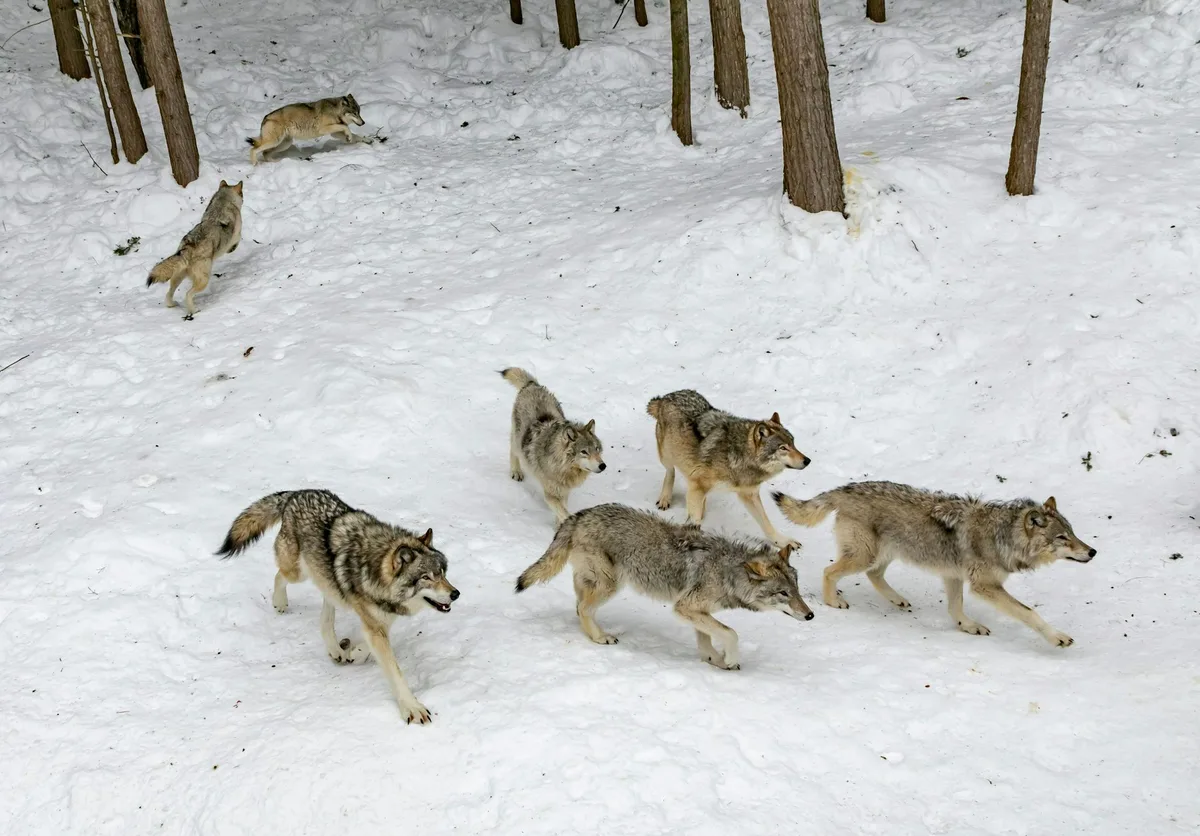
While the government emphasizes predators' effects on caribou, it glosses over the impact of human-caused habitat destruction. (Eva Blue/Unsplash) The government of British Columbia is facing renewed criticism over a proposed extension of its controversial wolf culling program .
This decade-long program, which has cost taxpayers $13 million , was mobilized in response to dwindling caribou populations across the province .
While the government emphasizes the effects of predators on caribou, they gloss over the impact of habitat destruction by humans.
The scapegoating of wolves is not new, but a repackaging of a centuries-long settler colonial view of the wolf as a monster — a narrative largely inspired by European folklore .
Our ongoing research engages with the social dimensions of predator culling, the cultural iconography of wolves and grizzly bears, human wildlife conflict and the militarization of wildlife management.
The true driver of caribou declines Habitat loss is the primary driver of caribou declines.
This is driven by natural events and resource extraction .
Habitat loss has far-ranging consequences for caribou, creating competition for resources and increasing the risk of predation from wolves and other predators.
Yet, the B.C. government continues to approve logging projects in caribou habitat .
Caribou have lost more habitat than they have gained in recent years , accelerating their path towards extinction.
Some researchers have argued that this wolf cull subsidizes caribou habitat destruction .
Killing wolves does not address this ecological destruction and may create new challenges .
Many experts agree that habitat loss is the primary driver of caribou decline. (Arctic Odyssey/Flickr) , CC BY Some studies have documented that caribou populations rebounded following wolf culls, while others indicate that this isn’t an effective long-term solution .
Reviews of predator control programs, more broadly, illustrate there is no clear consensus surrounding their efficacy.
5News aggregated this summary from the outlet’s public feed. The full article, with all the context, is on theconversation.com — the content belongs to The Conversation Canada.