Planting trees in the wrong places is not a climate solution
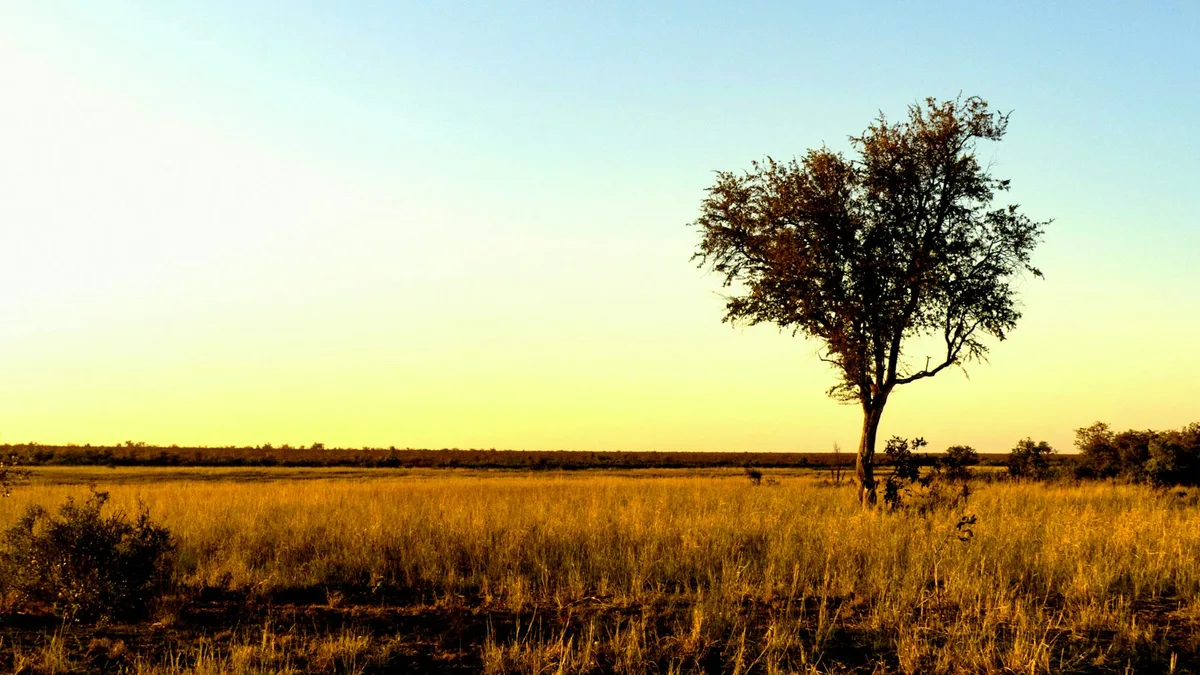
The savanna illuminated by dawn sunlight, in Kruger National Park, Limpopo province, South Africa, in September 2022. (Javier Puig Ochoa) , CC BY A recent United Nations report has stated the world will likely overshoot the 1.5 C target by 2030 set out in the 2015 Paris Climate Agreement .
Tree planting has become one of the most appealing symbols of climate action.
It can be easily accounted for, visible and easy to communicate: more trees means more carbon being absorbed, a cooler planet.
Everyone gets the point.
Global initiatives now promise restoration on a vast scale, including the Bonn Challenge goal of restoring 350 million hectares of degraded and deforested land by 2030.
But a tree is not automatically a climate solution, and land without dense tree cover is not necessarily degraded.
When tree planting targets natural grasslands, shrublands and savannas, well-meaning efforts can replace one ecosystem with another, reduce water availability and threaten livelihoods.
In 2007, the African Union launched the Great Green Wall Initiative ; a plan to stop southern expansion of the Sahara Desert by planting trees and restoring landscapes across 22 countries from Senegal to Djibouti.
Yet, almost 20 years later, the initiative has had mixed results.
What truly works is simple: plant trees for restoration in the right ecosystems.
Drylands are active ecosystems Drylands, including grasslands, shrublands and savannas, are often characterized by what they seem to lack: water, dense vegetation or agricultural potential.
Yet they cover about 40 per cent of the Earth’s surface , support billions of people and play an important role in the year-to-year variability of the global carbon cycle — changes in the carbon absorbed and released from one year to the next.
Dryland ecosystems have evolved around low and highly variable rainfall, recurrent drought and disturbance.
Native grasses, shrubs, scattered trees and biological soil crusts are not signs of an ecosystem needing restoration.
5News aggregated this summary from the outlet’s public feed. The full article, with all the context, is on theconversation.com — the content belongs to The Conversation Canada.