Global climate action: Advancing energy transition and climate justice
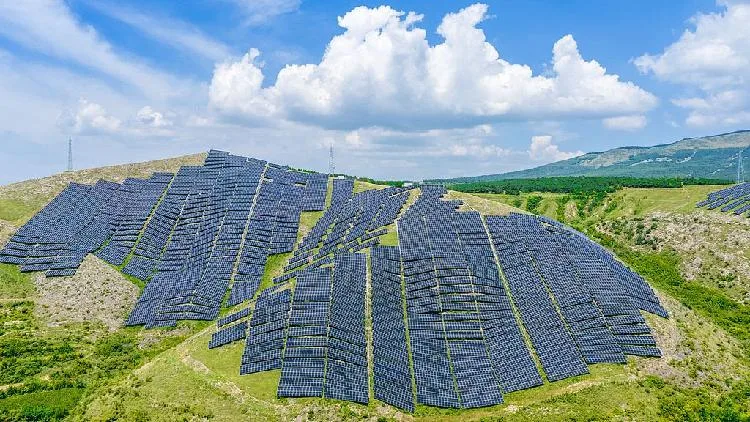
"We are the first generation with the tools to end the fossil fuel age – and the last who can avert climate catastrophe," United Nations (UN) Secretary-General António Guterres delivered the warning on Wednesday, calling on countries to develop credible roadmaps with clear timelines to transition away from fossil fuels.
He made the remarks during the UN General Assembly's high-level week in New York, where the UN Climate Summit 2026 brought together leaders from major economies, climate-vulnerable countries, and key energy-producing and energy-consuming countries to accelerate climate action and strengthen international cooperation.
Renewable energy surging, yet gap remaining Global renewable energy is making breakthrough progress.
The International Renewable Energy Agency reported on Monday that a record 693 gigawatts of new renewable capacity was added globally in 2025, bringing total installed capacity to 5.15 terawatts and helping save nearly $500 billion in fossil fuel costs.
However, the pace of progress remains insufficient to meet the temperature goals of the Paris Agreement.
The UN Environment Program (UNEP) estimated that, even if countries fully implement their Nationally Determined Contributions, global temperatures could still rise by 2.3 degrees Celsius to 2.5 degrees Celsius this century, well above the Paris Agreement's 1.5 degrees Celsius limit.
"While national climate plans have delivered some progress, it is nowhere near fast enough," UNEP's Executive Director Inger Andersen said in a statement.
Changing climate policies Climate policies are diverging among major economies.
In the US, the Environmental Protection Agency has rolled back several federal greenhouse gas regulations, including the 2009 Greenhouse Gas Endangerment Finding and emissions limits for power plants.
Meanwhile, states such as California continue to pursue 100% zero-emission vehicle sales by 2035.
In Europe, the European Union remains committed to decarbonization while seeking to balance climate goals with industrial competitiveness.
The European Commission has proposed adjusting the implementation of its 2035 vehicle emissions target by replacing the 100% zero-emission mandate with a 90% tailpipe reduction target.
Across the Asia-Pacific region, economies are exploring new mechanisms on energy transition cooperation.
At the latest Asia-Pacific Economic Cooperation (APEC) Energy Ministerial Meeting, economies agreed to work toward an Asia-Pacific energy community to enhance energy security, promote innovation and deliver shared benefits.
此摘要由5News从媒体的公开信息源汇聚而成。 包含完整背景的全文在www.cgtn.com — 内容归CGTN Nature (oficial)所有。