New CAS study reveals causes, amplification of deadly mudslide
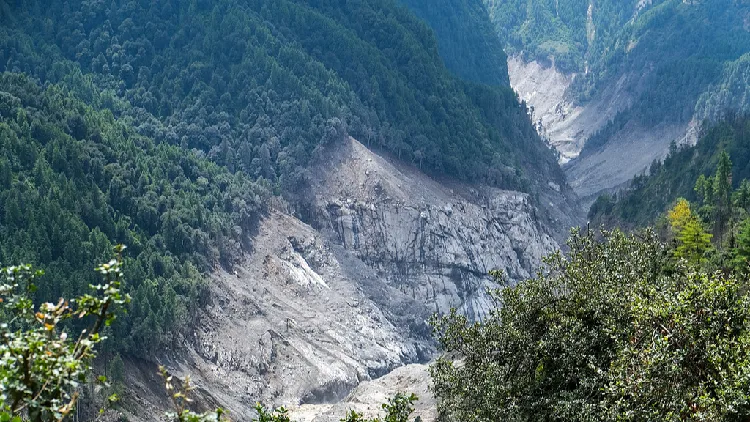
A new study has uncovered the mechanisms behind the devastating mudslide that struck Gyirong Port in southwest China's Xizang Autonomous Region on August 26, finding that the disaster was not triggered by heavy rain but by glacial instability amplified along a 22‑km path.
The catastrophe began as a massive ice‑rock avalanche on the northern slope of Nepal's Langtang Lirung peak.
Debris plunged down a steep gully and transformed into a violent mudflow that slammed into Gyirong Port, causing heavy casualties and infrastructure damage.
Published Tuesday in Science Bulletin , the research was led by the Institute of Tibetan Plateau Research, Chinese Academy of Sciences (CAS), in collaboration with multiple universities and research centers.
Using satellite imagery, seismic records, terrain data, and on‑site footage, the team reconstructed the entire chain – from source failure to downstream impact.
No rain trigger, but glacial warming The research indicates that precipitation in the source area had been below average in preceding months, with no intense rain before the event.
The team points to long‑term glacial movement, warmer spring‑summer temperatures increasing meltwater, and high‑altitude permafrost degradation.
These factors likely weakened the ice‑rock contact zone, causing sudden failure after gradual change.
"The evidence does not support a single direct trigger, but this was clearly not a short‑term rainstorm event," the researchers said.
Entrainment magnified destruction Crucially, the final scale of destruction was determined not by the initial avalanche volume but by "entrainment" along the descent.
As debris rushed down the 22‑km gully, it continuously scoured the bed, entrained channel materials, and mixed with river water – turning a high‑altitude collapse into a highly destructive mudflow.
"Entrainment is not a secondary process but a core factor deciding downstream intensity," the team emphasized.
Precursor signals detected Seismic stations recorded multiple anomalous tremors hours before the main event, some matching eyewitness reports of minor snow/ice activity.
This suggests smaller mass transfers preceded the major collapse – a potential clue for future early warning, though further verification is needed.
此摘要由5News从媒体的公开信息源汇聚而成。 包含完整背景的全文在www.cgtn.com — 内容归CGTN Nature (oficial)所有。