Melting plateau: How difficult is it to predict glacial disasters?
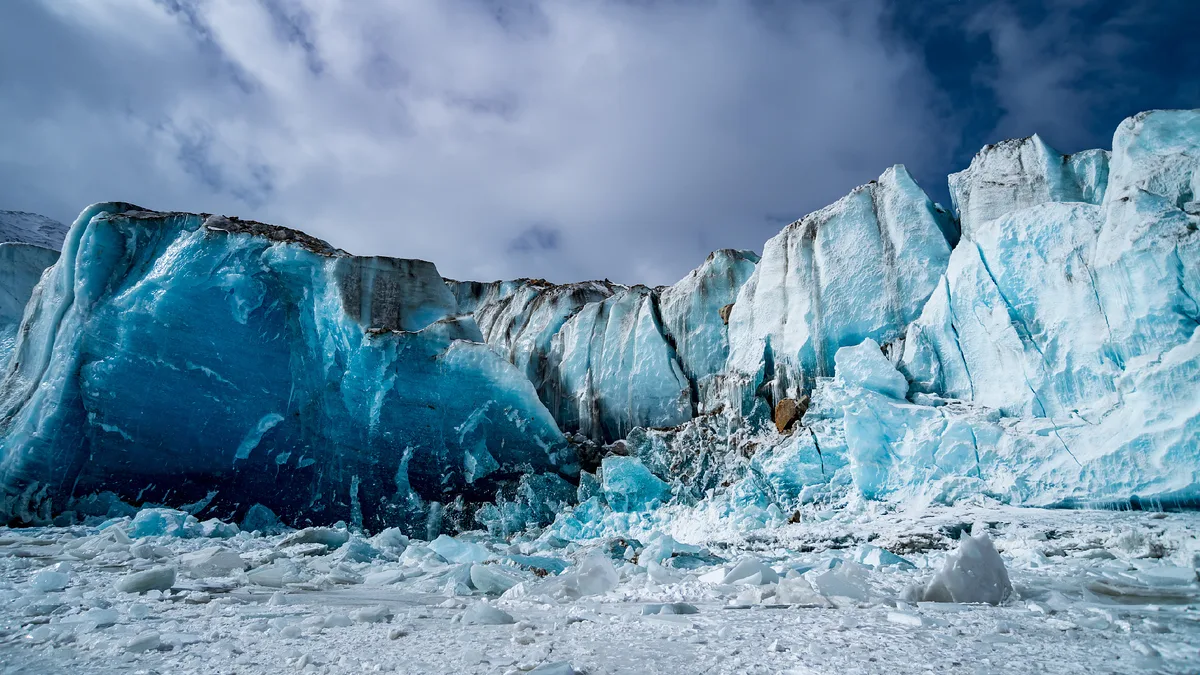
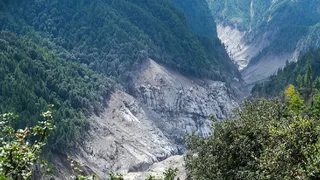
A geological disaster that recently struck along the China-Nepal border has once again drawn attention to glaciers.
Glaciers are often seen as "victims" of global warming.
But glacier retreat, permafrost degradation and the expansion of glacial lakes, combined with extreme weather and complex geological conditions, may also increase the risks of ice avalanches, glacial lake outbursts, landslides and debris flows.
As monitoring and early warning technologies for extreme weather and climate events continue to advance, can glaciers in remote, high-altitude areas be monitored and warnings issued before disasters occur? CGTN spoke with two experts about glacial disasters, climate change, monitoring and early warning: Zhang Dongqi, a research scientist at the Chinese Academy of Meteorological Sciences' Institute of Global Change and Polar Meteorology, and Ma Lijuan, a research scientist at the National Climate Center's Division of Climate Change Monitoring and Projection.
CGTN: We often think of glaciers as "victims" of climate change.
Are we now also seeing glaciers becoming sources of hazard? Are ice-rock avalanches and other glacier-related hazards becoming more frequent or more severe? Zhang Dongqi: Glacial disasters have always existed.
They occurred less frequently during periods of stable climate and consequently attracted less attention.
Against the backdrop of global warming, glacial disasters are becoming more frequent, causing greater losses and drawing increasing attention.
Analysis of the past several decades, or even the past 10 to 20 years, shows that ice-rock avalanches and other glacier-related disasters have indeed been increasing in frequency, and their severity is also increasing.
Both factors are at play.
Global warming has led to a higher incidence of cryospheric disasters in recent decades.
The expansion of human activity, advances in satellite remote sensing and other monitoring methods have also enabled us to detect more disasters in remote areas, including some that did not cause casualties in the past but left clear traces.
Ma Lijuan: Against the backdrop of a warming climate, glaciers in High Mountain Asia, with the Qinghai-Xizang Plateau as the core region, have been retreating and losing mass, while permafrost has been degrading and snow cover has been decreasing, with these trends intensifying since the 1990s.
This has led to glacier instability and increases in the number and area of glacial lakes.
此摘要由5News从媒体的公开信息源汇聚而成。 包含完整背景的全文在www.cgtn.com — 内容归CGTN Nature (oficial)所有。