Scientists uncover ancient gene's role in brain folding
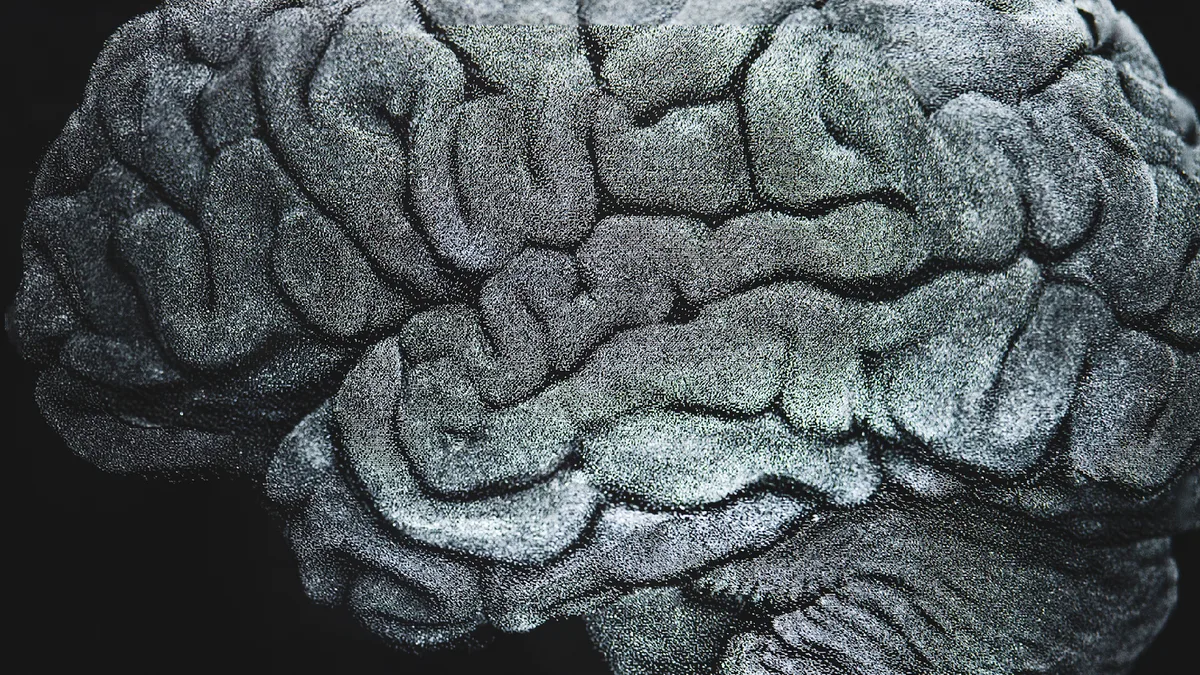
A group of Chinese scientists has uncovered the mystery behind how an ancient gene regulates the development of brain folds, shedding new light on the evolution of the human brain.
The findings were recently published in Nature Genetics.
The human brain is covered with intricate wrinkles and grooves, which constitute one of the important biological foundations for the emergence of advanced human cognitive functions.
The traditional view holds that the expansion of the primate cerebral cortex was primarily driven by newly evolved genes.
However, a research team led by Shi Lei, a researcher from the Kunming Institute of Zoology under the Chinese Academy of Sciences, proposed an alternative possibility: certain ancient and highly conserved genes could also play a key role in human brain evolution by reshaping their expression levels through changes in regulatory elements.
The team compared transcriptomic data from different layers of the embryonic cerebral cortex of mice, tree shrews, marmosets, macaques and humans.
They found that an ancient gene called "CCNB1IP1" was already expressed in the brain of the tree shrew, a close relative of primates, long before primates emerged but at relatively low expression levels.
The team further discovered that during the following course of evolution, the expression level of this ancient gene showed a clear stepwise increase among tree shrews, marmosets, macaques and humans, reaching its highest level in the human brain.
"The expression level of this ancient gene is closely correlated with the degree of cortical folding," said Shi, who noted that in marmosets, which have smooth brains, the expression level of this gene is similar to that in tree shrews.
In macaques, whose brains have folds, the expression level is markedly elevated.
In the human brain, this gene is expressed at the highest level.
Moreover, the team identified a key regulatory sequence, CRE1, that drives the elevated expression of CCNB1IP1.
To verify the gene's function, the team constructed a mouse model carrying the gene.
The experiment showed that mice, which normally have a smooth cerebral cortex, developed cortical folding structures after the gene knock-in.
此摘要由5News从媒体的公开信息源汇聚而成。 包含完整背景的全文在www.cgtn.com — 内容归CGTN Tech & Sci (oficial)所有。