While Madras went to bed early, Chennai stays up
Account subscription benefits alongside Premium Stories, Editorials, Opinions and more. Unlock these with Subscription
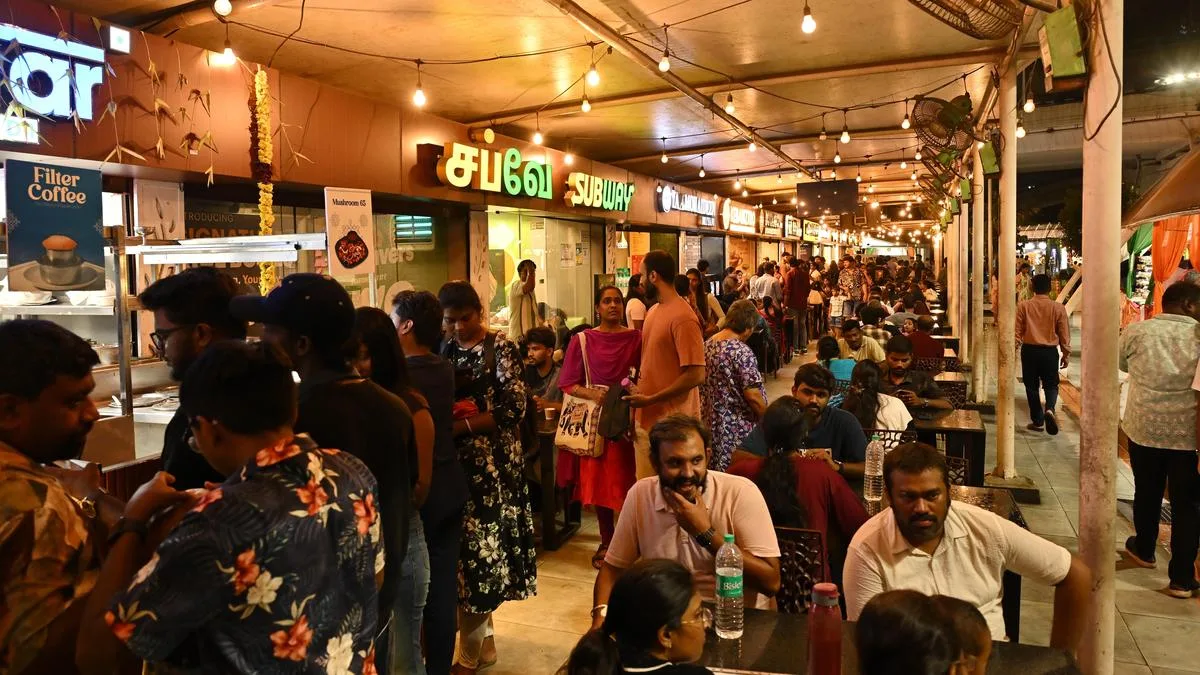
The Kathipara Urban Square in Guindy draws over 30,000 people during weekends. Residents attribute the active nightlife to better infrastructure and Metro connectivity. | Photo Credit: B. VELANKANNI RAJ
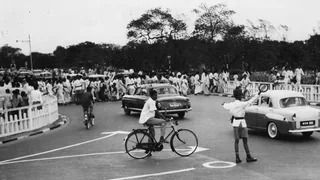
Decades ago, Madras was a city that believed about 9 p.m. was bedtime. After sunset, shutters came down, streets emptied, and roads fell into almost complete silence, with barely a vehicle in sight.
Chennai’s two prominent railway stations, Central and Egmore, were among the few places that remained active at night largely because of the steady flow of passengers.
The city began changing in the 1980s, when pubs slowly emerged, followed by the Information Technology (IT) and Business Process Outsourcing (BPO) boom and a growing night-shift workforce in the late 90s. Slowly, the night became an economy of its own, acquiring the character of sleepless cities across the world. Tea shops stayed open, eateries followed tech corridors, and businesses discovered a new customer as work hours changed — the night owl. The Madras that once went to bed early, forgot how to sleep after it became Chennai.
“In the 80s and 90s, nightlife saw more activity than the city was used to, with a few hotels having discos. A few of us who hung out together, resorted to disco hopping [a precursor to the pub hopping of today]. The Adyar Park Hotel had the vibrant Gatsby, a disco-cum-nightclub. Similar to this was Pasha at The Park. Suffice to say, the discos were always packed with youth of those days showing off their John Travolta moves,” said Nikhil Raghavan, a resident of Shenoy Nagar who writes about nightlife in the city.
“Much later, HFO (Hell Freezes Over) at Hotel Aruna on Sterling Road became a hot night spot. I visited this place so many times and remember running into Kamal Haasan who was shooting some film scenes,” he recalled. “After a late-night film or a disco, it was mandatory to head to Buhari s on Mount Road, which was open till beyond midnight. Tasty mutton samosas or bread butter jam with hot tea was the best way to stay awake at that time,” he added.
Hotels such as the Taj Connemara played an important role in the social fabric of upper-class Madras, offering some of the few spaces where people could meet and unwind beyond the routines of the day. “While it may not have had a “nightlife” culture in the way Chennai understands the term today, the bar was certainly a lively social spot for its time, with evenings extending into the night depending on the prevailing regulations and social norms,” said Shilpa Rameja, General Manager, Taj Connemara.
The late 1990s marked a turning point in Chennai’s night life, as IT firms spread across the city. The Old Mahabalipuram Road and places near Tidel Park saw new buildings crop up. Construction work continued through the night. Initially, the familiar chai wallahs on bicycles would pedal through the night, delivering tea and coffee to those working late. Soon, small eateries mushroomed around IT corridors, followed by hotels and 24/7 cafeterias within IT parks.
5News aggregated this summary from the outlet’s public feed. The full article, with all the context, is on www.thehindu.com — the content belongs to The Hindu - National.