Amid controversy, NCERT team head promises to bring out factual, unbiased textbooks
Account subscription benefits alongside Premium Stories, Editorials, Opinions and more. Unlock these with Subscription
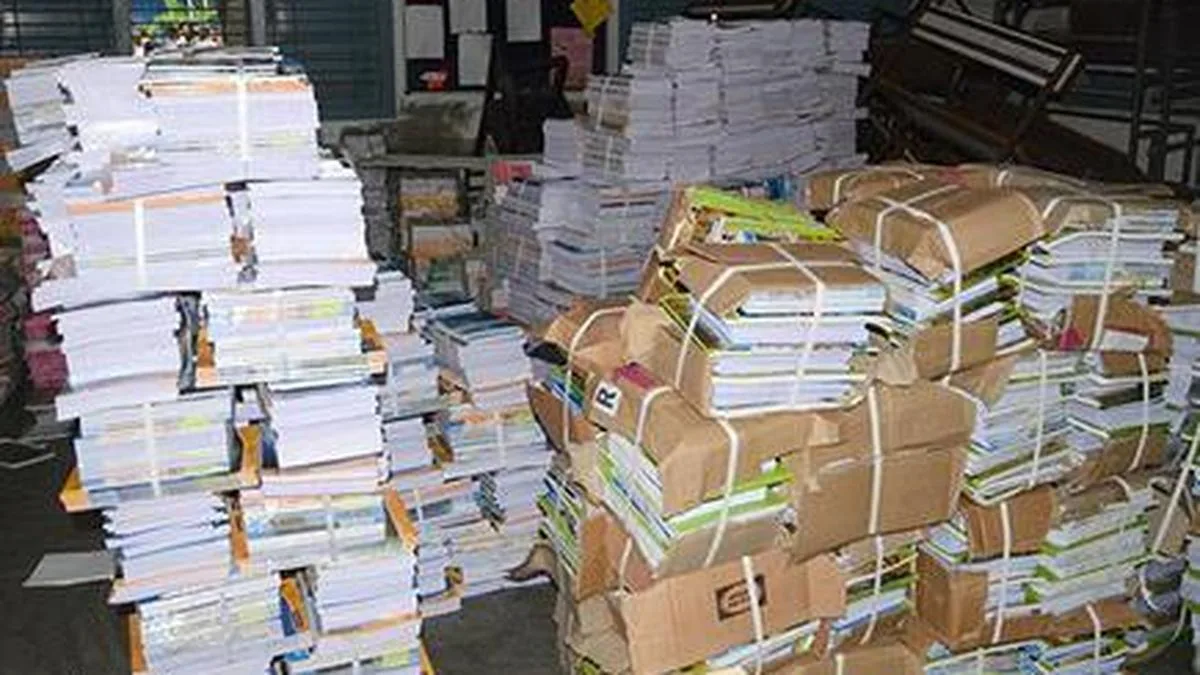
Image used for representative purpose only. | Photo Credit: M. Karunakaran
Following a political controversy over the reconstitution of the National Council of Educational Research and Training (NCERT) committee that brings out political science textbooks for Classes 11 and 12, members of the newly formed panel have said “personal political affiliations will be set aside” while working on the books.
The reconstituted 20-member committee, tasked with bringing out the Class 11 textbook this year and the Class 12 textbook by next year, faced criticism from Opposition parties and student bodies over reported links of some members to RSS-affiliated organisations.
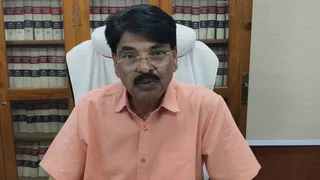
In an interview with The Hindu , Sandeep Shastri, Textbook Development Team (TDT) head and Vice President (Bengaluru campus) of Nitte University, said he would endeavour to bring out factual and unbiased textbooks. “We have been assigned to work on Class 11 and 12 political science textbooks. Fellow members of my team are essentially subject experts, and that is important to me. I want to work on a book that is factual and unbiased. That is the mandate that I have given to myself,” said Mr. Shastri.
“Over the last decade, I have worked with a wide range of people. We may choose to agree or not agree on certain topics. In case we do not agree, we work to arrive at an agreement,” Mr. Shastri added.
Before joining the Karnataka-based Nitte Education Trust, Mr. Shastri served as the Vice Chancellor of Bhopal-based Jagran Lake University. Before that, he was the Pro VC at JAIN University for 16 years.
Of the 20 members in the TDT, at least four members — Yadunath Deshpande, Prashant Divekar, Vandana Mishra and Ravi Rameshchandra — have links with the BJP, the RSS or the Akhil Bharatiya Vidyarthi Parishad (ABVP).
A TDT member emphasised that political affiliations of fellow members should be kept aside while developing the textbooks. The member, who spoke on the condition of anonymity, said, “Our political lineage, Left or Right, is immaterial when we meet as a group. We should not bring the ideology of any political party to the table. Everybody has their own life post academics, but when we meet for a particular purpose, we put those hats aside.”
“We should have a healthy debate. It is not that everything old will be erased, but a sense of contemporariness will be brought into the new textbooks,” the member added.
The NCERT notification mandates that the revised syllabus integrate cross-cutting themes like cultural rootedness and Indian Knowledge Systems into the new textbooks.
Mr. Shastri said, “We will explore the integration into the textbooks of ancient Indian political thought, which includes citing ancient democratic processes, republics, and foundational treatises such as Kautilya’s Arthashastra, Manu, Chanakya, and Shukraneetisara, which is believed to be one of the early Indian texts relating to law and ethics.”
“There is nothing new in looking at India’s contribution in various domains of knowledge.
5News aggregated this summary from the outlet’s public feed. The full article, with all the context, is on www.thehindu.com — the content belongs to The Hindu.