Going viral: Slogans that built solidarity during freedom struggle
Account subscription benefits alongside Premium Stories, Editorials, Opinions and more. Unlock these with Subscription
Slogans are dispatches, a voice of persuasion and resistance, and hence, carry as much historical and cultural value as our monuments. Though the trajectory of sloganeering has evolved with time, the essence of its purpose is still the same — bringing change.
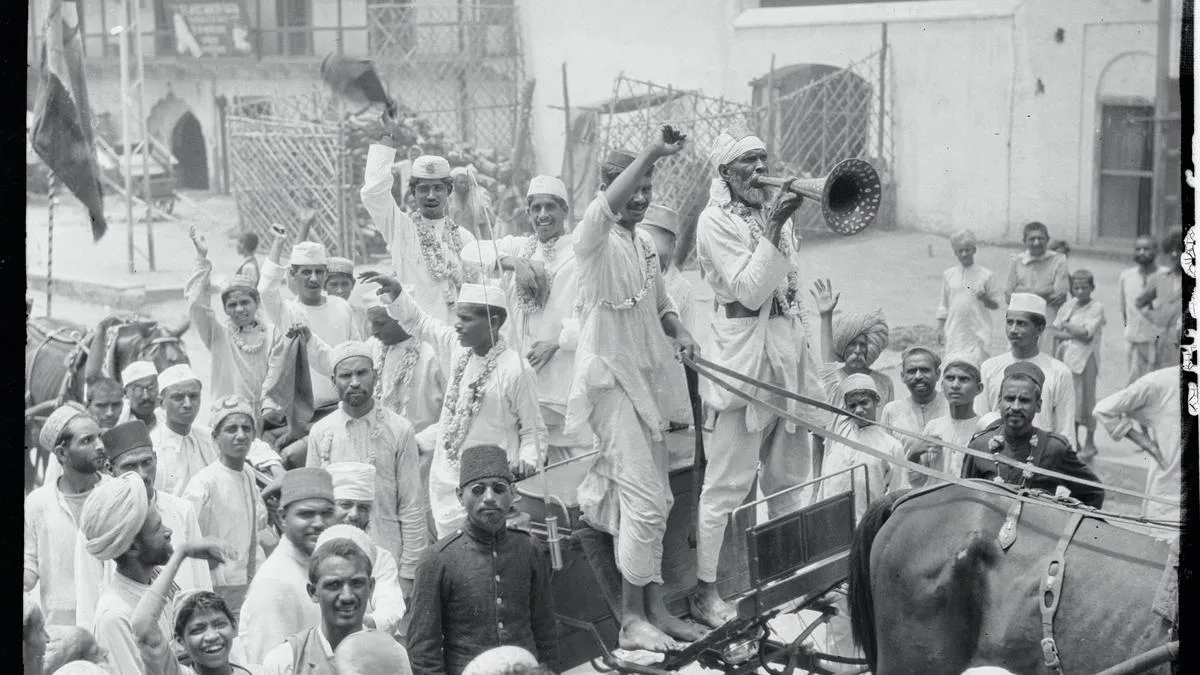
More than 150 years ago, sepoys in North India echoed three words with intense vigour. Maaro Firangi ko (Strike down the foreigners) kept ringing in the air, shaping the message of the 1857 revolt, the first major and revolutionary uprising against British authority. The revolt also came to be known as the First War of Independence. The slogan was a linguistic weapon, which spread from the sepoys towards the common people like artisans and peasants, awakening and uniting them (cutting across religions) for the first time, excavating bits and pieces of a national consciousness and the idea of a nation-wide resistance. For the British, this was a shocker.
The spirit of resistance, social frustration, and emotional call to action packed in those simple three words had a sense of straightforward urgency. At the most immediate of our understanding of slogans in any case, is this function. In this way, slogans become rhetorical devices. This is why slogans are able to catch the attention as well as support of a large number of people. Slogans thus help a revolt, like the 1857 one here, achieve virality.
After spending much time in jail in Mandalay, Myanmar for defending, in his newspaper Kesari , Indian revolutionaries and calling for Swaraj (self-rule), Bal Gangadhar Tilak from the Lal Bal Pal trio formed the Indian Home Rule League in 1916.
Tilak perfectly captured the emotion of discontent and protest and cried out an unforgettable, goosebump-inducing slogan — Swaraj is my birthright and I shall have it! The slogan was confidence personified and it inspired an anti-colonial solidarity where ‘we’ are in opposition with ‘them’.
Coming out of a preoccupation with constitutional reforms, “Swaraj” symbolised an Indian renaissance, spontaneously becoming a language of its own and developing sister ideals like swadeshi and non-cooperation. “Swaraj” travelled through gossip, tea conversations, news, songs, and performances instantly into the cultural and economic spheres of thought.
With working class strikes and labour unrest clearly on rise against colonial exploitation during the 1920s, the British government began committing brutal atrocities and heavily censoring the press. Mahatma Gandhi had also risen as a prominent leader, launching the non-cooperation movement after the Jallianwala Bagh tragedy. The resistance was unrelenting. Students participated, protesting in their colleges (walking out of colonial institutions), with placards and their own slogans.
Young Bhagat Singh, in 1929, popularised Urdu poet Mualana Hasrat Mohani’s “Inquilab Zindabad ” in India’s struggle for freedom. After throwing non-lethal, low-intensity smoke bombs in the Central Assembly, Bhagat Singh and B.K. Dutt stayed shouting “ Inquilab Zindabad ”.
5News aggregated this summary from the outlet’s public feed. The full article, with all the context, is on www.thehindu.com — the content belongs to The Hindu.