Staines triple murder case: Supreme Court gives ultimatum to Odisha on Dara Singh’s remission plea
Account subscription benefits alongside Premium Stories, Editorials, Opinions and more. Unlock these with Subscription
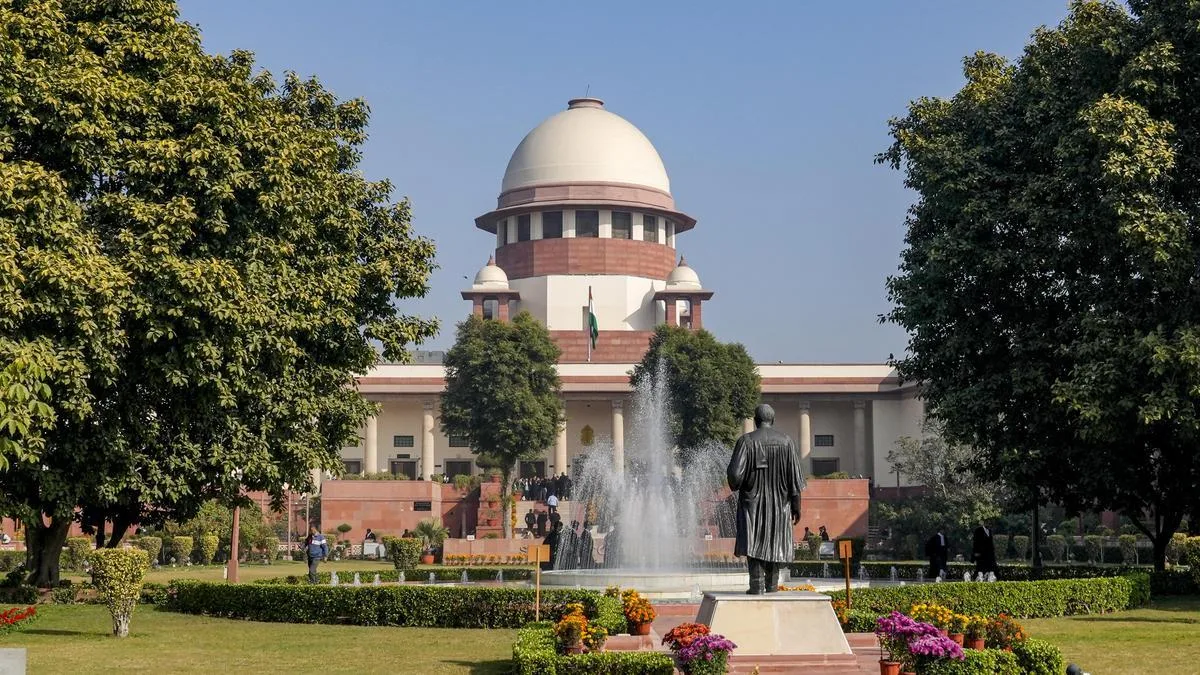
The Supreme Court Bench orally said it would give the State a final opportunity to take a call on the remission plea. File | Photo Credit: PTI
The Supreme Court on Wednesday (August 19, 2018) criticised the Odisha government for delaying a decision on the remission plea filed by Rabindra Kumar Pal alias Dara Singh, who is serving a life sentence in the triple murder of Australian missionary Graham Staines and his two young sons in January 1999.
Staines and his sons, aged six and 10, were sleeping in their vehicle parked outside a church when a mob reached the spot and set fire to the car. The mob prevented the father and sons from getting out of the burning vehicle.
A Bench headed by Justice Manoj Misra cautioned the State government that procrastination would only lead to the Supreme Court taking over and deciding the life convict’s remission petition.
“If you do not decide, we will… We are not concerned how you are communicating. Just take a decision. We will not tolerate this avoiding taking a decision,” Justice Misra addressed the State counsel.
Singh has sought remission on the ground that the Odisha Remission Rules allow it after serving 25 years of the sentence. He said he had already served 26 years. Singh had filed his remission petition in 2024. The State was yet to decide.
The Supreme Court Bench orally said it would give the State a final opportunity to take a call on the remission plea.
“The matter was adjourned for the Sentence Review Board to take a decision. Today, the counsel for the State has placed before us a letter of the prison authorities wherein they say certain documents crucial to taking the decision are yet to be received. We are yet to be informed about the decision of the Sentence Review Committee,” the court noted.
Singh was arrested in January 2000 after a year-long manhunt. He has been in custody ever since. He was sentenced to death by the trial court in 2003. In 2005, the Orissa High Court commuted the death penalty to life imprisonment, which was confirmed by the Supreme Court in 2011.
His plea for remission said he had committed the crime in a “fit of youthful rage” and was repentant now.
Comments have to be in English, and in full sentences. They cannot be abusive or personal. Please abide by our community guidelines for posting your comments.
We have migrated to a new commenting platform. If you are already a registered user of The Hindu and logged in, you may continue to engage with our articles. If you do not have an account please register and login to post comments. Users can access their older comments by logging into their accounts on Vuukle.
5News aggregated this summary from the outlet’s public feed. The full article, with all the context, is on www.thehindu.com — the content belongs to The Hindu - National.