Risks weakening worker safeguards: Cong on SC's industry definition ruling
Congress on Saturday expressed concern over a Supreme Court ruling that said its 1978 worker-friendly interpretation of the term "industry". (Photo: ANI)
The Congress on Saturday expressed concern over a Supreme Court ruling that said its 1978 worker-friendly interpretation of the term "industry" will not apply to fresh cases under the Industrial Relations Code of 2020, and said any move to narrow or distance the law from the broad definition of "industry" risks weakening worker safeguards.
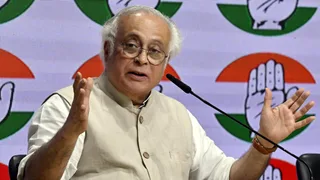
Congress general secretary in charge of communications, Jairam Ramesh, claimed that the Modi government's Industrial Relations Code, 2020, "significantly weakens essential safeguards for our workers".
Against this backdrop, a narrow majority of the Supreme Court, in State of Uttar Pradesh versus Jai Bir Singh delivered on August 20, 2026, has "hypothesised" a reformulation of the Triple Test laid down in its earlier landmark February 1978 verdict in the Bangalore Water Supply and Sewerage Board versus A Rajappa case, Ramesh said on X.
The importance of how "industry" is interpreted lies in the legal reality of who qualifies as a workman and, consequently, who receives the protections of labour law, he said.
"In the 1978 Bangalore Water Supply case, the Supreme Court identified three elements that ordinarily characterise an industry: a systematic activity; cooperation between employer and employee; and production or distribution of goods or services calculated to satisfy human wants and wishes, excluding purely spiritual or religious services," he said.
It also held that the absence of profit motive is irrelevant, and activities carried out by charitable institutions or public bodies may still fall within the definition, Ramesh pointed out.
The only exemption was core sovereign activities such as the judiciary, law and order and defence, he said.
"For nearly five decades, this Triple Test provided a broad and settled framework for determining what constitutes an 'industry' under the erstwhile Industrial Disputes Act, 1947, as amended from time to time, bringing a wide range of workers within the protection of labour law," he said.
The 2026 majority judgment narrows this approach in two important ways by requiring an activity to have a "discernible commercial character" resembling trade or business an additional requirement not found in the earlier test; and by broadening the scope of the sovereign-function exemption, potentially placing a wider range of government activities outside the definition of "industry", Ramesh said.
The Supreme Court has clarified that this reformulation will not disturb concluded or pending proceedings under the erstwhile Industrial Disputes Act, as amended from time to time, and will not govern interpretation of the new Industrial Relations Code, he said.
But leaving this "hypothesis" on the record creates an interpretive vacuum that could open a Pandora's Box of litigation and uncertainty, particularly before labour courts and industrial tribunals, Ramesh said.
This leaves space for a narrower definition to take hold in practice, especially when the Industrial Relations Code already empowers the Central government to
5News aggregated this summary from the outlet’s public feed. The full article, with all the context, is on www.business-standard.com — the content belongs to Business Standard.