1,400-year-old skeleton found in underground channel in Peru may have belonged to human sacrifice victim
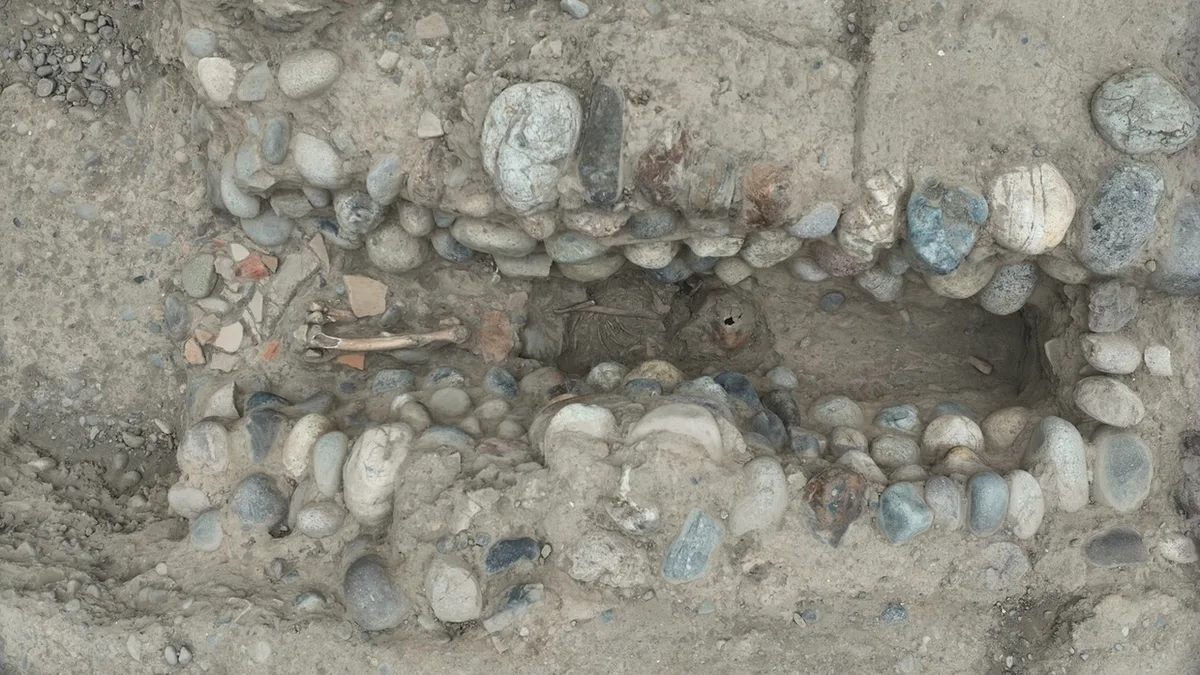
Archaeologists have discovered a possible human sacrifice near the pyramid of Huaca Pucllana in the center of Lima, Peru.
The skeleton may represent an offering connected to a ceremonial well that was closed up nearly 1,400 years ago.
Bones of an adult male were excavated from an underground water channel at the archaeological site earlier this year, according to an Aug.
18 translated statement from Peru's Ministry of Culture.
The man was found resting on his left side, with his skull facing the ocean and the Huaca Pucllana pyramid, hinting he was intentionally placed that way.
The settlement at Huaca Pucllana was established around A.D.
400 in what is now Lima, Peru, and was occupied by different pre-Hispanic cultures until around 1440.
The site is well known for its large platform pyramid, which was built by the Lima culture as the focal point of a ceremonial center.
The Lima people performed three main rituals at Huaca Pucllana, according to a 2023 study : the ritual destruction of massive pots, ritual banquets and human sacrifice.
The ritual sacrifices at Huaca Pucllana over four centuries varied in the number of people killed.
For example, in 2007 and 2009, archaeologists discovered burials of an adult male and an adult female in the foundations of the pyramid.
They believe these individuals were sacrificed to satisfy rituals associated with construction and architectural modifications of the pyramid.
RELATED STORIES 1,500-year-old tomb in Peru holds human sacrifices, including strangled son next to father's remains, genetic analysis reveals 'An offering to energize the fields': 76 child sacrifice victims, all with their chests cut open, unearthed at burial site in Peru Ancient Maya 'blood cave' discovered in Guatemala baffles archaeologists The newly discovered burial, which has been dated to around A.D.
650, was found in a water channel near the pyramid that leads to a ceremonial well.
5News aggregated this summary from the outlet’s public feed. The full article, with all the context, is on www.livescience.com — the content belongs to Live Science.