Secret 'messages' in cat pee let felines identify each other — and scientists just cracked the code
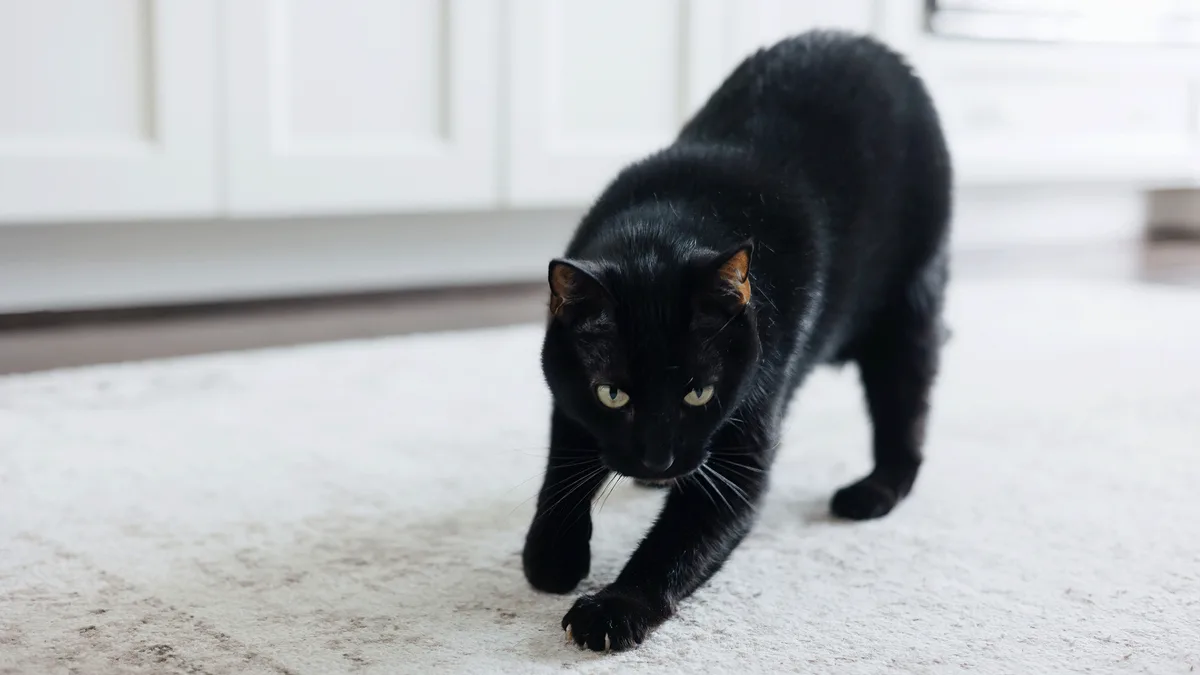
Cats can identify each other based on the scent of their pee, and researchers have just decoded the secret "messages" that make that possible.
A group of chemicals called branched-chain fatty acids (BFAs) help give cats their unique scent marks, a new study found.
Unusual fat droplets in the cats' kidneys likely help them maintain that chemical fingerprint in each mark.
The researchers reported their findings Aug.ust 19 in the journal Current Biology .
While most animals use a combination of visual, audible and scent-related cues to recognize each other, some also rely on specific chemical signatures.
A number of insects, for example, use certain hydrocarbons to determine whether other insects are part of the same colony, and mice excrete urinary proteins that provide identifying information about the individual that left them.
But not much is known about how other mammals leave unique scent marks that remain stable over time.
"The way I think of the mouse proteins is kind of equivalent to a human face," said Michael Sheehan , a neurobiologist at Cornell University who was not involved in the study.
While a person might recognize someone they know well from less obvious signals such as their hairstyle or the way they walk, people typically recognize others by their faces.
"My hunch is probably these branched-chain fatty acids from the cat urine [are] the same deal," Sheehan told Live Science.
In the new study, the researchers investigated domestic cats' flehmen response — an odd, open-mouthed expression many cat owners will recognize.
The flehmen response is an innate behavior that draws certain chemicals into a cat's vomeronasal organ when it is investigating interesting odors.
The vomeronasal organ helps cats detect pheromones and certain other chemicals in their environment.
The researchers found that cats showed the flehmen response less often, on average, the more they encountered the same urine sample from another cat, but the response increased when urine from a new cat was introduced.
5News aggregated this summary from the outlet’s public feed. The full article, with all the context, is on www.livescience.com — the content belongs to Live Science.