Trump’s ballroom survives — for now
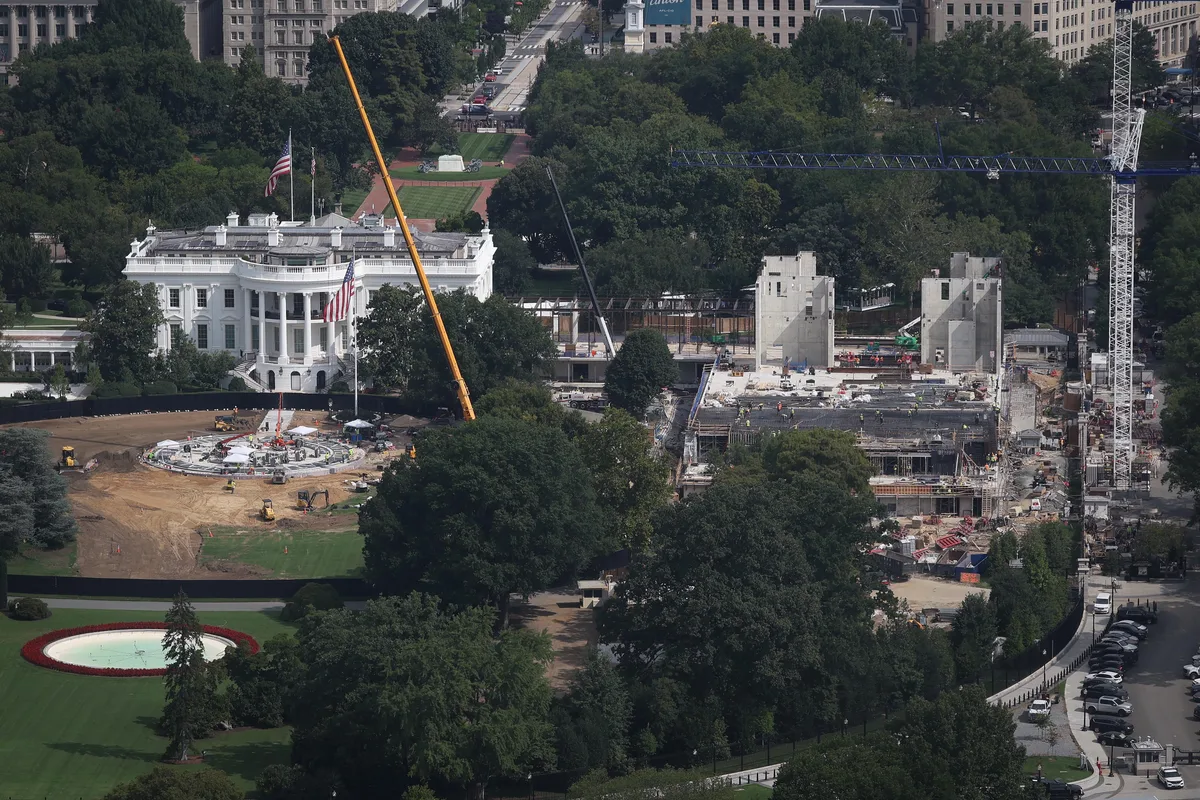
Construction of Trump’s East Wing ballroom continues at the White House on August 18, 2026. | Win McNamee/Getty Images This story appeared in The Logoff , a daily newsletter that helps you stay informed about the Trump administration without letting political news take over your life.
Subscribe here .
Welcome to The Logoff: President Donald Trump’s ballroom is still happening.
What’s the latest? On Friday, Supreme Court Chief Justice John Roberts stayed a lower court injunction threatening to halt construction on Trump’s East Wing ballroom, hours before it would have taken effect.
The order came from Roberts alone, and it isn’t final.
But the new stay will remain in place “pending further order” (likely, the Court’s full decision), allowing construction to continue for now.
It’s the latest in a series of escapes for the project, despite adverse rulings in lower courts.
What have other judges said? Earlier this month, the DC Circuit Court of Appeals upheld a previous district court ruling that Trump had exceeded his authority in unilaterally pursuing the ballroom project and would need to seek congressional approval to continue. (Trump, meanwhile, has attempted to justify the project on national security grounds, describing it as a “Military Complex” and its opponents as “ TREASONISTS .”) Both the appeals court decision and the previous district court decision had been paused, however, to allow the appeals process to play out.
That pause would have expired on Friday, but for Roberts’s order.
How far along is the project? Trump has been working fast.
According to Trump’s solicitor general , the ballroom was already 65 percent complete last week, standing around 70 feet tall and five stories below ground.
Crews have been working on the project nearly around the clock — 20 hours per day, seven days a week.
What else should I know? When the full Supreme Court does weigh in, it could have implications far beyond just the ballroom.
As my colleague Ian Millhiser explained earlier this week, the ability of the plaintiffs challenging the ballroom to bring their case in the first place hinges on the “aesthetic injury” theory of standing, which also underpins a great deal of US environmental law.
5News aggregated this summary from the outlet’s public feed. The full article, with all the context, is on www.vox.com — the content belongs to Vox.