The United Nations looks broken. Is it?
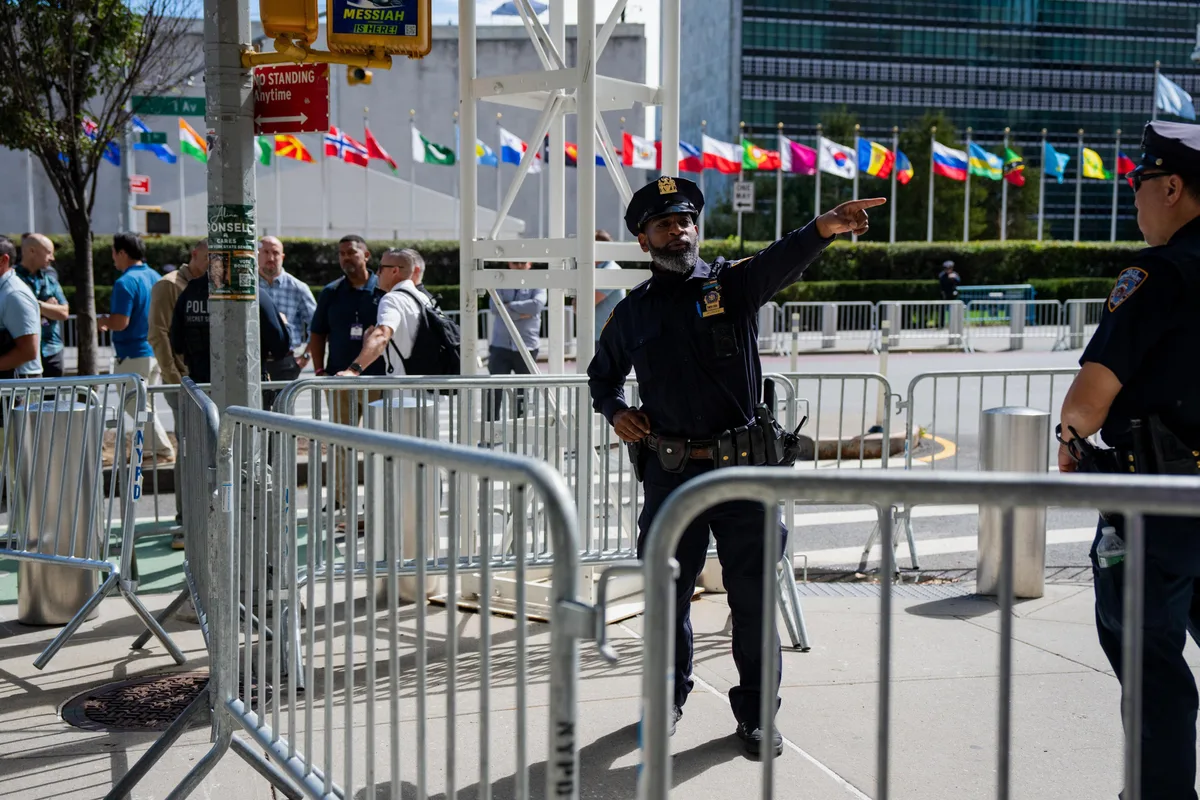
Law enforcement officers outside the United Nations headquarters ahead of the UN General Assembly on September 21, 2026. | Angelina Katsanis/Bloomberg via Getty Images This story appeared in Today, Explained, a daily newsletter that helps you understand the most compelling news and stories of the day.
Subscribe here .
It’s time for yet another United Nations General Assembly meeting in Manhattan — just one year after President Donald Trump appeared at it and asked, bluntly : “What is the purpose of the United Nations?” Every year around this time, roughly 130 leaders from around the world convene at the UN to deliver speeches, hold diplomatic meetings, and debate issues like AI, climate change, and the wars in Ukraine, Gaza, and Iran.
Trump is scheduled to speak this week, as are Ukrainian President Volodymyr Zelenskyy, Iranian President Masoud Pezeshkian, and Israeli Prime Minister Benjamin Netanyahu (…despite New York’s chilly reception ).
Even more important than those big public speeches, however, are the one-on-one talks between foreign leaders.
Trump has a packed meeting schedule on Monday and Tuesday, featuring the likes of Zelenskyy, New York City Mayor Zohran Mamdani, and new British Prime Minister Andy Burnham.
In Trump’s famously bizarre speech last year, he attacked several US allies, called climate change a “con,” and suggested the UN itself was irrelevant .
Increasingly — as we’ll get into below — that’s an accusation echoed by many UN critics.
Go a little deeper View Link This week’s meeting comes at a moment of crisis — or at the very least, inflection — for the United Nations.
The UN faces a severe budgetary shortfall this year, caused largely by Trump’s refusal to pay America’s full dues.
At the same time, the UN has battled searing criticism of its inability to end conflicts in places like Ukraine, Iran, and Gaza.
Under the organization’s founding charter, any of the five permanent members of its Security Council — the body responsible for maintaining international security — can block important resolutions unilaterally.
In 2022, Russia controversially used that power to torpedo a resolution condemning its attempted annexation of parts of Ukraine.
Three years later, the US similarly vetoed a demand for a permanent ceasefire in Gaza and an increase in unrestricted humanitarian aid.
5News aggregated this summary from the outlet’s public feed. The full article, with all the context, is on www.vox.com — the content belongs to Vox.