Polish startup Ares Shield hired to protect data center satellites with high-power microwave weapons
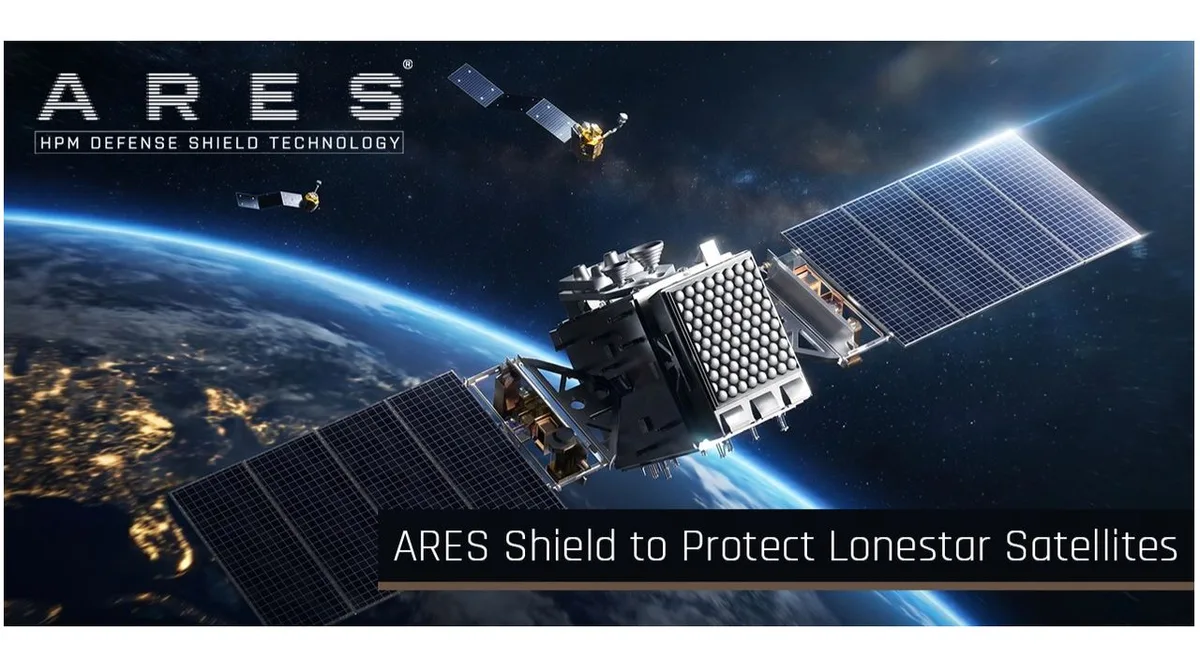
The final frontier is getting more and more contested, so satellite companies are investing in some self-defense.
At least one of them is, anyway.
Florida-based Lonestar Data Holdings announced today (Aug.
25) that it has contracted Polish startup Ares Shield to provide protection for its off-Earth data centers , in a deal worth up to $6 million.
"Our clients entrust us with mission-critical data, which is why we treat the security of our orbital infrastructure as the foundation of our entire service," Lonestar CEO Stephen Eisele said in a statement today.
"Ares Shield technology offers a unique solution that allows us to further protect our satellites without the risk of generating space debris.
For a company whose product is data security, it is a compelling option." Lonestar has already tested its data-storage tech on four space missions, including two that went to the moon .
For example, one of the company's devices hit the gray dirt aboard Intuitive Machines ' Athena lander in March 2025.
Athena toppled over shortly after touchdown, but Lonestar's mini data center achieved its desired milestones regardless , according to the company.
Such work has helped inform the development of Lonestar's first commercial space-based offering — a platform called StarVault, which will store customer data at a healthy remove from natural disasters and other issues that could crop up here on terra firma.
"StarVault combines Lonestar's advanced cryptographic key escrow capabilities with space-based data storage infrastructure, creating a new class of digital resilience — extending secure data beyond Earth," the company said in a statement in April.
The first StarVault payload is currently scheduled to fly aboard Sidus Space's LizzieSat-4, which is manifested on SpaceX 's Transporter 18 rideshare mission.
That flight is expected to launch from California's Vandenberg Space Force Base in late October.
Other StarVault missions will follow, as Lonestar builds a data-storage network in low Earth orbit and, perhaps, more far-flung locales. 🛰️Russian satellites multi-object proximity event in LEORadar tracking data via @LeoLabs_Space, processed through COMSPOC SSA Suite.This week we observed a complex proximity event involving Russian satellites: COSMOS 2581, 2582, 2583, and Object F (a subsatellite released by… pic.twitter.com/3nDkcOmTuD May 1, 2026 Multiple satellites in that network will be protected by Ares Shield technology, if all goes according to plan.
5News aggregated this summary from the outlet’s public feed. The full article, with all the context, is on www.space.com — the content belongs to Space.com.