NASA satellites ace world's 1st 'lost-in-space' GPS-free navigation experiment
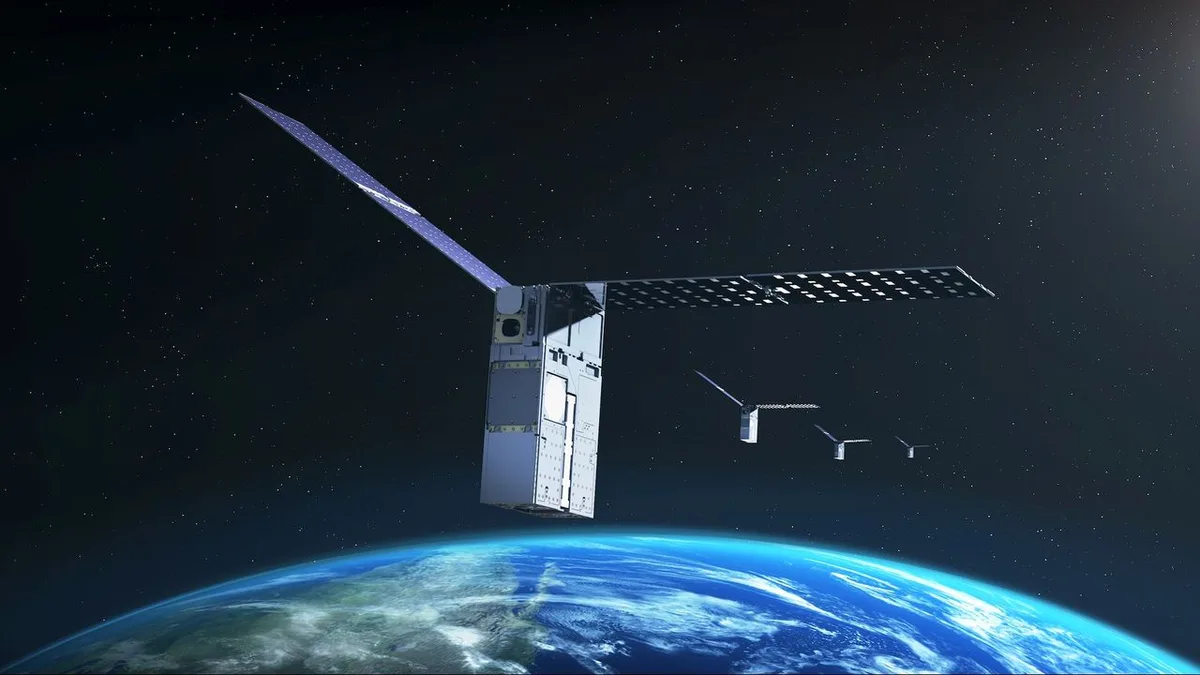
No GPS available in space? A satellite experiment may have a solution for that.
NASA's Starling mission — made up of a swarm of four cubesats in low Earth orbit (LEO) — is testing out navigation by using other satellites as moving landmarks.
The hope is that this tech will allow future missions to navigate if GPS is not available.
The three-year-old tech demo will be extended beyond its previous expiration date this year until at least 2028, NASA announced on Monday (Aug.
17).
The aim is to get the most out of the onboard experiment, a collaboration with industry partner EraDrive called FALCON (short for "Fast Autonomous Lost-in-space Catalog-based Optical Navigation").
"As NASA prepares for more missions beyond Earth's orbit, technologies like FALCON can support lunar satellite swarms, distributed science missions and human exploration," NASA officials said in Monday's statement.
While NASA's applications are civilian, alternative GPS solutions are also being investigated by the U.S.
Department of Defense (DoD) out of concern that the limited number of GPS satellites could be vulnerable to adversaries.
Earlier this year, for example, Space Force entities SpaceWERX and Space Systems Command jointly launched an initiative aiming for new ideas for "positioning, navigation and timing" (PNT) capabilities in space.
The aim of FALCON, however, is to deal with sheer distance.
While satellites in Earth orbit have ample access to purpose-built navigational markers such as GPS, that access rapidly thins out as missions go farther afield.
And this isn't just an abstract concern; NASA aims to send astronauts to the surface of the moon again as soon as 2028 on the Artemis IV mission, as part of a larger effort to build a moon base .
Industry and the military are also very interested in the moon and the area around it, known as cislunar space — and how best to navigate in the new environment.
5News aggregated this summary from the outlet’s public feed. The full article, with all the context, is on www.space.com — the content belongs to Space.com.