Archaeologists discover Etruscan well that was ritually opened with offerings for a goddess — and 'closed' with human bodies
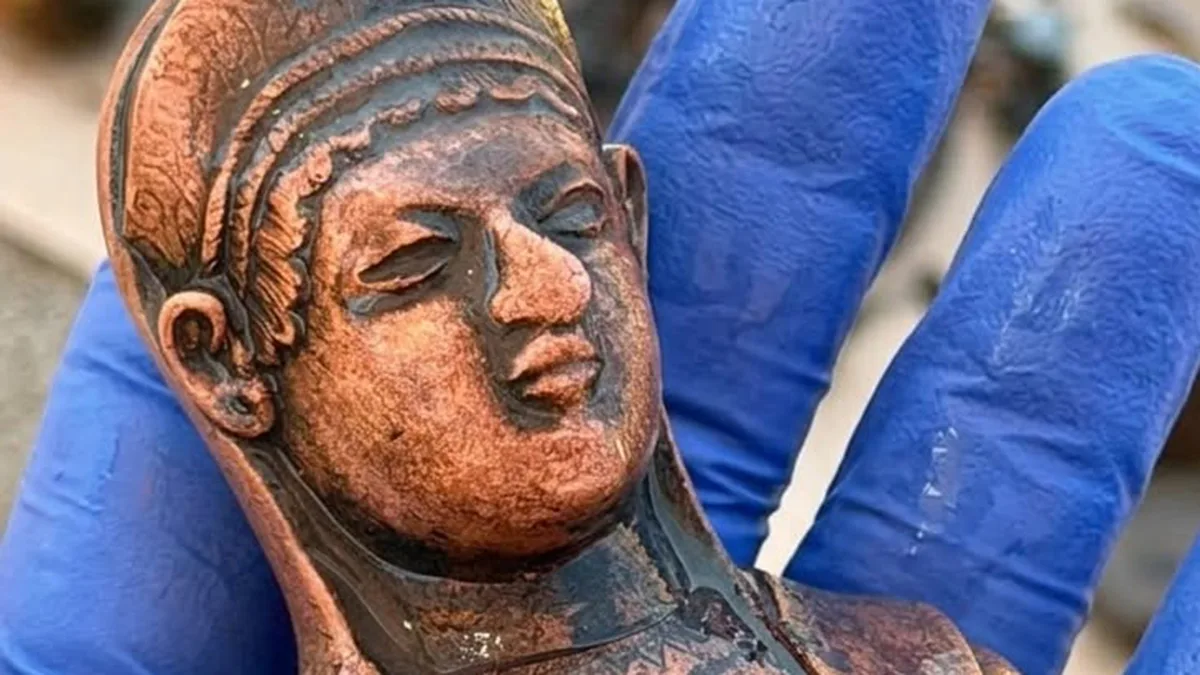
Archaeologists in Italy have discovered stunning bronze statuettes and a unique plate at the bottom of a ritual well associated with an ancient Etruscan goddess.
It's possible that the artifacts were placed in the well in a ceremony to celebrate the "birth" of an ancient city.
The additional discovery of ancient human remains in the well suggests that these individuals' burials may have been part of a "ritual closing," of the well, Elisabetta Govi , an archaeologist at the University of Bologna who led the excavation, told Live Science.
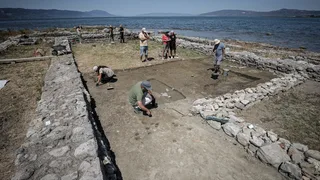
The team discovered the well in the outskirts of modern-day Bologna.
During the early fifth century B.C., the Etruscans established a town called Kainua in this area, and the well was found near the religious sanctuary of the mother-goddess Uni, the Etruscan version of ancient Rome 's Juno.
Found in the depths of the well were a unique bronze plate and the fragmented remains of two bronze female statuettes, which help date the well to the end of the sixth or the beginning of the fifth century B.C.
The artifacts still possess their original bronze luster because they were preserved in a low-oxygen environment underwater, Govi said.
The bronze statuettes and plate were likely a part of an opening ritual for the ancient well. (Image credit: University of Bologna) The goddess Uni was associated with women, marriage, birth and growth.
Archaeological evidence from the nearby sanctuary indicates that this female cult was important for the entire city, Govi said.
"Everything comes together to tell this story of rituals centered on the female component.
Why? Because for this city, which sits in the Apennine mountain range, agricultural fertility was fundamental," Govi explained.
The Etruscans also had a strong cult related to water, and the construction of every well was accompanied by a ritual.
But given this particular well's proximity to the sanctuary of Uni, it was likely also part of a sacred or at least public area, Govi said.
This idea is further bolstered by the objects placed in the well.
5News aggregated this summary from the outlet’s public feed. The full article, with all the context, is on www.livescience.com — the content belongs to Live Science.