'They don't deserve this beauty and this breathtaking fragility': Former Antarctic tour guides told researchers why they quit the troubling industry
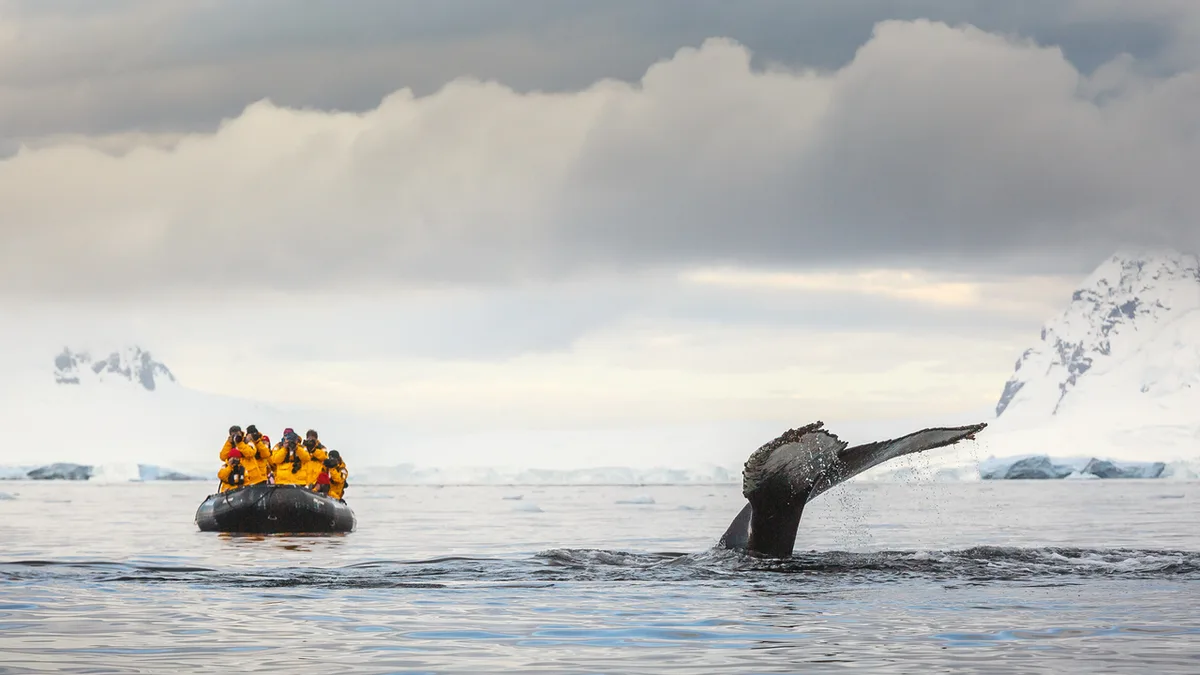
Despite being one of the remotest places on Earth, more than 100,000 people journey to Antarctica every year.
And within the next few years, the number of tourists flocking to the continent each summer could reach 450,000 .
That's far fewer people than visit the Great Barrier Reef or Grand Canyon National Park, but Antarctic tourism comes with a colossal carbon footprint — and the frozen continent is a particularly vulnerable place.
A study published online July 8 in the journal Annals of Tourism Research reveals the impacts of Antarctic tourism from the perspectives of 25 former guides who, year after year, took visitors on cruise ships to some of the most remote locations on Earth.
What these guides witnessed eventually made them quit, the study and an accompanying article in The Conversation show.
To find out exactly what drove the tour guides to leave their roles and whether such individual choices make a difference to Antarctica's overall condition, Live Science spoke with two of the study's authors: social anthropologist Zdenka Sokolickova and polar tourism researcher Liz Cooper , who both work at the University of Groningen in the Netherlands.
Sokolickova and Cooper divided the interviews between them, speaking with 14 male guides and 11 female guides about their experiences.
Together, those conversations shone a light on the reality of Antarctic cruises and the huge emotional toll of quitting a dream job.
Sascha Pare: How did you get the idea to interview former Antarctic tour guides? Zdenka Sokolickova: We both started to work as postdocs on this project.
We started with interviewing current Antarctic tour guides, because we wanted to know more about the industry, and about how they felt about the tourism development.
The industry is booming; it's growing rapidly.
And with more vessels, more tour operators and more people wanting to go and visit on a guided tour, there is also a bigger need for guides.
So more people are accepted into the industry, and that comes with consequences; for example, the industry might need to lower the standards for qualifications, or there are safety risks coming with people who have less experience.
But we also heard that, at the same time, some tour guides are leaving the industry.
5News aggregated this summary from the outlet’s public feed. The full article, with all the context, is on www.livescience.com — the content belongs to Live Science.