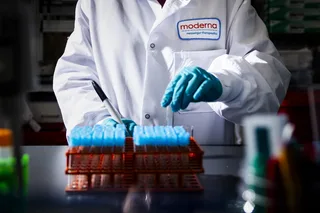
Promising Results for mRNA Cancer Vaccine from Moderna and Merck
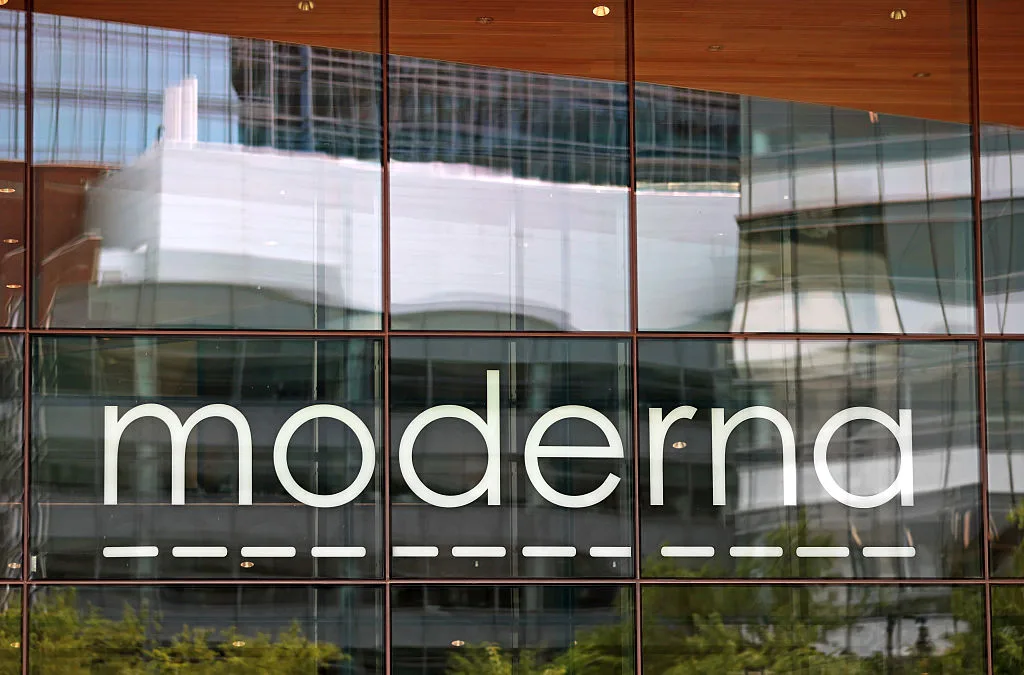
Moderna headquarters in Cambridge, Mass. —Boston Globe / Contributor—Getty Images Cancer treatments have been veering toward more personalized approaches that recruit the immune system, and the latest results involving an mRNA -based therapy from Moderna and an immunotherapy from Merck show that combining them may result in significant benefit for certain cancer patients.
In a release , the two companies report that people with melanoma who received Moderna’s therapy, intismeran, and Merck’s pembrolizumab (Keytruda), lived longer without any recurrence of their cancer, as well as had fewer incidences of their cancer spreading, compared to those receiving Keytruda alone, which is the current standard treatment.
Combining the two therapies seems to lead to better outcomes in this later-stage trial.
Moderna’s intismeran is not yet approved, while Merck’s Keytruda was first approved to treat melanoma in 2014, and in 2019 to treat melanoma in people after tumors were removed.
The current study included people in this latter group with stage 2 to stage 4 melanoma who were treated with either intismeran and Keytruda or Keytruda alone after surgeons removed the bulk of their tumors.
“What we’re trying to do here is to tell the immune system that it missed the signature of the tumor cell if you have cancer,” Moderna CEO Stephane Bancel tells TIME of intismeran.
“This product basically allows us to teach the immune system about the mutation in your cancer that allows the cancer to grow.” The study involved 1,137 people with stage 2 to stage 4 melanoma who received surgery then were randomly assigned to receive either the combination of therapies or Keytruda for just over a year.
Intismeran is the first of its kind autogene therapy that relies on studying a patient’s cancer mutations, making mRNA sequences of those mutations and giving them back to the patient in so their immune systems can recognize the tumor signals in the same way it would a virus—in what's known as a therapeutic vaccine.
One of the advantages of the mRNA platform is its ability to generate such genetic sequences relatively quickly, in a matter of weeks, which is essential for scaling up more personalized cancer treatment approaches.
Keytruda works by unveiling the cancer cells, which can often hide from the immune system since they start out as normal cells before picking up mutations that make them grow out of control.
The companies did not provide specific details about the recurrence or survival rates, but earlier this year reported at ASCO, a major cancer conference, from an earlier stage study that showed that the combination lowered the risk of recurring melanoma by 49% and lowered the risk of distant spread of the cancer or death by 59%.
5News aggregated this summary from the outlet’s public feed. The full article, with all the context, is on time.com — the content belongs to TIME.