What to Know About the Pentagon’s Crackdown on Universities’ Foreign Research Ties
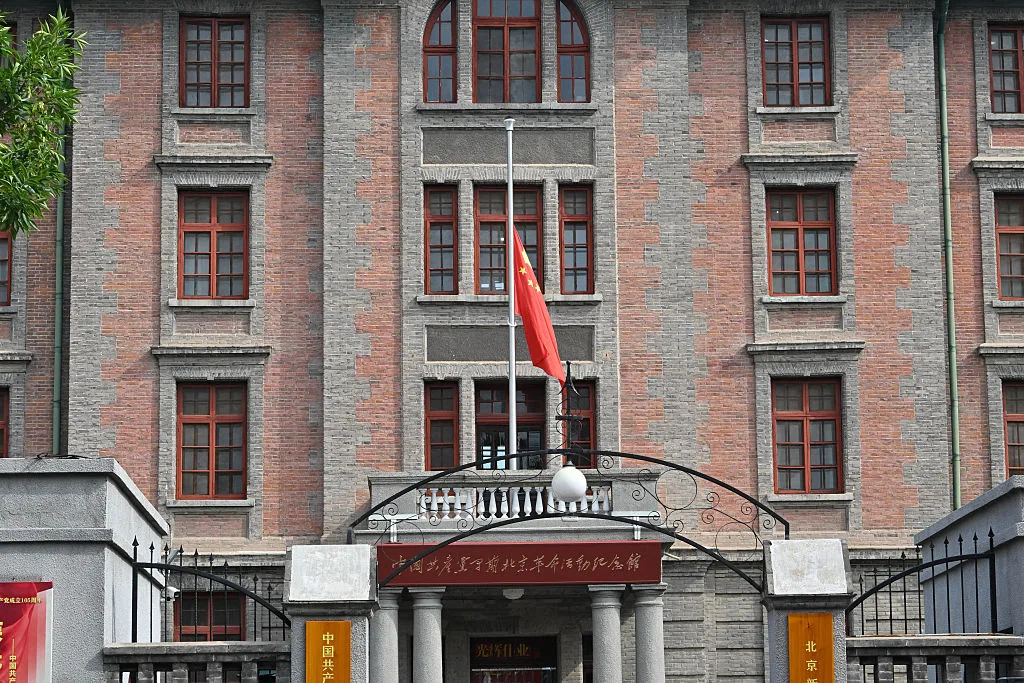
The Chinese national flag is pictured at half mast to mourn the death of China's former premier Zhu Rongji at the Red Building of Peking University, the site of early Chinese Communist Party revolutionary activities, in Beijing on Aug.
18, 2026. —Adek Berry—AFP/Getty Images The Trump Administration ordered 30 universities to audit their foreign research partnerships or risk losing funding.
The order , issued Monday by the Defense Department, instructs universities to review their ties to 130 foreign institutions, mainly Chinese, that “engage in activities that increase the likelihood of U.S. government-funded research and development efforts being misappropriated.” Schools that fail to terminate any “problematic” partnerships within two weeks may lose their eligibility for future federal research funding.
The order is intended to protect taxpayer-funded research from “unauthorized technology transfer, intellectual property theft and adversarial exploitation,” the Pentagon said in the announcement.
“The Department of War has zero tolerance for academic partnerships that compromise our national security,” Emil Michael, undersecretary of war for research and engineering, said.
The announcement did not identify which schools had received the order or how they were selected, but a U.S. official told the Associated Press on Tuesday that they include Harvard University, the Massachusetts Institute of Technology, and Johns Hopkins University.
The order is the latest effort to clamp down on alleged Chinese influence in the U.S., including in higher education.
The Trump Administration and several lawmakers from both parties have argued that China exploits U.S.-funded research to obtain sensitive technology and intellectual property.
U.S. concerns about Chinese intellectual property theft and espionage have grown in recent years.
Last year, a federal jury convicted former Corning scientist Ji Wang of stealing files containing trade secrets from a Pentagon-funded project.
Prosecutors said he planned to use the technology in a Chinese business backed by government entities.
In May, Eileen Wang, the mayor of Arcadia, Calif., resigned after admitting to acting as an unregistered Chinese government agent before taking office.
But some observers have warned that the crackdown unfairly politicizes academic collaboration, stigmatizes Chinese academics, and could weaken American scientific competitiveness.
The Chinese embassy in Washington said in a statement to news outlets that it opposed “the overstretching of the concept of national security and the politicisation or instrumentalisation of normal scientific, educational and academic exchanges.” “The U.S.
5News aggregated this summary from the outlet’s public feed. The full article, with all the context, is on time.com — the content belongs to TIME.