Inuit figurine: A 700-year-old Indigenous carving of a European made a century before Columbus
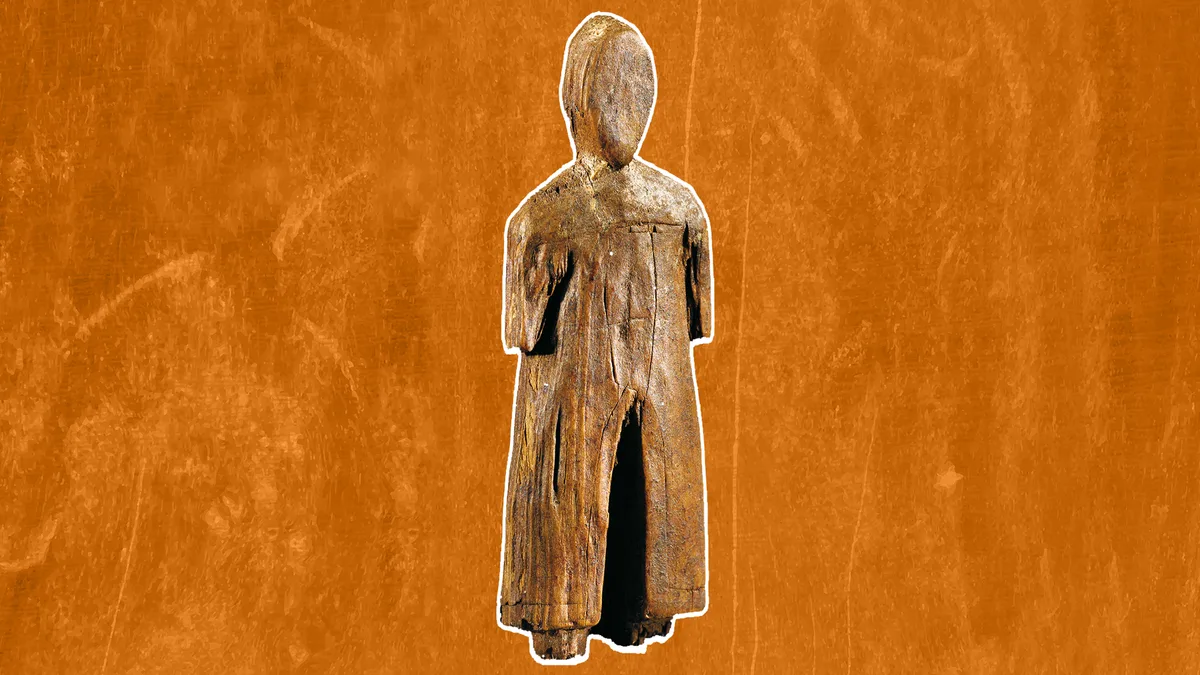
An Inuit carving of a European, dated to around AD 1350 — the earliest depiction of a European in the Western Hemisphere. (Image credit: Canadian Museum of History, IMG2009-0063-0154-Dm) QUICK FACTS Name: Inuit figurine What it is: A carved wood figurine Where it is from: Baffin Island, Nunavut, Canada When it was made: Circa 1350 This wooden figurine was discovered in 1977 in an early house built by the ancestors of the Inuit on Baffin Island in northern Canada.
The unique carving represents a person wearing European clothing and a cross on their chest.
Dated to 1350, the figurine is the earliest Indigenous representation of a European anywhere in the Western Hemisphere and probably depicts a Norseman.
The tiny driftwood carving, which is currently on display at the Canadian Museum of History , measures just 2.1 inches (5.4 centimeters) tall.
According to the museum, the featureless face and stumpy arms are common in 14th-century Inuit carvings, but the depiction of a non-Inuit is unique.
The mysterious figure wears a long robe or tunic with a cross on the front — a garment that is similar to those worn in the 11th to 13th centuries by Norse Christians from Greenland.
The Norse sagas mention a place called " Helluland ," which Leif Eriksson (also spelled Erikson) visited in the early 11th century and is most likely Baffin Island.
Around A.D.
1000, Norse explorers landed in what is now Newfoundland and set up camp at a site archaeologists call l'Anse aux Meadows .
Wood buildings and remains from iron production are all that is left of the earliest European settlement in the Americas.
The Norse likely made multiple trips from Greenland to Canada over the centuries in order to trade metal and cloth with the Inuit's ancestors, known as the Thule , and procure walrus ivory in return, as European-origin artifacts have been found in early Inuit houses on Baffin Island.
But the Norse eventually abandoned their westward trade routes, possibly due to the resistance of the Indigenous people and the long distance.
This wooden figurine may commemorate a meeting between the Inuit and the Norse and is especially important because it was crafted long before sustained contact in the late 15th century, according to the museum.
It is also the earliest evidence of the Indigenous perspective of visitors from the east, revealing which characteristics of the Norse the artisan observed and felt were important to depict.
5News aggregated this summary from the outlet’s public feed. The full article, with all the context, is on www.livescience.com — the content belongs to Live Science.