Hubble, James Webb team up to capture the 'Black Eye Galaxy' | Space photo of the day for Aug. 18, 2026
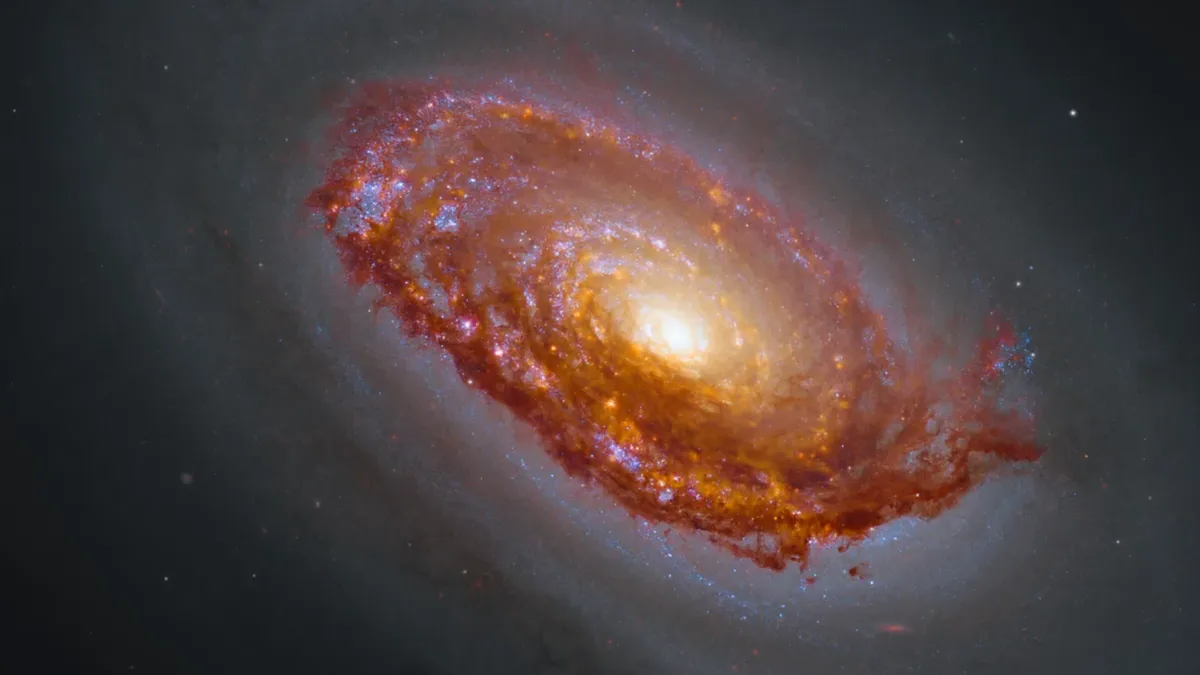
The "Black Eye Galaxy" is captured in this new composite image from the Hubble Space Telescope and JWST. (Image credit: NASA, CSA, ESA, F.
Belfiore (European Southern Observatory – Germany), J.
Lee (Space Telescope Science Institute), A.
Leroy (The Ohio State University), and D.
Thilker (The Johns Hopkins University); Processing: Gladys Kober (NASA/Catholic University of America)) Sometimes, incredibly powerful space telescopes work together to accomplish amazing things.
Recently, observations made by both the James Webb Space Telescope and Hubble were combined in a composite image that shows the incredible nature of the "Black Eye Galaxy," more formally known as Messier 64.
What is it? The Black Eye Galaxy is a strange spiral galaxy located 17 million light-years from Earth, in the constellation Coma Berenices, a name that means "Berenice's Hair" in Latin.
Discovered in 1779, the Black Eye Galaxy is fairly isolated from other galaxies and is known for its hypnotizing "stare." This look is created by the galaxy's internal, swirling motion.
However, unlike many other spiral galaxies, the gas in the outer reaches of this one rotates in the opposite direction to the gas and stars closer to its center, creating an especially unusual motion.
To capture this incredible composite view of the galaxy, astronomers combined near and mid-infrared wavelength observations made by JWST and ultraviolet, visible and near-infrared observations made by Hubble.
Why is it incredible? As we look forward to observations from NASA's upcoming flagship space observer, the Nancy Grace Roman Space Telescope , this collaborative effort shows how such powerful instruments don't replace one another; rather, they bring different capabilities to the table and can complement each other.
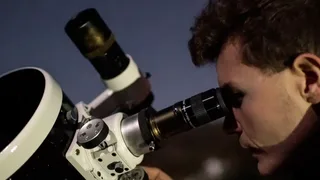
And, while this new image is the result of a team effort of cutting edge-technology, the Black Eye Galaxy is also a favorite target for backyard astronomers because it can often be spotted in small telescopes.
5News aggregated this summary from the outlet’s public feed. The full article, with all the context, is on www.space.com — the content belongs to Space.com.