It's harder to poop in space. Scientists may finally know why
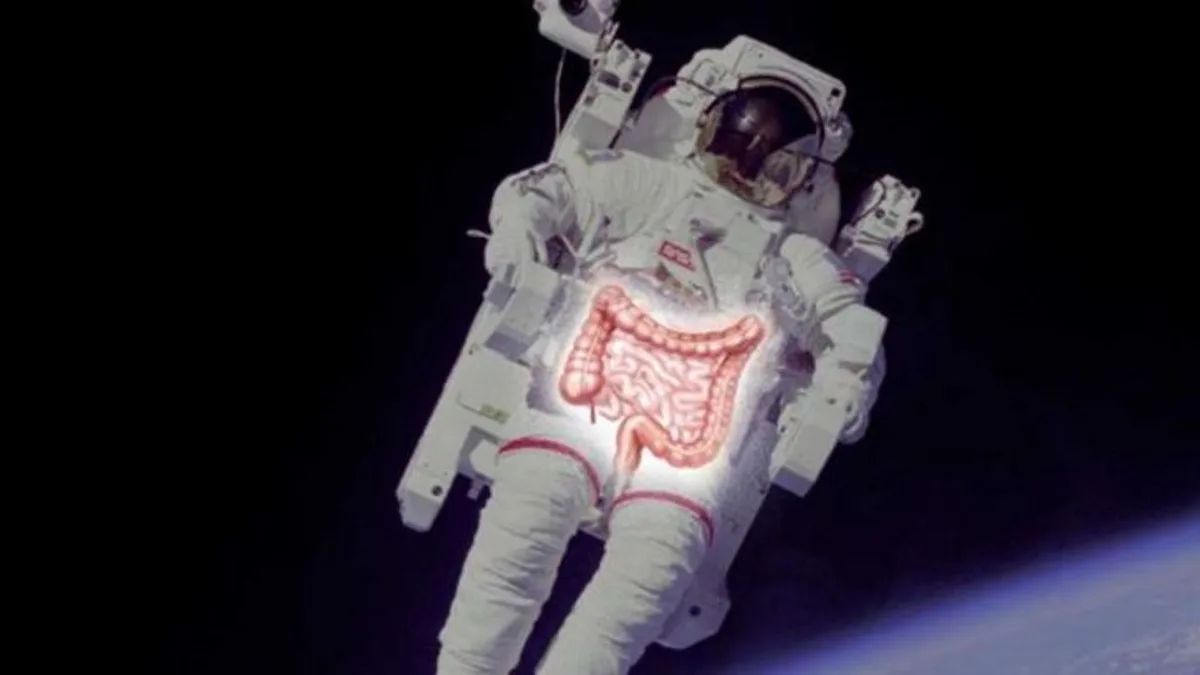
Astronauts have long struggled with constipation in space.
Now, scientists may finally understand why.
A new study of 52 astronauts who lived aboard the International Space Station (ISS) suggests that microgravity may slow the movement of food through the intestines, changing how gut bacteria break down nutrients.
The findings could ultimately help researchers develop dietary strategies to keep astronauts' digestive systems running smoothly during future missions to the moon and Mars — while offering new clues about digestive problems here on Earth, according to a statement from the University of Copenhagen.
Constipation is a common problem among astronauts, but exactly what happens inside the gut during spaceflight has remained less clear.
To investigate, researchers from the University of Copenhagen and NASA analyzed blood samples collected from astronauts before, during and after missions aboard the space station.
"We see changes in astronauts' blood samples that indicate that the gut bacteria begin to ferment protein to a greater extent than usual within weeks after the astronauts arrive in space, and this change continues until they are back on Earth," Giorgia La Barbera, co-lead author of the study and associate professor at the Department of Nutrition, Exercise and Sports, said in the statement .
The team used a technique called metabolomics to measure small molecules circulating in the blood, providing a biochemical snapshot of how the astronauts' bodies — and the microbes living inside them — were responding to spaceflight.
In total, the researchers analyzed 488 plasma samples from 52 astronauts who spent between two and nine months aboard the orbiting lab between 2006 and 2018.
They identified changes in around 40 circulating compounds during spaceflight, including several metabolites produced when bacteria in the colon ferment proteins.
Those compounds increased while the astronauts were in space, suggesting food was spending more time moving through their intestines, according to the statement.
Normally, bacteria in the colon ferment fiber and carbohydrates for energy.
But when digestion slows, those carbohydrates can become depleted, causing microbes to break down more proteins instead and produce different metabolites that can enter the bloodstream.
The changes appeared shortly after astronauts entered space and largely subsided within days of their return to Earth, providing biochemical evidence that digestion slows in space.
5News aggregated this summary from the outlet’s public feed. The full article, with all the context, is on www.space.com — the content belongs to Space.com.