Flightless Jurassic bird was like a carnivorous pheasant with killer claws
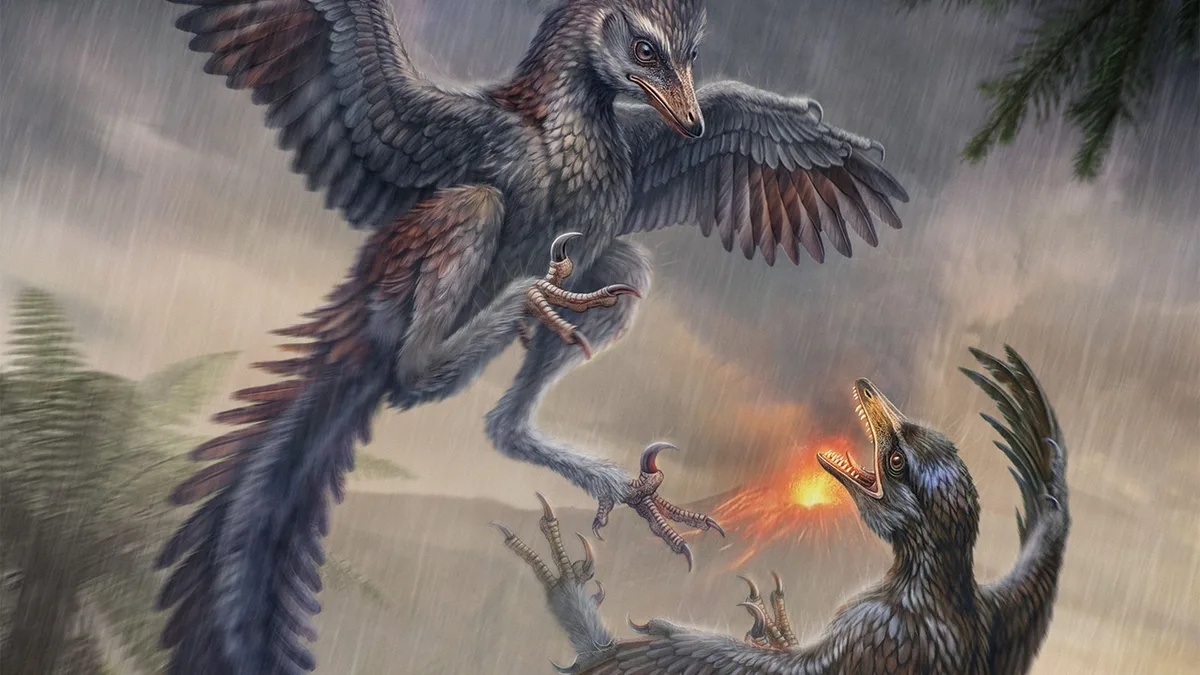
Illustration of the flightless Jurassic bird Y uezhuornis yangyuanensis , which had features of both birds and dinosaurs. (Image credit: Mr.
Chung-Tat Cheung) Paleontologists in China have discovered a small Jurassic bird that was likely a land-based predator — like a carnivorous pheasant with killer claws.
It had some features of birds and others of dinosaurs, suggesting that the earliest birds had a greater diversity of lifestyles than previously recognized.
Jurassic birds first emerged 150 million to 148 million years ago, and fossils of them are rare, so experts are just starting to understand how early birds diversified and evolved the ability to fly.
The researchers discovered the newly identified Yuezhuornis yangyuanensis in 2024, in the fossil assemblage known as the Upper Jurassic Zhenghe Fauna in southeastern China.
It lived 150 million to 148 million years ago, roughly when birds started to appear in the fossil record.
The team published their findings Wednesday (Oct.
14) in the journal Nature .
Analysis of the fossilized skeleton revealed the animal was small and weighed about 1.8 pounds (0.8 kilograms).
"It was probably as large as a crow," Wang told Live Science via email.
Y. yangyuanensis had a mix of features seen in birds and predatory Deinonychosauria dinosaurs, such as Velociraptor , which are known for their sickle-shaped toe claws .
It had deinonychosaur-like hyperextensible toes, with forelimbs that were roughly one-third shorter than its hind limbs.
This is odd because modern birds and many other Jurassic paravians — the group that includes bird-like dinosaurs, including the ancestors of birds as well as modern birds themselves — have long forelimbs, linked to giving wings more lift force for taking off.
Y. yangyuanensis also had slender cranial elements and sparsely spaced teeth.
5News aggregated this summary from the outlet’s public feed. The full article, with all the context, is on www.livescience.com — the content belongs to Live Science.