Sun fires powerful M6.9 solar flare and CME toward Earth — could it boost northern lights chances this week?
Today (Aug.
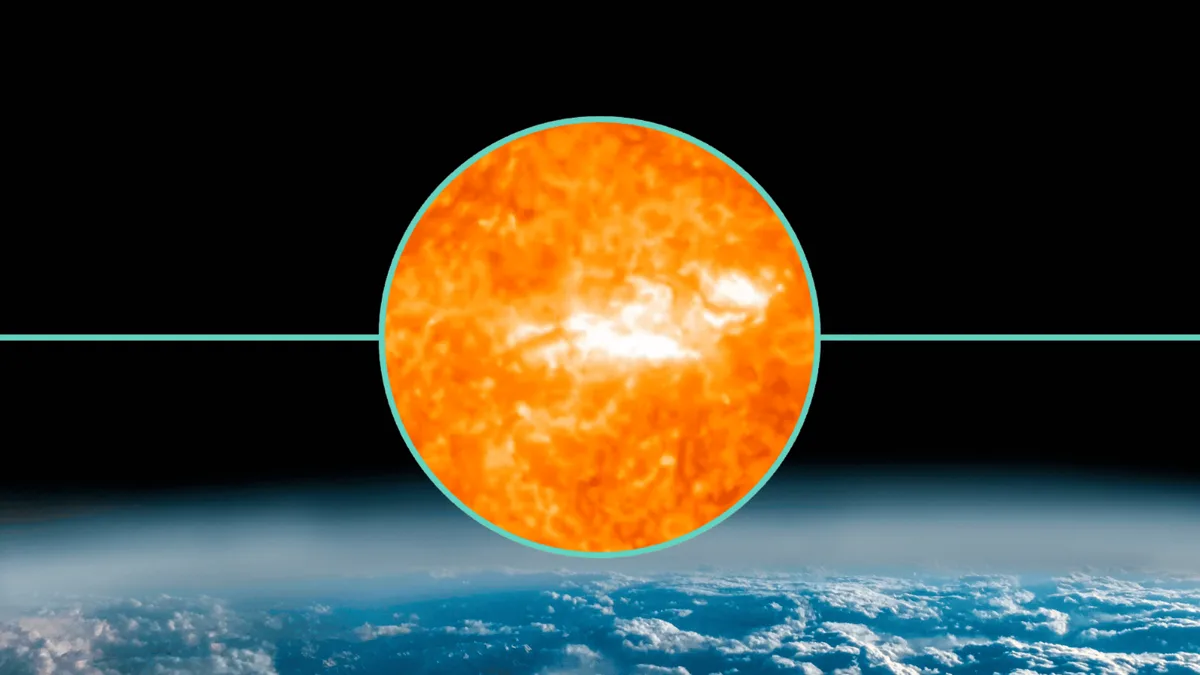
25), the sun unleashed a powerful M6.9 solar flare from a restless Earth-facing sunspot, hurling a coronal mass ejection (CME) into space — and Earth could potentially be in the firing line.
The M6.98 solar flare erupted from the active sunspot region 4513 and peaked at 6 a.m.
EDT (1000 GMT), according to SpaceWeatherLive .
4513 has been particularly active over the last 24 hours, firing off a barrage of solar flares including five powerful M-class eruptions.
Solar flares are ranked by strength into five classes — A, B, C, M and X — with each class 10 times more powerful than the one before it.
M-class flares are the second-strongest category, sitting just below the most powerful X-class eruptions.
The eruption also triggered a moderate (R2) radio blackout across the sunlit side of Earth, affecting high-frequency radio communications over parts of Africa, Europe and the Arctic.
High-frequency radio blackouts from the M-class solar flare on Aug.
25. (Image credit: NOAA Space Weather Prediction Center) CME incoming Now, all eyes are on the CME launched during today's M6.9 eruption.
Early modelling suggests Earth could receive a glancing blow from the CME on Friday (Aug.
28).
According to aurora chaser Jure Atanackov , NASA's model predicts the CME could reach Earth at around 6-7 a.m.
EDT (1000-1100 GMT), with an uncertainty of around seven hours.
5News aggregated this summary from the outlet’s public feed. The full article, with all the context, is on www.space.com — the content belongs to Space.com.