The Trouble With Trump’s Attempt to Rename Lake Ontario
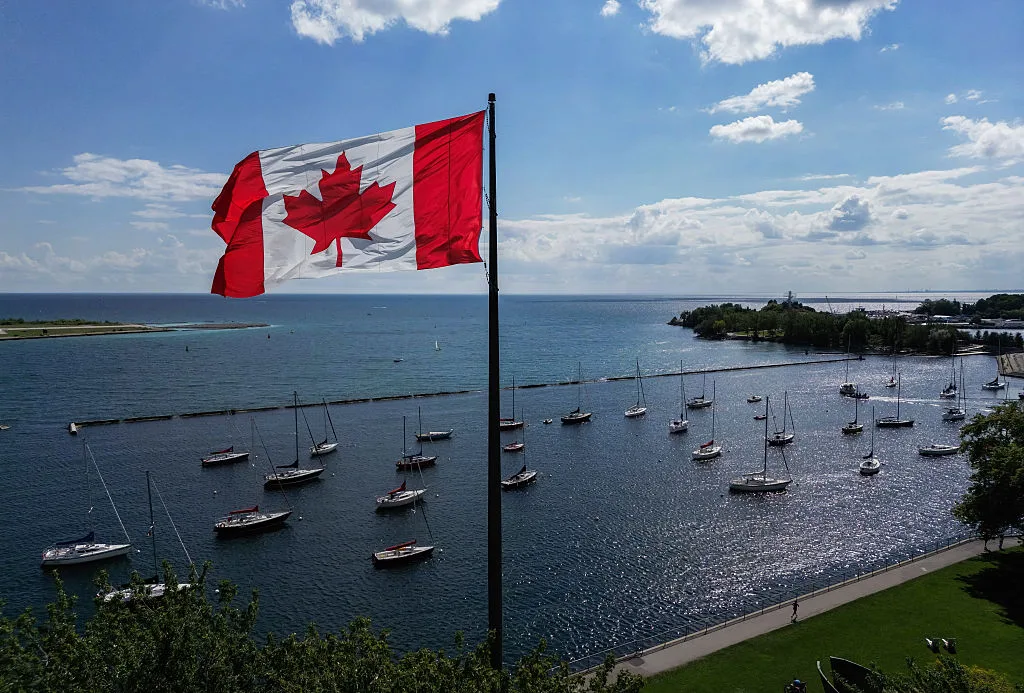
A Canadian flag flies along the waterfront of Lake Ontario on Aug.
27, 2026. —Cole Burston—AFP via Getty Images As President Donald Trump’s approval rating hit a new low, he turned once again to the art of redrawing the world map.
With the stroke of a pen, the President sought to erase over 400 years of cartographic history by renaming Lake Ontario as “ Lake America ” through executive order .
Trump’s unilateral action requires that the U.S.
Board on Geographic Names update its databases to “reflect the renaming of the Lake and remove all references to Lake Ontario.” Trump’s executive order applies to all U.S. federal maps, documents, and other communications.
However, experts suggest that Trump can’t force other countries , international organizations, private mapping companies, or even U.S. state governments to use the new name.
Canada’s Prime Minister Mark Carney has already responded in no uncertain terms that Canada will retain the original name of Lake Ontario “today and forever.” New York Governor Kathy Hochul also rejected the use of the name “Lake America” on New York state maps.
As two geographers who have spent decades studying political toponymy , or the politics of place naming, in both the United States and Canada, we are dismayed by the careless nature of Trump’s impulsive use of place renaming as a form of political rage baiting .
Renaming Lake Ontario is part of a larger pattern of using place naming to promote the Trump brand and his “America First” ideology.
From the very outset of his second presidential term, Trump launched the so-called “Golden Age of America” by announcing that the Gulf of Mexico would be renamed the “ Gulf of America .” This has now been followed with “Lake America,” and Trump even mused about possibly renaming the Atlantic or Pacific Ocean , we presume to something along the lines of “American Ocean” or “Ocean of America.” Over the past year, Trump’s obsession with naming places has given rise to a new term— toponymic narcissism —which refers to the condition of being obsessed with naming places after oneself.
In many respects, Trump tends to approach the world map much like the Greek mythical figure of Narcissus viewed a body of water: as an opportunity to admire the reflection of his own self-image.
The cost of this narcissistic approach to controlling and changing place names is that it obscures how these names should be shared symbolic resources that serve the broader public and not just the ambitions, grievances, or political feuds of a single individual.
The conventional process of naming geographical features along the U.S.-Canada border involves bringing a formal proposal to the U.S.
5News aggregated this summary from the outlet’s public feed. The full article, with all the context, is on time.com — the content belongs to TIME.