On this day in space! Sept. 14, 1966: NASA's Gemini 11 astronauts set altitude record for Earth orbit that went unbroken for 58 years
On Sept.
14, 1966, NASA's Gemini 11 mission set an spaceflight altitude record that lasted for nearly six decades when two astronauts reached an orbit of 850 miles above the Earth.
It remained the highest altitude ever achieved by a crewed, non-lunar mission until 2024 .
Gemini 11 command pilot Pete Conrad and pilot Dick Gordon spent three days orbiting the Earth in their cramped Gemini spacecraft .
After launch, they performed the first-ever direct-ascent rendezvous with an Agena target vehicle.
Once the two spacecraft were adjoined, they used the rocket on the Agena target vehicle to ascend to their record-breaking altitude.
They also created a little bit of artificial gravity while in orbit by using their thrusters to rotate the combined spacecraft.
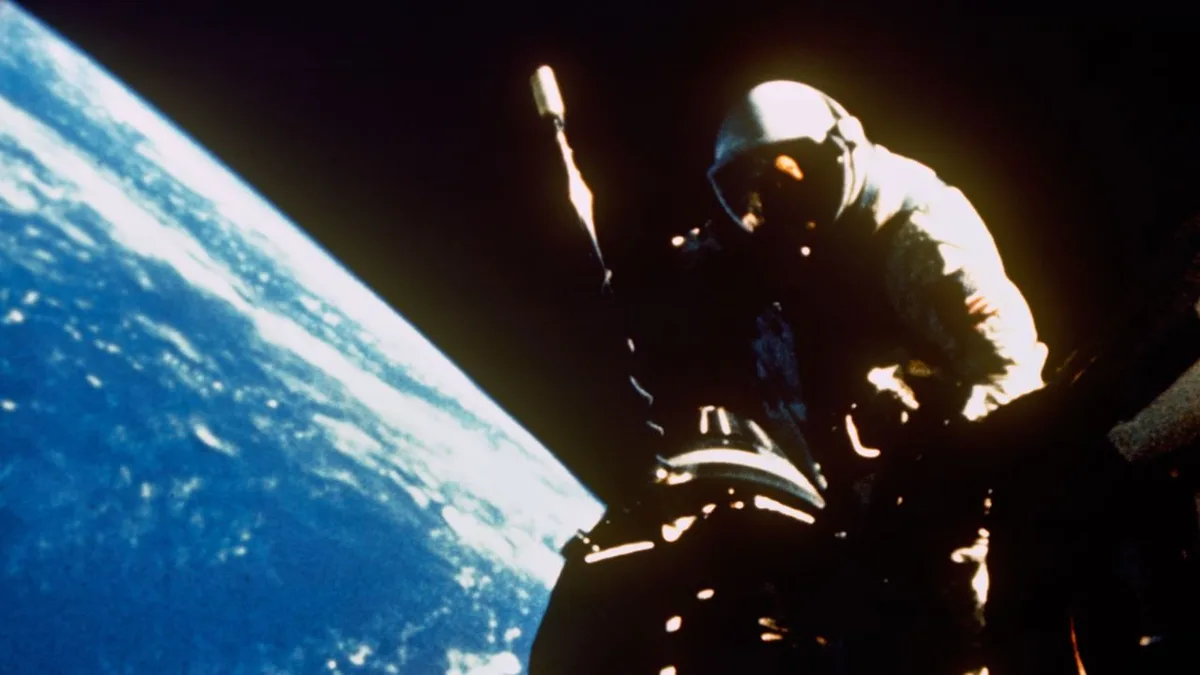
NASA Gemini 11 astronaut Dick Gordon works outside his space capsule while crewmate Pete Conrad waits inside during the Gemini 11 mission, which set an altitude record for a crewed flight in Earth orbit on Sept.
14, 1966. (Image credit: NASA) Why it mattered Despite its name, Gemini 11 (or Gemini XI) was actually NASA's ninth crewed mission of the two-person Gemini spaceflights.
The mission was relatively short, just three days, and included two spacewalks, and what NASA calls the first orbital rendezvous and docking with an Agena target vehicle (the first in-space docking occurred three missions earlier on Gemini 8 ).
But for 58 years, the Gemini 11 mission marked the highest astronauts flew above Earth without going to the moon .
The astronauts used the rocket engine on the Agena booster to raise the orbit of their docked spacecraft to reach a peak altitude of 853.8 miles (1,374.1 kilometers).
Conrad and Gordon performed eight different science experiments, but perhaps one of their most striking feats was the artificial gravity demonstration.
During one of his spacewalks, Gordon attached a 30-meter tether from the Agena booster to the Gemini capsule.
5News aggregated this summary from the outlet’s public feed. The full article, with all the context, is on www.space.com — the content belongs to Space.com.