Guldhøj folding chair: The only completely preserved chair from Bronze Age Europe
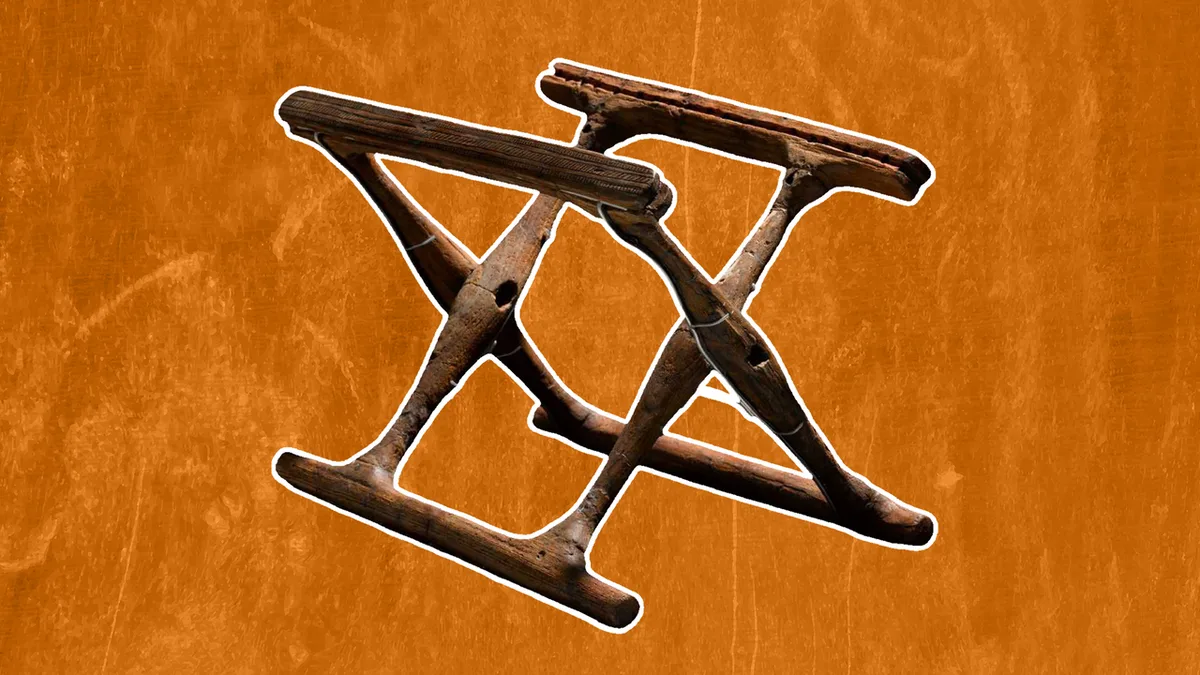
Remains of a Bronze Age folding chair were found in a chieftain's grave in Denmark. (Image credit: National Museum of Denmark ( CC-BY-SA )) QUICK FACTS Name: Guldhøj folding chair What it is: A wooden chair with an otter-skin seat Where it is from: Guldhøj, southern Denmark When it was made: Circa 1400 B.C.
When archaeologists with the National Museum of Denmark excavated a burial mound called Guldhøj (Gold Hill) in southern Jutland in 1891, they were surprised to find a well-preserved wooden folding chair similar to those known from ancient Egypt and Greece.
But the Guldhøj folding chair was made in Denmark around 3,400 years ago and is the only completely preserved chair from the Bronze Age in Europe, according to the National Museum of Denmark .
The chair was discovered in the grave of a chieftain, who was buried in a hollowed-out oak tree trunk and wrapped in a cowhide.
The man had been dressed in a wool cloak secured with a bronze brooch, two wool hats, woolen mittens and leather shoes.
Among the offerings his loved ones left in the grave were a bronze ax and a bronze dagger, along with two ornate wooden bowls and a wooden box.
But the folding chair was an unusual addition to the grave and was likely a marker of the man's extremely high status .
The frame of the Guldhøj folding chair was crafted from ash wood, while the seat was made from otter skin, only a fragment of which was preserved over the millennia.
Patterns incised into the top of the wooden frame were inlaid with a black, tar-like substance to create a band of geometric decoration.
In a 1999 study led by archaeologist Kirsten Prangsgaard , researchers who examined the chair determined that it was made from two frames of wood, each about 13 inches (33 centimeters) tall.
When the frames were put together at a 45-degree angle, the low chair or stool would have been around 9.5 inches (24 cm) off the ground.
Originally, the chair frame was likely held together with bronze nails, which may have been removed before the seat was placed in the grave, according to the researchers.
Folding chairs may seem simple, but they were important pieces of furniture that signified the seated person was of high rank, and they were likely used in rituals or ceremonies, according to the National Museum of Denmark.
Archaeologists have found ancient folding chairs in this style in Bronze Age Egypt and Greece, where weather conditions are better for preserving organic material such as wood.
5News aggregated this summary from the outlet’s public feed. The full article, with all the context, is on www.livescience.com — the content belongs to Live Science.