No cities on the moon — there isn't enough water, scientists say (op-ed)
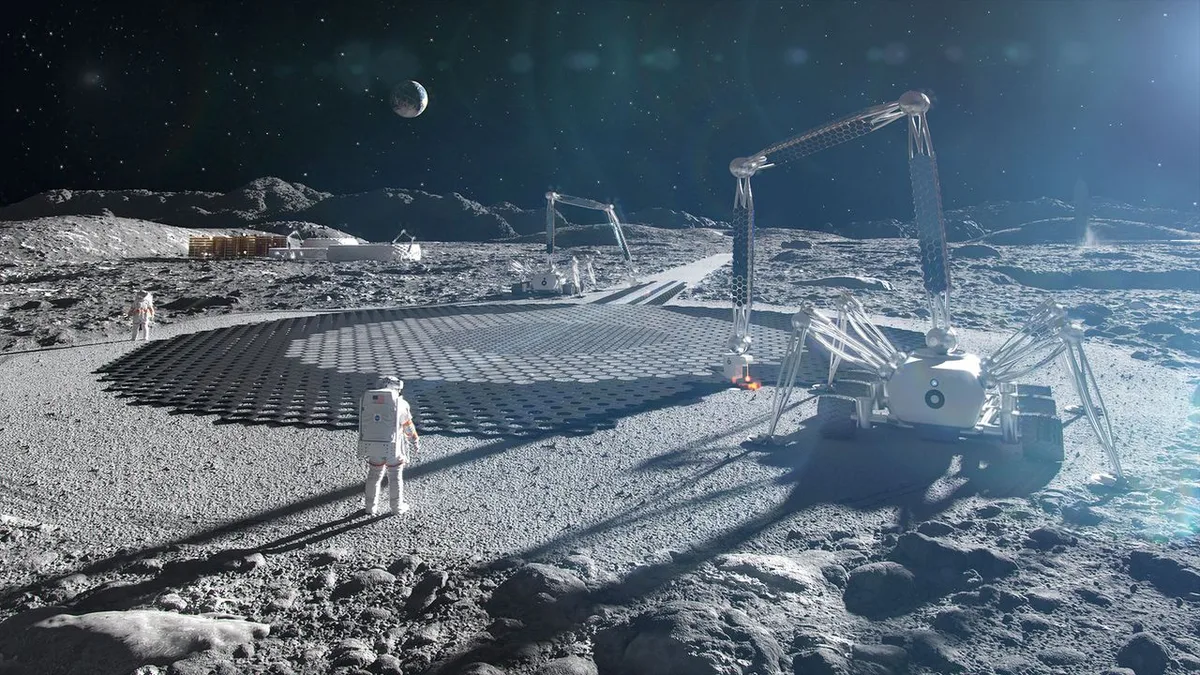
The discovery of water at the poles of the moon has inspired speculation about whether we can build there – cities, industrial neighborhoods, places where people work and live.
But is there enough water, and can we use it efficiently enough? In their new article in Frontiers in Space Technologies , Dr.
Martin Elvis and Dr.
Jonathan McDowell do the math.
Even at the most generous estimates of the available water and recycling efficiency, a city of one million people would only last 100 years before all the water runs out.
In this guest editorial , which Frontiers in Space Technologies provided, Elvis breaks down what we can and can't do with the technology available.
The discovery of water in dark craters at the moon's poles has sparked a "moon rush" to establish bases there, and then villages, cities and heavy industry.
How sustainable is this rush? Soon after the moon was formed , asteroids bombarded it, creating its pockmarked topography.
Near the moon's poles, there are dozens of crater floors that have not seen direct sunlight in about four billion years.
Many of these cryogenically cold "pits of eternal darkness" are below a temperature of 110 Kelvin (minus 262 degrees Fahrenheit), forming "cold traps" in which water ice won't sublimate away by more than a millimeter in a billion years, even in the vacuum at the moon's surface.
And there is water to freeze: some of those asteroids brought it along with them.
Since 2013 we have known that that water is still there, possibly as much as a billion tons of it, thanks to a succession of moon-orbiting missions that have mapped out likely locations in increasing detail.
The presence of water at the lunar poles changes everything about human visits to the moon .
Suddenly it is practical to envisage a "moon village" where people could survive without importing every last bit from Earth.
5News aggregated this summary from the outlet’s public feed. The full article, with all the context, is on www.space.com — the content belongs to Space.com.