The grueling fight over who profits from AI music
For most of the last century, the music business operated under a surprisingly simple idea: If you want to use someone else's work, you ask permission and pay them money. Want to sample a song? There's a licensing process . Want to use a song in a movie, advertisement or television show? The people who own the song get paid.
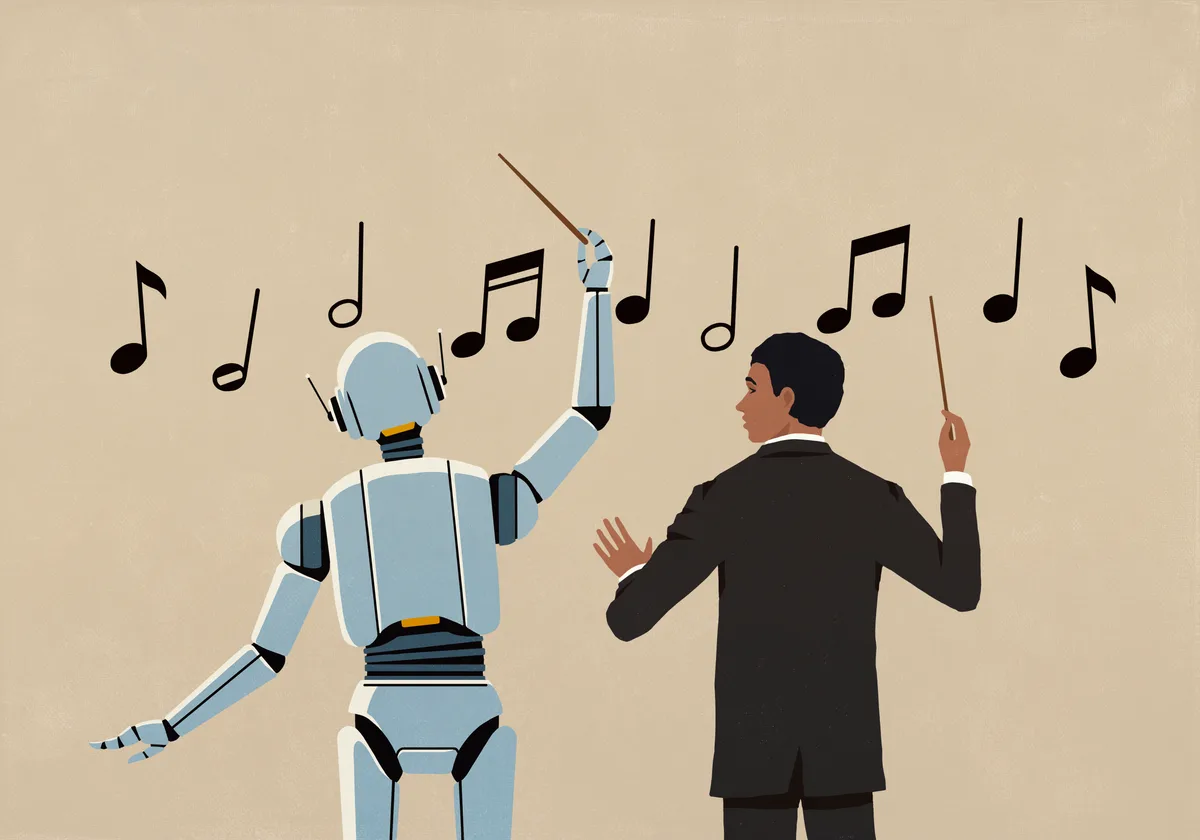
The industry built a massive economy around identifying who owns a piece of music, who contributed to it, and who deserves compensation when it creates value. Now, generative AI is challenging that entire system.
AI music platforms like Suno and Udio let anyone generate complete songs, including vocals, lyrics and instrumentation, from a simple text prompt. Used by everyone from hobbyists and content creators to independent musicians and Grammy-award-winning producers, they've become the public face of AI-generated music. In February, Suno CEO and co-founder Mikey Shulman said in a post on X that the company had surpassed two million paid subscribers.
Suno and Udio can generate songs in a few clicks, but the bigger disruption may not be the songs themselves. For us at Planet Money , we're interested in the economic question: When an AI model learns from millions of songs, who gets paid for that use?
This question is now at the center of a growing legal and financial battle in the music industry as AI music is already stealing income from human musicians.
Part of this battle's complexity is that it's been unclear exactly what material has gone into training many AI models. That lack of transparency has made it harder for artists and researchers to understand what these systems learned from, and build a legal case.
Alex Reisner , a journalist at The Atlantic , has been investigating AI training datasets through his AI Watchdog project . The tool has helped musicians, including artists such as SZA , spot their own work in AI training datasets.
" I think it's really difficult to discuss the potential of the technology, the risks of the technology, without having more information out there about how it's trained," Reisner says. "And so my purpose with AI Watchdog and these search tools is just to try to give people access to… some of the raw data."
Reisner says many artists are still surprised to learn their work was used to train AI systems.
"Which I think really reflects the strength and persuasiveness of the narratives that these tech companies are putting out there about how they're just creating this kind of magical resource when really what they're doing is taking everyone's stuff and kind of reorganizing it, remixing it," Reisner says.
Suno has previously acknowledged in court filings that its training data included "essentially all music files of reasonable quality that are accessible on the open Internet," combined with other available data.
Even assuming this is fair use (a debate which we will address below), the deeper question is over compensation.
5News aggregated this summary from the outlet’s public feed. The full article, with all the context, is on www.npr.org — the content belongs to NPR Business.