How to Lose a Trade War
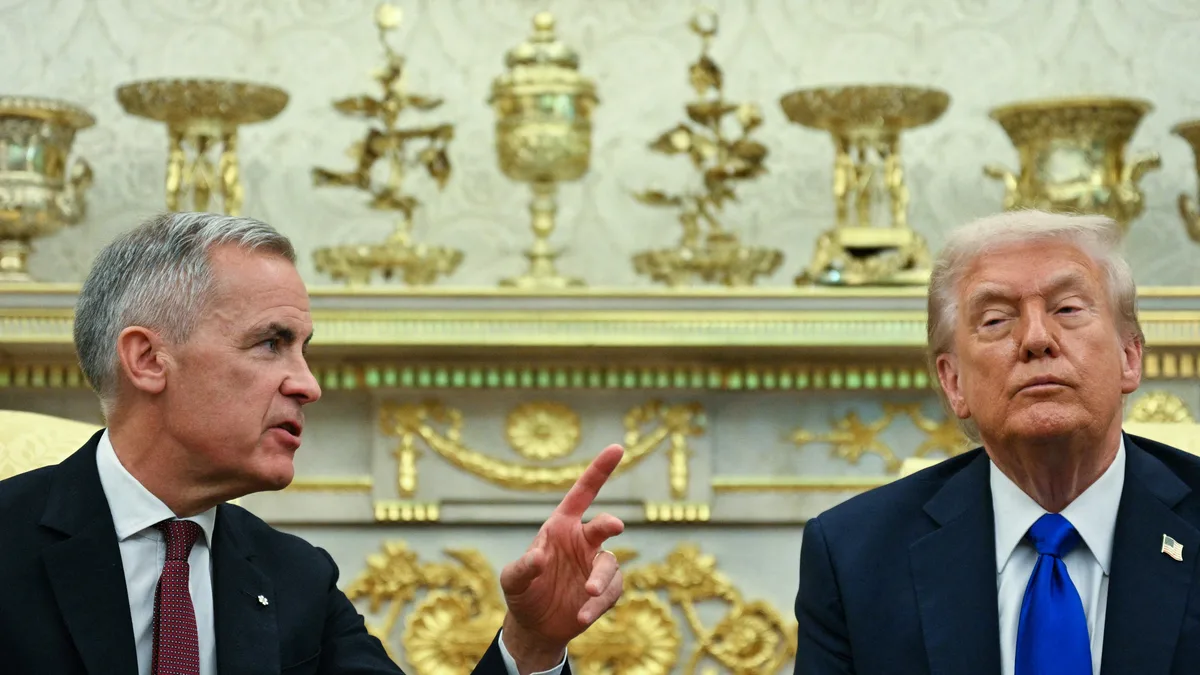
U.S.-Canada trade talks collapsed last night.
Punitive Trump tariffs will now go into effect.
Canada will reciprocate with retaliatory tariffs of its own.
The story may not be over.
Donald Trump is notorious for issuing threats, then reversing them.
Wars are on, off, on again, off again, then on a third time—but only as a “ little detour .” This is not an administration that thinks even one move ahead.
But without a supersized Trump TACO , the U.S.-Canada impasse likely won’t resolve soon.
The Trump administration has one big idea about Canada: The U.S. is larger, stronger, and richer than Canada, so Canada must sooner or later surrender to Trump’s demands.
That one big idea is wrong.
Yes, Trump can hurt Canada more than Canada can hurt Trump.
That part of Trump’s thinking is true.
But wars are not decided only by the question Who can inflict more pain? Wars are also decided by the question Who can endure more pain? Trump’s failure to accept this truth is why he lost the Iran war—and why he is losing his trade wars.
Canadian Prime Minister Mark Carney has much more political permission to accept pain from a U.S.-Canadian trade war than Trump does.
To read current Canadian polling is to see a country united under its political leadership—and energized in dislike and distrust of Trump’s United States.
5News aggregated this summary from the outlet’s public feed. The full article, with all the context, is on www.theatlantic.com — the content belongs to The Atlantic.