My 5 favorite sights to see in the night sky with binoculars
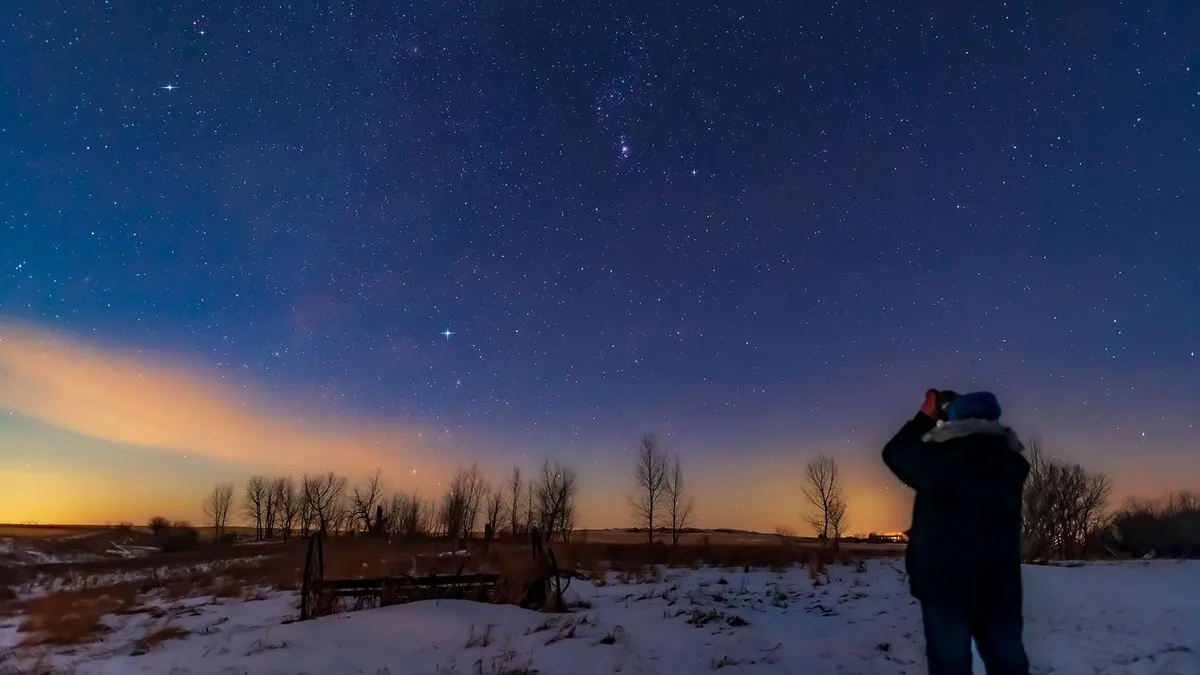
Top 5 things to see in the night sky with binoculars — ranked by an expert Beyond simple naked-eye observing, a pair of the best binoculars are the most accessible way to experience the night sky.
They are affordable (although pricier models are available), very easy to use compared to telescopes and they offer a wide range of celestial sights, from our solar system neighbors to distant deep-sky objects.
They are great for both beginners, casual observers and even veteran stargazers who want to grab a quick look or spend time sweeping through the Milky Way .
So what are the best night-sky targets for binocular users? There are so many, but we’ve done our best to whittle them down to five of the best that provide a good sense of what can be seen through binoculars.
We’ve also accounted for different apertures and magnifications to make sure there’s something for everyone, even kids The moon Binoculars can get you great views of the moon. (Image credit: Getty Images) The moon is the ideal starting point for observing with binoculars.
As a large target full of intricate features that appear differently depending upon the illumination, the moon rewards return visits, and you’ll never grow bored.
Even low-magnification, smaller-aperture binoculars will show some interesting details.
Small 8x40 or 7x50 binoculars are sufficient; you certainly wouldn’t want to go as low as, say, 8x25 because the moon would appear small.
While larger magnifications can improve the view, unless you have the binocular mounted on a tripod, the shake from jittery hands can look like moonquakes.
If you don’t have a tripod, an alternate solution is to use image-stabilized (IS) binoculars, where the binoculars’ internal electronics are able to remove the jitter from the image, making the view more static.
The illumination on the moon changes across a 29.5-day cycle as the sun rises and sets over the lunar landscape, with phases cycling from new to first quarter, then to full and last quarter and finally back to new again.
Often, the best time to observe a particular feature on the moon is when it is dawn or dusk at that location, and the sun angle is low, casting stark shadows.
Otherwise, it is difficult to see the relief when the sun is overhead.
Jupiter’s moons Jupiter and (some) of its moons in orbit.
5News aggregated this summary from the outlet’s public feed. The full article, with all the context, is on www.space.com — the content belongs to Space.com.