Don't miss Venus shine beside the crescent moon at sunset tonight
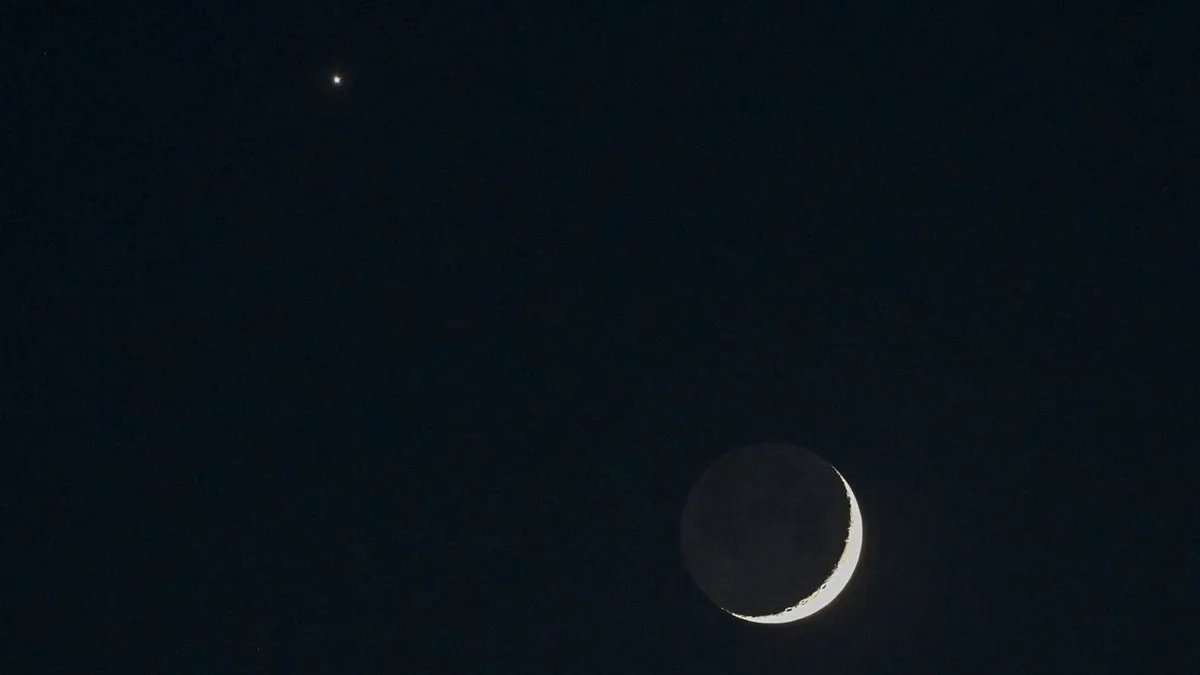
Look west at sunset on Sept.
13 to see brilliant Venus shining close to the delicate arc of the crescent moon.
The encounter is a prelude to an even closer meeting the following day, when the moon will pass directly in front of Venus for observers across parts of Europe, Africa and Asia.
Tonight (Sept.
13), Venus will appear as a bright " Evening Star ," a little over 5 degrees from the 9%-illuminated waxing moon — roughly the width of your three middle fingers held at arm's length against the evening sky.
Venus, often referred to as "Earth's twin" as a result of its similar size and rocky composition, will be easy to spot as a dazzling point of light in the evening sky, while the moon will be a trickier target, with its barely illuminated disk all but lost in the glare of the setting sun.
The moon and Venus will shine less than 10 degrees above the horizon at dusk, so find a spot with a clear view to the west to give yourself the best chance at catching the solar system pairing before they follow the sun out of view a little over an hour after sunset.
The moon and Venus will shine less than 10 degrees above the horizon at sunset and will be visible for less than an hour before the lunar disk follows our parent star below the late summer skyline.
Find a spot with a clear view to the west and start scanning the sky as soon as the sun sets to give yourself the best chance at catching the solar system pairing.
You can discover the exact timings for sunset for your location using Time and Date's sunset tracker .
Look out for earthshine brightening the unlit side of the lunar disk, as sunlight reflects off our planet to bathe the moon in a subtle glow, revealing ghostly details on the moon's otherwise unlit side.
The phenomenon is best viewed on nights surrounding the new moon phase, when Earth is well positioned to bathe its natural satellite in reflected sunlight.
Celestron UpClose G2 10x50 (Image credit: Celestron) For around $50 you can grab these beginner binoculars for better views of craters and seas on the lunar surface.
10x is enough for a closer look without worrying about excessive shakes during handheld observation. _ Celestron UpClose G2 10x50 review Millions of stargazers across parts of Europe, North Africa, the Middle East and southern India will be positioned to see the moon pass directly in front of Venus in the daytime sky starting at 5:26 a.m.
5News aggregated this summary from the outlet’s public feed. The full article, with all the context, is on www.space.com — the content belongs to Space.com.