Self-driving, solar-powered cars that talk to each other? What vehicles might look like in 10 years.
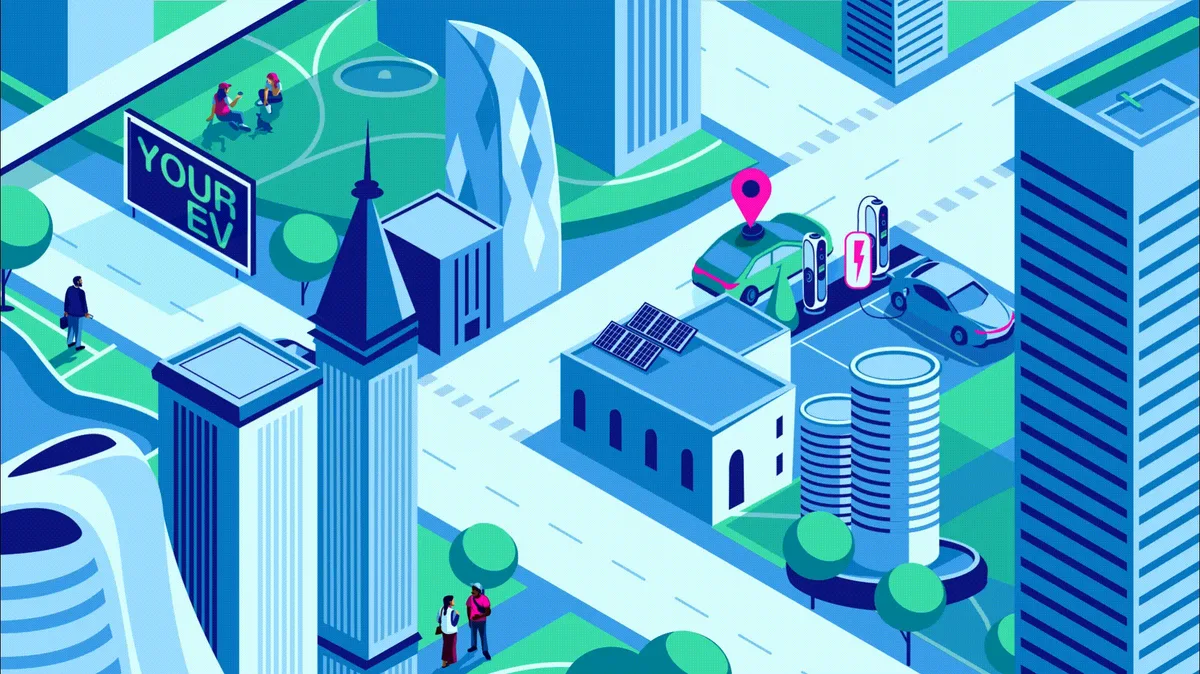
Imagine you're road-tripping across the country 10 years from now.
You spend a few minutes charging your electric vehicle and then set off — and your car's solar paint keeps it charged as you drive.
Your eyes are on the stunning scenery, taking in the vistas along Route 66 or the grandeur of the Rocky Mountains, or you're catching up on messages.
Your hands barely touch the wheel, and your foot doesn't push a pedal.
Your car communicates with others on the road, so there's no need to brake suddenly or swerve.
That's because it knows a vehicle five cars up from you has done so, and all those in between are slowing at exactly the right pace to avoid dramatic changes in trajectory.
And when you park for the night, your car makes you money, selling the excess energy it's harvested from its paint back to the grid.
Or maybe you don't feel like being in the driver's seat at all, so you hail a self-driving car and take a nap in the back seat in between adventures.
Some of that scenario may become a reality in the next 10 years, at least for those who are using the most cutting-edge cars on the market.
Although there's some heavy speculation involved in that futuristic vision, vehicle manufacturers are already incorporating increasingly sophisticated automated driving technology into high-end personal vehicles, and self-driving taxis are coming to dozens of U.S. cities.
What's more, dramatic changes in range, cost and charging speed for electric vehicles (EVs) are arriving at a rapid pace.
While some of these technologies may not wind up in personal cars, others are already taking to the roads.
An ecosystem of connected vehicles Some car models within the next decade may interact with their surroundings in new ways, including by communicating with other cars to avoid collisions, drawing energy from natural sources, or letting drivers get paid for sending their cars' unused energy back to the grid.
Some researchers are developing technology to connect cars on the road, which could make for smoother braking and less traffic. (Image credit: lupengyu via Getty Images) If you're driving an EV, you might avoid the hassle of finding a charger when you're at work or running errands.
5News aggregated this summary from the outlet’s public feed. The full article, with all the context, is on www.livescience.com — the content belongs to Live Science.