Scientists find youngest exoplanet on record — a 'newborn' named Elias
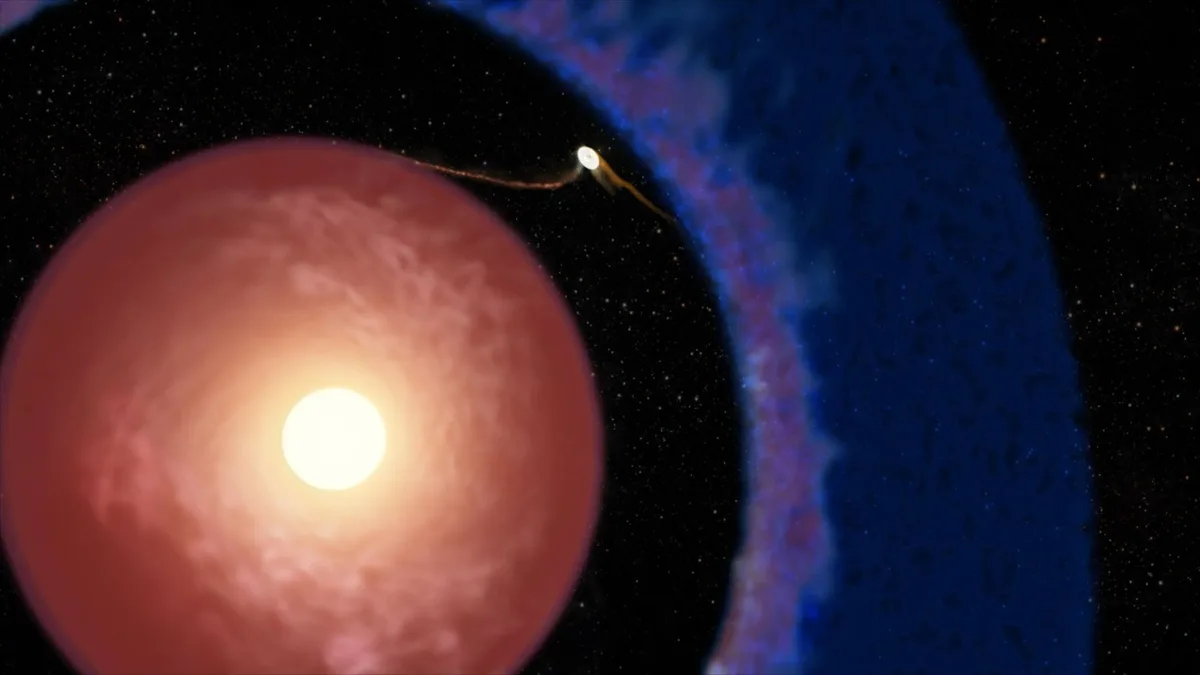
Astronomers have discovered the youngest exoplanet on record, and they spotted the "newborn" world hiding in old data archives.
About as massive as Jupiter , the newly-discovered exoplanet Elias 2-24 b is one big baby — despite its hefty size, Elias 2-24 b is by far the youngest planet ever found, thought to be less than a million years old.
In fact, the exoplanet (or, planet outside of our solar system) was located 450 light-years away from Earth , still resting in the swirling gas and dust where it was born.
The previous record-holder for "youngest exoplanet" is a four-way tie between four worlds that are all over 5 million years old, according to Lucas Cieza, co-author of a study on Elias 2-24 b and a professor at the Instituto de Estudios Astrofísicos in Chile.
"Our planet-formation models already struggled to explain the previous record holders for the youngest known planet," Cieza said in a statement .
"Elias 2-24 b shows us that even our best planet-formation models are still missing some important processes." To spot this massive baby, a team led by Andrea Bernardi, a doctoral candidate at the Universidad Diego Portales in Chile, dug through archival data captured by the W.M.
Keck Observatory in Hawaii.
The study focused on the star Elias 2-24 which is surrounded by a disk of material.
Their findings confirmed earlier observations collected with the Atacama Large Millimeter/submillimeter Array (ALMA) and the European Southern Observatory's Very Large Telescope which suggested something may lie in a gap within the debris disk around Elias 2-24.
The archival data that confirmed these suspicions and this planet came from observations using Keck's coronagraph.
Coronagraphs work by blocking out the glare from far-off starlight, allowing light bouncing off the planets orbiting those stars to be captured for direct observations.
The team looked through such coronagraph data for seven distant stars, each surrounded by debris disks where planet formation may be happening.
The team thought that perhaps it'd be possible to find a planet hiding in a gap in one of these disks.
And they were right.
5News aggregated this summary from the outlet’s public feed. The full article, with all the context, is on www.space.com — the content belongs to Space.com.