Jonathan the tortoise has lived to 194 years old — now scientists think they know why
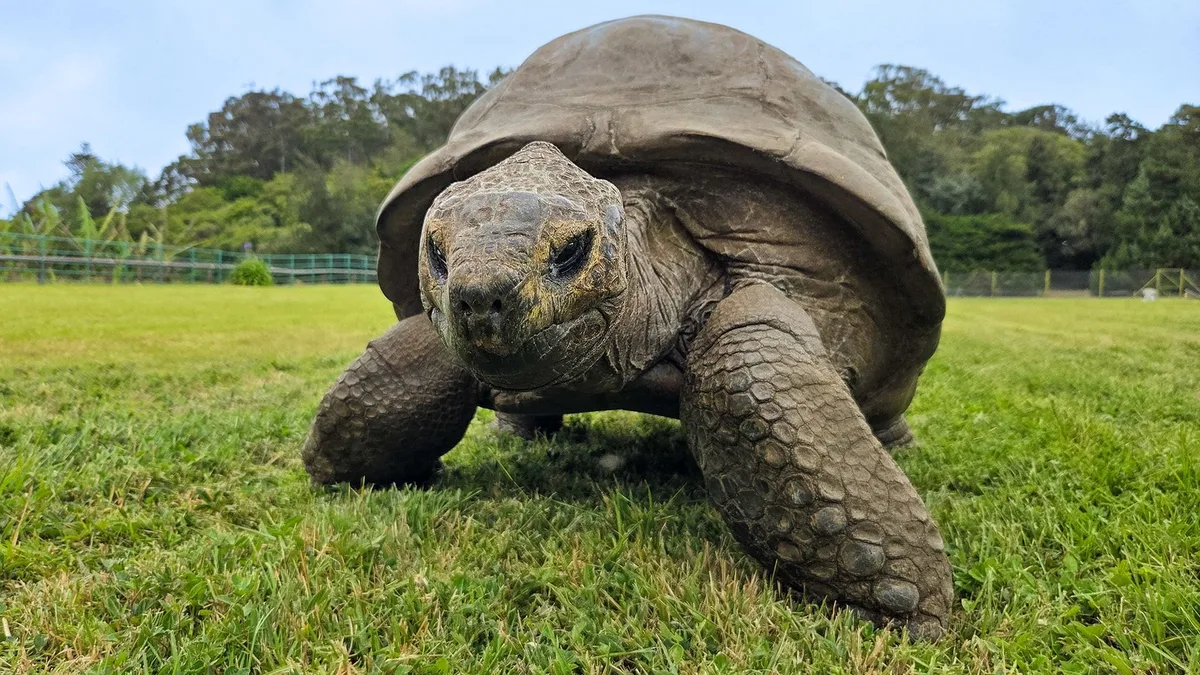
The remote south Atlantic island of St.
Helena boasts an international celebrity: the tortoise Jonathan , the oldest living land animal.
At 194 years old, he has outlasted the expected lifespan for an Aldabra giant tortoise ( Aldabrachelys gigantea ) by about a century.
Now, scientists have identified a range of unique genetic and epigenetic traits that may hold the key to this longevity.
The new research zoomed in on Jonathan's genes, as well as the chemical tags that sit on top of DNA molecules, known as "epigenetic markers." These markers help control which genes are activated and to what degree.
The analysis finds that Jonathan's genes associated with mitochondrial function are in great shape, epigenetically speaking, which suggests that they've played a big role in the tortoise's success.
While mitochondrial function has long been linked to longevity and mitochondrial dysfunction has been tied to disease, Jonathan offers fresh insight into that dynamic, said study co-author Stephen Clark , chief scientist of the Kallel Foundation, a nonprofit in Nashville researching drug targets to promote human longevity.
Clark and colleagues published their findings Wednesday (Oct.
7) in the journal Science Advances .
Decoding Jonathan's secrets to long life Nearly a decade ago, the researchers enlisted Joe Hollins, the vet tasked with Jonathan's care, to collect samples from the record-setting animal.
Island authorities forbade the vet from drawing the tortoise's blood, fearing the risk of an infection.
"I didn't want to be the doctor that killed Jonathan," Clark told Live Science.
Hollins collected samples via cheek swab instead.
When the samples arrived in the U.S., the researchers sequenced them, but when their computers kept crashing, they discovered that the DNA had been isolated from bacteria in Jonathan's mouth rather than the tortoise's own cells.
5News aggregated this summary from the outlet’s public feed. The full article, with all the context, is on www.livescience.com — the content belongs to Live Science.