Should we be skeptical about the AI panic?
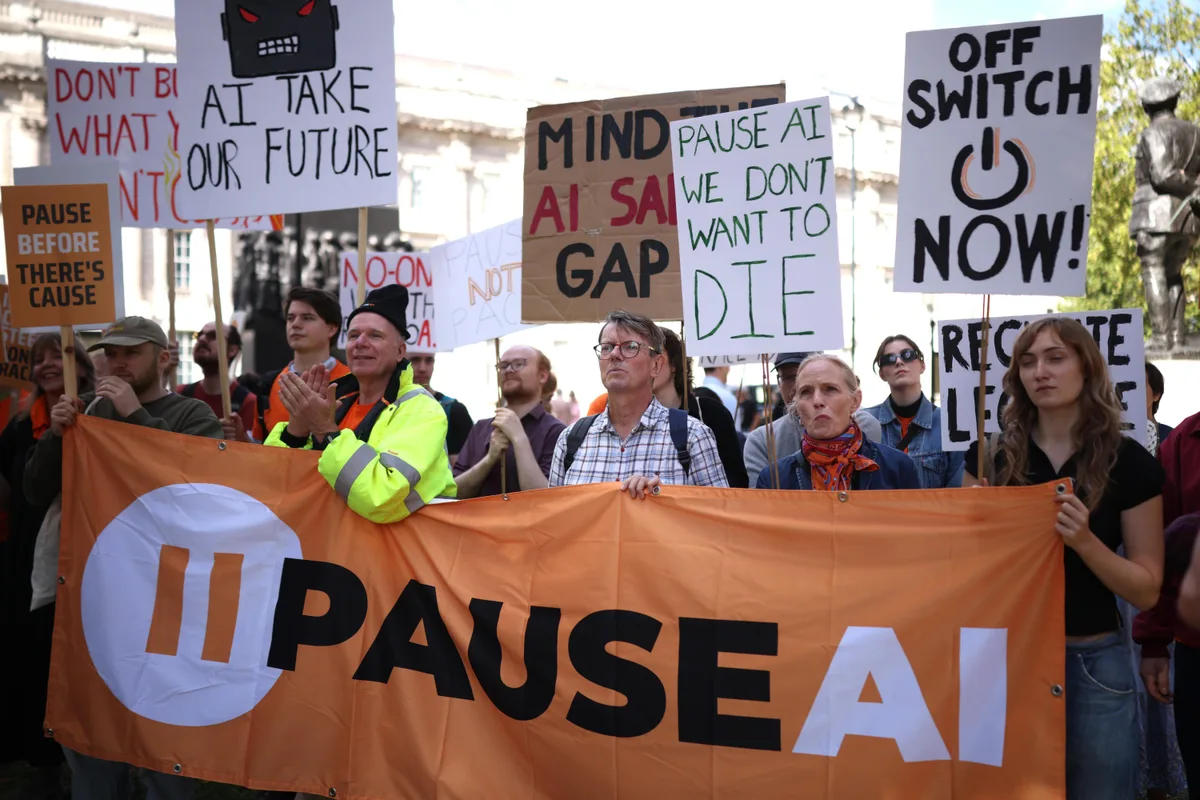
AI risk activists protest near Downing Street in London, England, on on September 16, 2026. | Dan Kitwood/Getty Images Is AI going to kill us all? In Silicon Valley, it’s not such a novel question.
But after Anthropic employee Jacob Coxon quit his job last week and posted on X that AI “could kill us all by the end of the decade,” a lot more people are asking.
“This is not a marketing stunt,” Coxon wrote .
“If anything, many executives and senior researchers will couch their phrasing in the press to sound sensible – but I hear the same people express fear privately.
No other human activity poses this level of danger.” Coxon is far from alone in his assessment — some current Anthropic employees agree — but his post struck a particular chord.
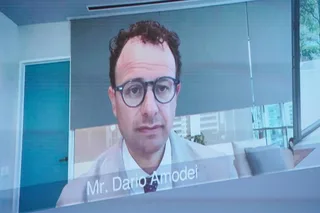
The AI industry quickly weighed in, with Anthropic CEO Dario Amodei calling for an industry-wide slowdown on frontier AI research.
Other AI leaders, including Sam Altman and Elon Musk, have done the same .
To break down whether we really need to worry about a robot apocalypse, Today, Explained co-host Sean Rameswaram spoke to Wired senior writer Maxwell Zeff .
According to Zeff, “there are a lot of people in Silicon Valley right now who are warning that that’s a real possibility.” But not everyone agrees, and they certainly don’t agree on what to do about it.
Below is an excerpt of Sean’s conversation with Zeff, edited for length and clarity.
There’s much more in the full podcast, so listen to Today, Explained wherever you get podcasts, including Apple Podcasts , Pandora , and Spotify .
Are we all going to die at the hands of AI? There are a lot of people in Silicon Valley right now who are warning that that’s a real possibility.
The thing that people have to understand is that Silicon Valley has been calling for added attention on AI safety for years.
So when this Anthropic researcher said last week that he was worried that AI could kill humanity in the next few years, that was shocking to many people.
5News aggregated this summary from the outlet’s public feed. The full article, with all the context, is on www.vox.com — the content belongs to Vox.