Are the AI industry’s apocalyptic warnings just a marketing ploy?
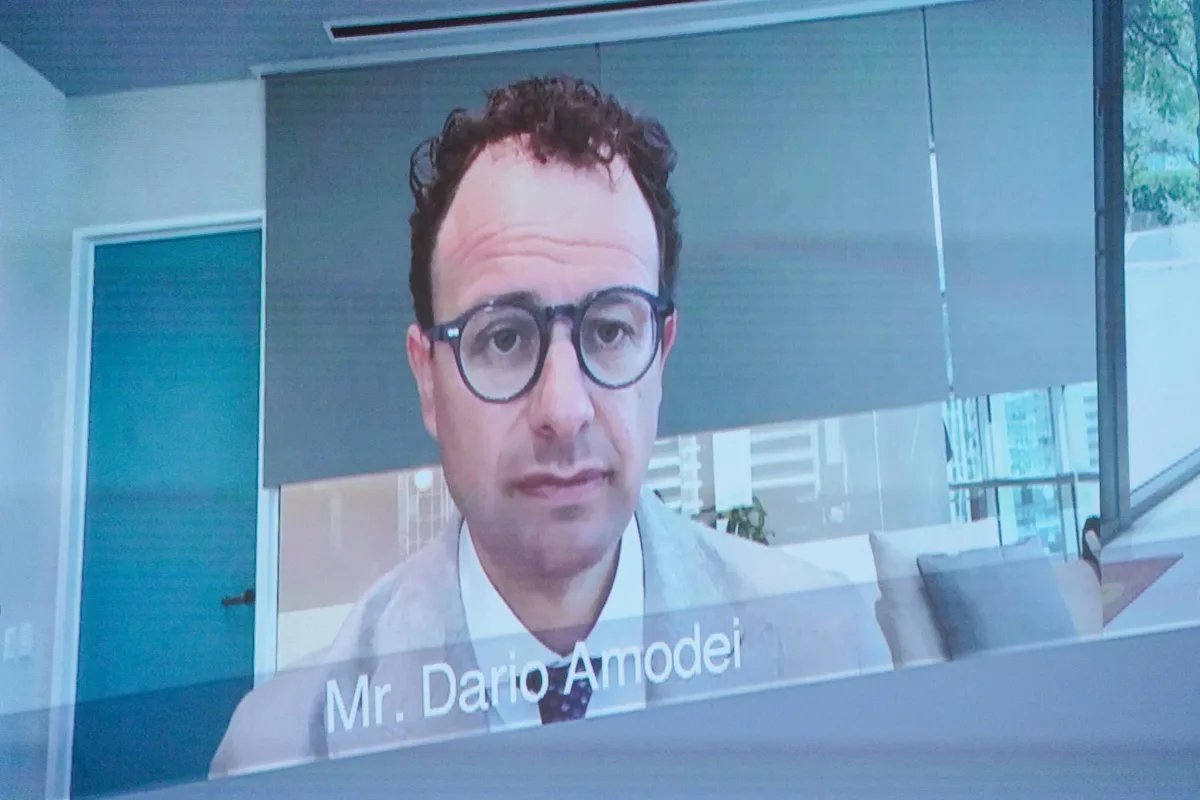
Anthropic CEO Dario Amodei told the UN that if “managed poorly,” AI models “could be a risk to humanity as a whole.” | John Lamparski/Bloomberg via Getty Images Silicon Valley has long warned that its favorite technology might get us all killed.
But chatter about AI’s apocalyptic potential has grown louder in recent weeks.
In September, Anthropic researcher Jacob Coxon resigned from the company, accusing his former employer of “gambling with our lives” by developing evermore powerful models faster than it could control them.
One of Coxon’s former colleagues vouched for this assessment, saying that there was a greater than 10 percent chance of AI “killing all humans” within the next decade.
Recent pronouncements from the leaders of these companies have been nearly as grim.
At the United Nations last month, Anthropic CEO Dario Amodei warned that, if “managed poorly,” AI models “could be a risk to humanity as a whole.” OpenAI’s Sam Altman similarly declared that our species just might “lose control of the future” to the type of software that his firm is selling.
All this triggered a tsunami of media coverage and policy debate about the “existential risks” of AI — and what, if anything, we can do about them.
Key takeaways Some critics argue that AI leaders’ warnings about existential risk are a PR strategy to attract investment, distract from present-day harms, and shape regulation in their favor.
But this theory doesn’t make a ton of sense.
The simpler explanation is that many AI executives, researchers, and defectors genuinely believe the technology poses catastrophic risks, based on real trends in AI’s growing power and autonomy.
Yet some of the AI industry’s biggest critics are more annoyed than afraid.
As they see it, the world isn’t trembling on the precipice of robo-annihilation, so much as falling for the tricks of snake oil salesmen.
This argument has been percolating for years, voiced by a broad set of observers, including the linguist Emily Bender (“ It makes the product seem more powerful ”), computer scientist Timnit Gebru (“ It’s not just a distraction, but it’s harmful ”), as well as Substack columnist Ed Zitron and various reporters and social media influencers .
In their thinking, Altman and Amodei aren’t talking up their technology’s catastrophic potential because they’re rationally afraid of where AI is going — they’re doing so because their firms are ravenously hungry for more investment.
5News aggregated this summary from the outlet’s public feed. The full article, with all the context, is on www.vox.com — the content belongs to Vox.