Canon RF 20mm f/1.4L VCM review: Wide, bright and built for the dark
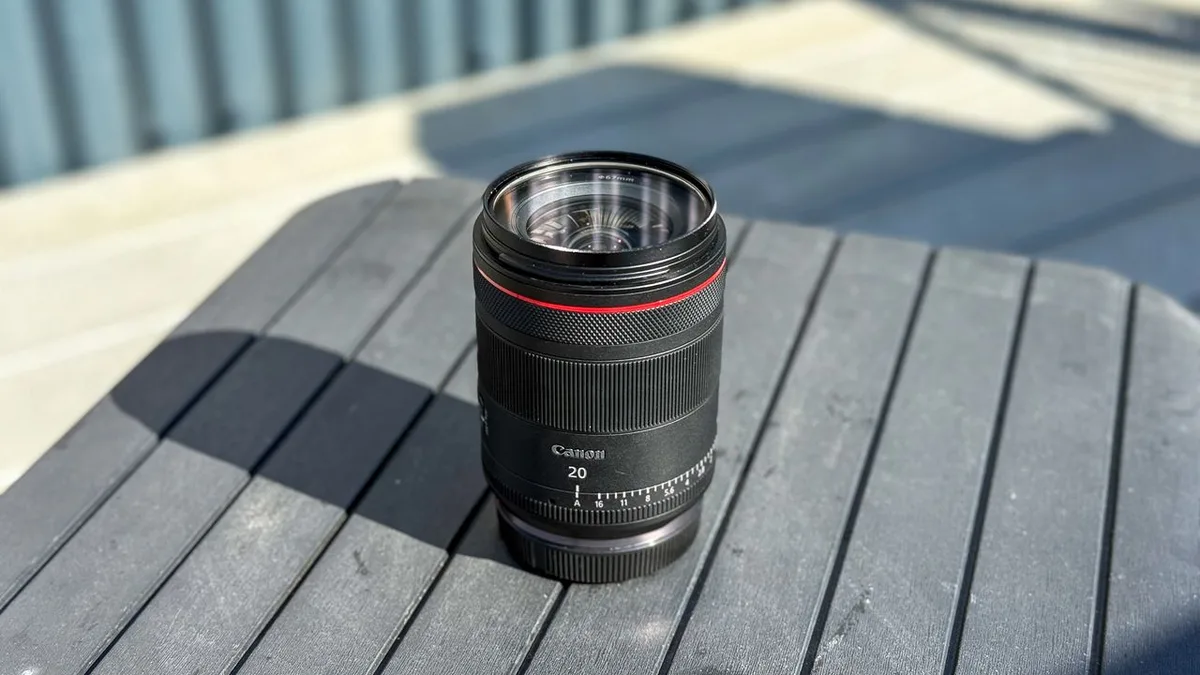
The Canon RF 20mm f/1.4L VCM is an intriguing lens for photographers who want a wide field of view without sacrificing aperture.
Its f/1.4 maximum aperture makes it particularly appealing for astrophotography, while the 20mm focal length offers plenty of room for landscapes, architecture and other wide-view scenes.
We took the lens out to the dark skies of Wales to photograph the night sky and the Perseids, giving it a real-world test in some of the best conditions we could find.
With a premium L-series build and a price tag to match, there's a lot to consider before adding this lens to your kit.
We wanted to find out how it actually performs in the real world, and whether it's worth the investment.
Canon RF 20mm f/1.4L VCM: Design It's a nice size and weight, despite not being the smallest lens. (Image credit: Kimberley Lane) Premium, solid build Surprisingly manageable for an f/1.4 lens A few small quirks keep it from being flawless The Canon RF 20mm f/1.4L VCM feels like a proper L-series lens from the moment you pick it up.
It's solid and reassuringly well-built, but it never felt excessively heavy or awkward on the camera.
At 1.41 pounds (519 grams), it's certainly not a tiny 20mm prime, but the weight is well balanced and it was comfortable to carry and shoot with.
And considering it'll often be used for astrophotography, it'll be on a tripod a lot of the time anyway.
The focus and control rings both feel smooth and nicely weighted, while the switches and customizable buttons are easy to find without having to look at the lens.
The weather-resistant build is another bonus for outdoor shooting, which will come in handy if you also use the lens for landscapes where you might encounter inclement weather.
The dedicated aperture ring is also a nice feature, especially if you prefer having more physical controls rather than relying on the camera body and remembering which dial is set to each setting.
Plus, the clickable nature of the aperture ring is an ASMR dream.
Canon RF 20mm f/1.4L VCM: Performance The wide 20mm focal length and fast f/1.4 aperture are perfect for astrophotography. (Image credit: Kimberley Lane) Excellent low-light performance Sharp in the center with some corner softness f/1.4 makes a real difference under dark skies A fast 20mm is a pretty exciting combination for astrophotography.
5News aggregated this summary from the outlet’s public feed. The full article, with all the context, is on www.livescience.com — the content belongs to Live Science.