Severe COVID-19 may wake up dormant viruses and lead to lasting physical disability, study finds
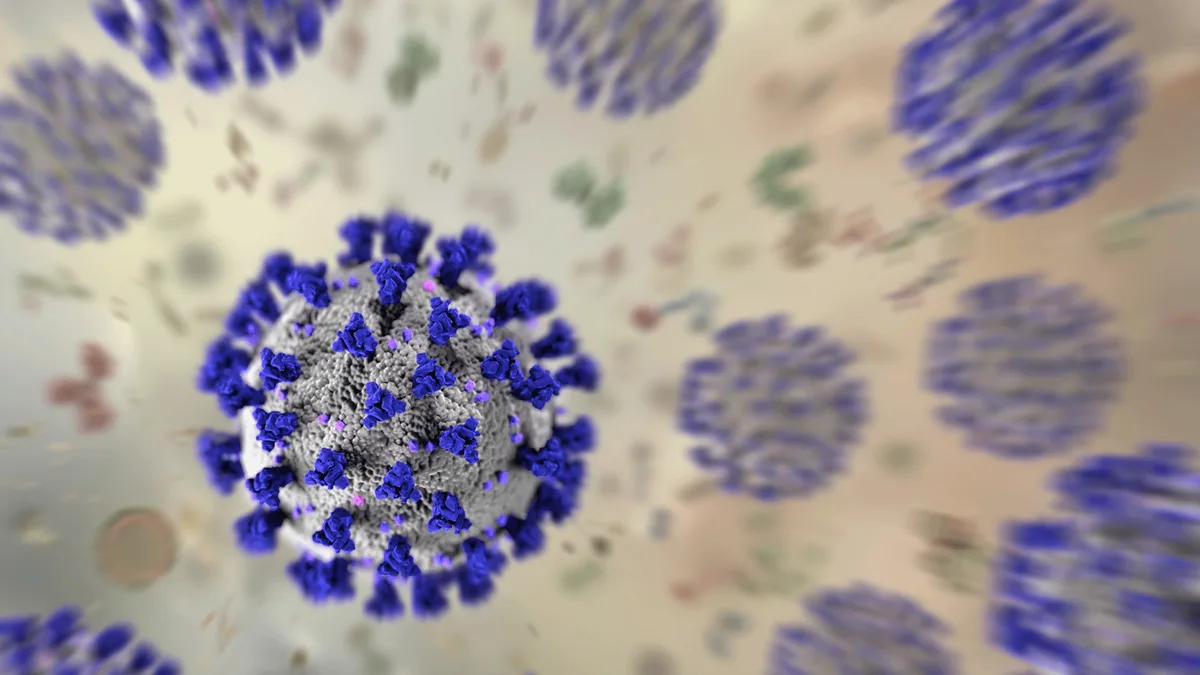
A severe case of COVID-19 can "reawaken" dormant viruses in the body, even in people with otherwise healthy immune systems, a new study finds.
These reactivated viruses include Epstein-Barr virus (the "mono" virus, or EBV), cytomegalovirus (CMV), herpes simplex virus (HSV) and anelloviruses.
That final group of viruses can be found in the vast majority of people , but they have never been definitively shown to cause human disease .
However, in this study, the reactivation of these seemingly benign anelloviruses was linked to persistent physical disability from long COVID, researchers reported Aug.
5 in the journal Nature .
Anna Cliffe , an associate professor of microbiology, immunology and cancer biology at the University of Virginia who wasn't involved in this study, praised the work as "one of the largest and most carefully done studies of its kind." The findings suggest that severe COVID-19 may wake up dormant viruses, and "once awake, they may add to the inflammation that makes COVID-19 worse," Cliffe told Live Science in an email.
What's more, "if our findings on Anelloviridae and long COVID are validated, then it would really create a lot of urgency around better understanding these viruses and developing antivirals for them," study co-author Dr.
Esther Melamed , a neuroimmunologist at the University of Texas at Austin, told Live Science.
Viral reactivation The study tracked 1,154 adults who'd been hospitalized with COVID-19 cases of varying severity, following them for a year.
The researchers gathered blood samples and nasal swabs, as well as lung fluid samples from the ventilated patients.
These samples were taken at six time points during the first month, and then at three, six, nine and 12 months.
The team ran tests to look for viral RNA , a genetic cousin of DNA, as a sign that these lingering viruses were reactivating during and after their infection with SARS-CoV-2, the virus that causes COVID-19.
The results showed that many dormant viruses awakened during the acute infection, particularly members of the herpes family — EBV, CMV and HSV — and anelloviruses.
Each virus followed its own timeline of reactivation, with EBV and anelloviruses appearing early, and CMV and HSV later.
5News aggregated this summary from the outlet’s public feed. The full article, with all the context, is on www.livescience.com — the content belongs to Live Science.