What Russia’s Parliamentary Election Results Mean for Putin and the War
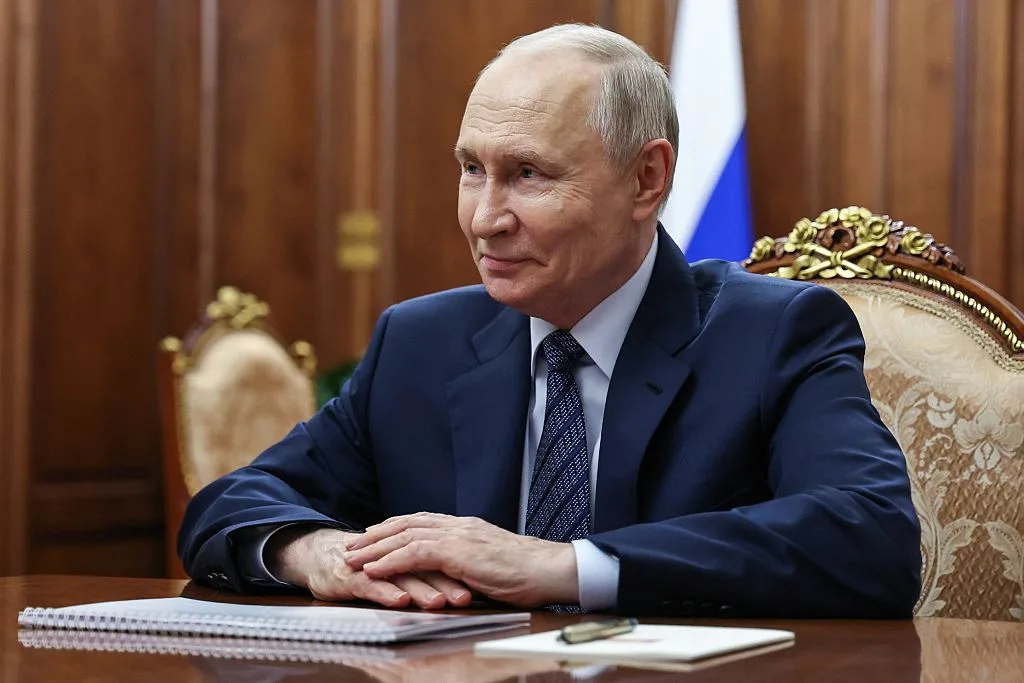
Russian President Vladimir Putin attends a meeting with the head of the Federal Customs Service in Moscow on Sept.
21, 2026. —Vyacheslav Prokofyev—POOL/AFP Russia's electoral commission on Monday said that United Russia, the ruling party aligned with President Vladimir Putin, is projected to win the parliamentary election that has been widely criticized as a “ sham .” The Central Election Commission (CEC) reported that 95% of the votes have been counted after a three-day election that began last Friday and ended Sunday.
While the final counts are not expected to be certified until later this week, preliminary figures show that the pro-Kremlin party is projected to win a record 355 seats in the country’s 450-seat Duma, the lower house of parliament, giving United Russia an even larger supermajority than its 2016 record high of 343 seats.
Read More: Why the Outcome of Russia's First Parliamentary Elections in Years Is All But Assured Voter turnout was high at just over 59%, according to a briefing from the CEC.
The election is the first parliamentary poll since Russia's full-scale invasion of Ukraine in 2022 , and the Kremlin has cast it as a referendum on support for what it calls a “special military operation” rather than a war.
It was also, therefore, the first parliamentary election to include voters from four partly occupied regions of Ukraine—Donetsk, Luhansk, Kherson and Zaporizhzhia—which Moscow claimed to annex illegally in 2022 but does not fully control.
Voting also was held in Crimea, which was illegally annexed in 2014.
Despite the vote being framed as an opportunity for citizens to express sentiments about the war, it is widely considered an illusion of choice: Russia’s supreme court last month banned the federal candidate list of the one registered antiwar party, Yabloko, from participating in the State Duma.
“I would be very careful to kind of unpack the distribution of votes as something indicative of what people think of the war,” David Szakonyi, a professor at George Washington University whose research focuses on Putin-era Russia, tells TIME.
“They were not given the choice to vote against it.” “This playing field was tilted before the votes were even counted, and this was not by any means a free and fair election,” he adds.
Kremlin spokesperson Dmitry Peskov told members of the press Monday that the election showed how Russians support the country’s leader and “point to the highest level of consolidation within Russian society around the head of state.” Experts believe that the election will allow the Kremlin to continue justifying its war with Ukraine—and it could further consolidate Putin’s power.
5News aggregated this summary from the outlet’s public feed. The full article, with all the context, is on time.com — the content belongs to TIME.