Scientists build a DNA computer that can perform calculations in a drop of water
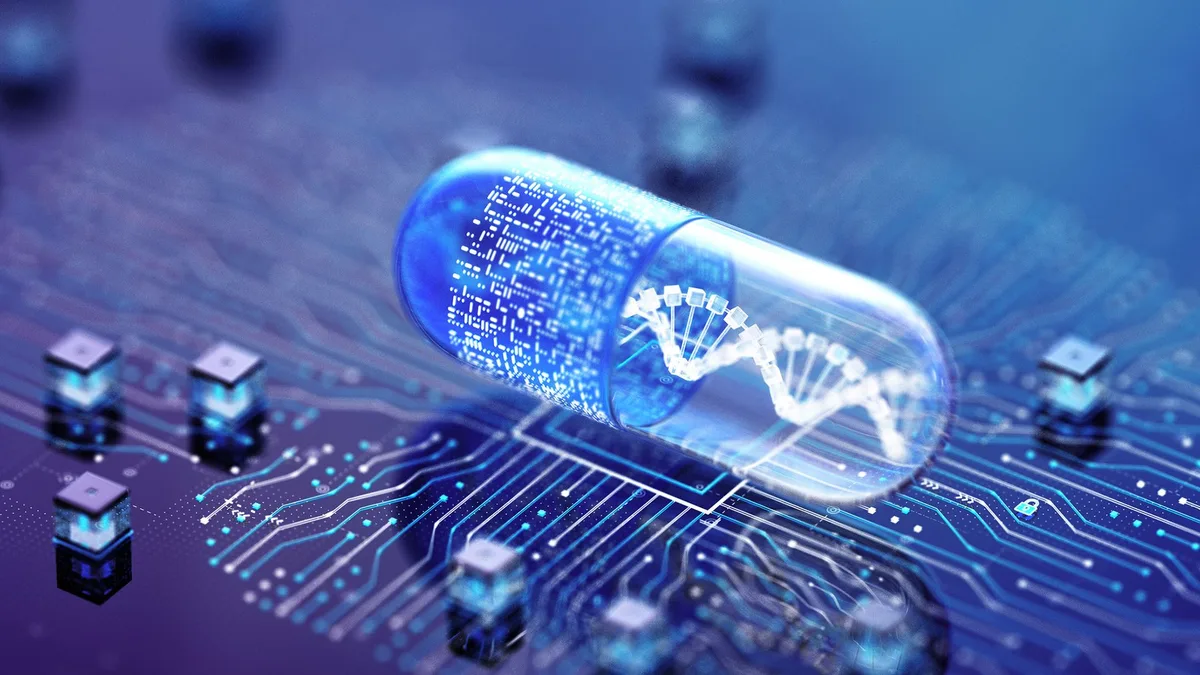
Scientists have built a DNA-powered computer that can perform calculations using billions of molecules in a tiny drop of water.
The system taps into the laws of physics to create what the scientists describe as a computing system that's more efficient than the conventional computers that are widely used today.
Rather than continuously using energy to force a calculation through a series of processing steps, the DNA computer is designed so that its more "energetically favorable" state is the correct answer.
In other words, the computer is built to use less energy than other biological computers, which integrate living cells with traditional hardware, would take to calculate the answer.
"The clever part is that the binding process is competitive: the DNA molecules compete with each other to select a winner, which succeeds in binding to the scaffold; all of the jostling and competition process information and execute a computation," Damien Woods , a professor of computer science at Maynooth University in Ireland and a co-author of the study, told Live Science in an email.
"Eventually, the system settles down into its energetically-preferred state which encodes the answer to the computation." The researchers described their system, called the Scaffolded DNA Computer (SDC), in a study published Sept.
16 in the journal Nature .
They tested the SDC on 10 programs, including 100-bit computations.
Some calculations, like 10 + 3, took around 30 seconds for the SDC to compute.
There are several possible long-term applications for the SDC, but these are currently speculative, the researchers noted in the study.
DNA-based systems could potentially contribute to molecular data storage , energy-efficient forms of computation, or even devices capable of running inside living cells .
"Molecular computers like this are not trying to replace electronic ones, but they could be used in biological environments, smart materials and archival DNA data storage," Abeer Eshra , an assistant professor of computer science and a co-author of the study, told Live Science via email.
"Our work is a new direction for DNA data storage, since any data stored in such a system would have natural built-in error correction properties." A computer made from DNA The SDC is made from short strands of DNA that interact with a longer DNA scaffold.
The strands are placed into a small amount of salt water, and then heated and cooled.
5News aggregated this summary from the outlet’s public feed. The full article, with all the context, is on www.livescience.com — the content belongs to Live Science.